
Vegetables
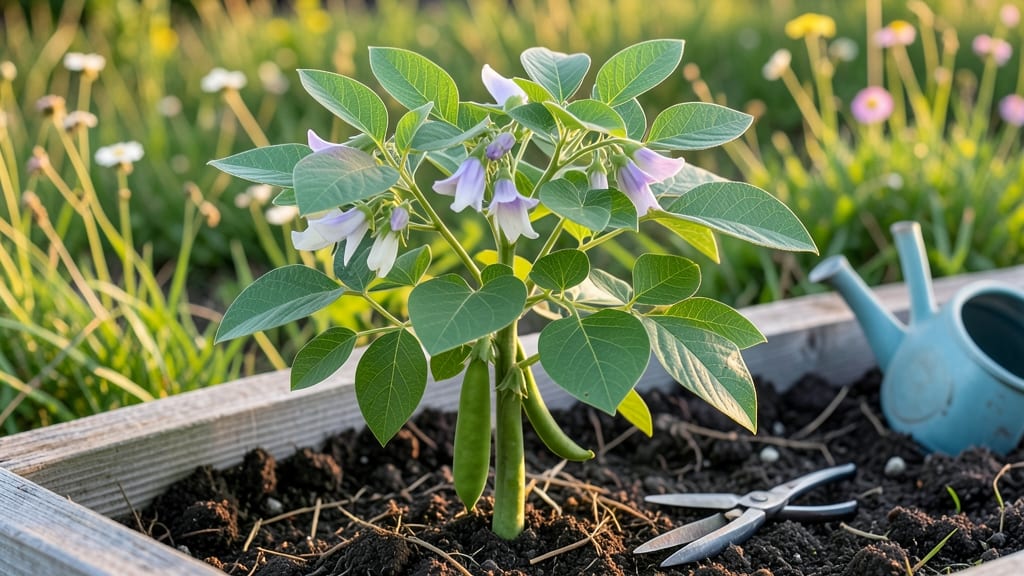
Beans are living organisms when growing as plants, but dried beans are technically dead seeds that can germinate under the right conditions—moisture, warmth, and oxygen.
Beans are living organisms only during their active growth phase as plants, where they perform photosynthesis and develop through their life cycle.
Once harvested and dried, they enter a dormant state, effectively becoming seeds that can't grow without the right conditions. 🌱 The key to understanding this is recognizing that dried beans are in a state of suspended animation—they're not dead but rather in a low-energy mode waiting for activation.
What makes this fascinating is how easily beans transition between states. When you soak dried beans, you're essentially waking them up by providing the moisture and warmth they need to restart their metabolic processes.
This is why proper storage matters—beans need to stay dry and cool to maintain their viability for longer periods.
💡 In This Article
- Botanical Life Stages of Beans: Plant vs Seed
- How to Tell If a Bean Is Alive or Dormant
Botanical life stages of beans: plant vs seed
Beans begin their life as living plants, where they perform photosynthesis to convert sunlight into energy through their green leaves. During this stage, the plant actively grows roots, stems, and pods while maintaining cellular respiration—breathing in oxygen and releasing carbon dioxide.
This metabolic activity keeps the plant alive and allows it to develop seeds containing the next generation. The process requires a steady supply of water, nutrients, and sunlight, all of which sustain the plant's vibrant green color and firm texture.
When beans reach maturity, they enter their dormant seed phase after being harvested and dried. This transition involves a dramatic reduction in metabolic activity, where the seed's moisture content drops to around 10-12%—critical for long-term storage.
The seed's cells enter a state of suspended animation, halting growth until conditions become favorable again. Unlike the living plant, the dried bean no longer performs photosynthesis or respiration independently. Instead, it relies entirely on external factors like moisture and warmth to restart its biological processes.
The key to germination lies in reactivating these metabolic pathways. When you soak dried beans in water, the seed absorbs moisture, swelling up to 1.5-2 times its original size within 8-12 hours.
This triggers the production of enzymes that break down stored nutrients, providing energy for the seedling to emerge. The warmth from the environment further accelerates this process, as temperatures between 68-86°F create optimal conditions for enzymatic activity. 🌱
This biological transition is why dried beans can remain viable for years if stored properly. Unlike fresh produce that spoils quickly, seeds enter a state of dormancy where their metabolic rate slows to nearly undetectable levels.
The hard outer shell protects the seed's delicate inner structures, allowing it to survive extreme conditions that would kill a living plant. This adaptability is what makes beans such a resilient crop in agriculture.
Consider the black bean as an example: when growing, it's a living plant with chlorophyll performing photosynthesis, but once dried, it becomes a seed capable of lying dormant for decades. The same principles apply to all legumes—whether kidney beans, lentils, or chickpeas.
The difference lies in their specific requirements for reactivation, with some needing scarification (lightly scratching the seed coat) to improve water absorption.
Understanding this cycle explains why gardeners often pre-sprout seeds indoors before transplanting—it gives the seed a head start in its transition from dormancy back to active growth. The process mirrors how ancient civilizations preserved food by drying seeds, allowing them to be stored and later revived when needed.
This dual nature of beans as both living plants and dormant seeds is what makes them such a fascinating and versatile crop.