
Pests
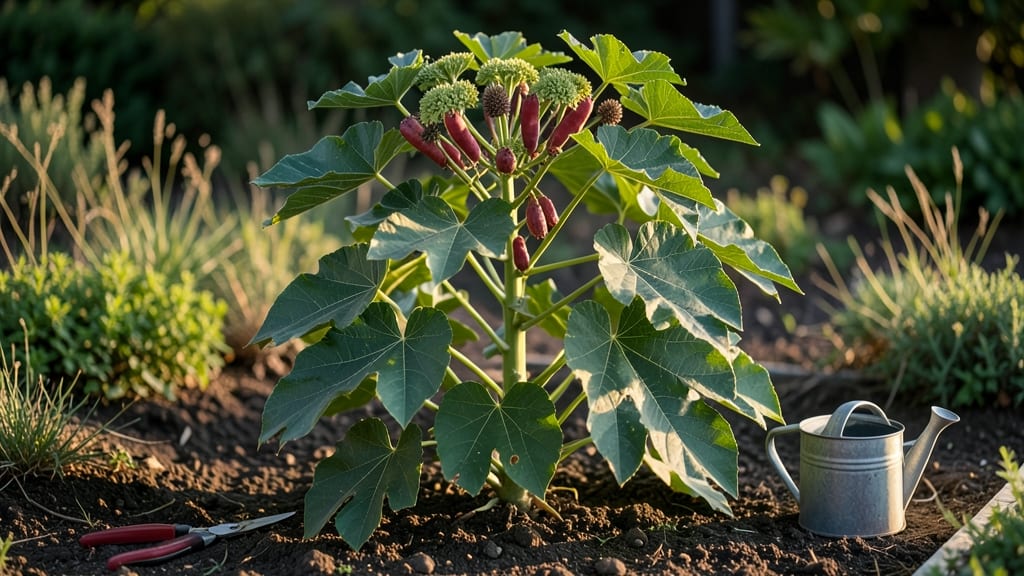
Caster bean poison poses extreme danger because its seeds contain ricin, a protein that shuts down cells by destroying ribosomes. Even small amounts can trigger violent vomiting, organ failure, and death within days, with no effective antidote. Seek emergency care immediately if exposure occurs.
Ricin's toxicity stems from its ability to halt protein production in cells, starting with the digestive system and spreading to vital organs. 🔥 Unlike many plant toxins that cause immediate reactions, ricin's effects often appear hours later, making early symptoms like nausea and abdominal pain deceptively mild.
The lethal dose for humans is estimated between 0.5 to 1 milligram per kilogram of body weight, though individual sensitivity varies dramatically. This makes accidental poisoning particularly risky for children or pets who might chew on seeds.
Gardeners and plant enthusiasts should handle caster beans with extreme caution, treating them like biological weapons. Never crush seeds—even inhaling ricin-contaminated dust can cause respiratory distress.
If ingestion occurs, induce vomiting only if instructed by poison control, as further damage depends on how much ricin has already entered the bloodstream. Most cases require intensive hospital care with supportive treatments like IV fluids and pain management.
💡 In This Article
- How Ricin in Caster Beans Triggers Deadly Toxicity
- Safety Precautions for Handling Caster Bean Plants
How ricin in caster beans triggers deadly toxicity
Ricin works like a molecular assassin inside human cells, specifically targeting the ribosomes—the tiny structures responsible for building proteins. When ricin enters through ingestion or inhalation, it splits into two chains: Chain A enters the cell's cytoplasm while Chain B helps it bind to a specific receptor.
Chain A then modifies a critical ribosomal component called RNA N-glycosidase, effectively halting protein synthesis. This means cells can't produce essential enzymes, hormones, or structural proteins, leading to widespread cellular death.
The delay between exposure and symptoms—often 6 to 24 hours—makes ricin particularly insidious. Initial signs like nausea, vomiting, and diarrhea mimic food poisoning, but the damage spreads rapidly to the liver, spleen, and kidneys. At 24-72 hours, symptoms escalate to seizures, internal bleeding, and organ failure.
The lethal dose varies but averages 0.5-1 milligram per kilogram of body weight, meaning just 30-50 seeds could be fatal for an adult. For comparison, a single seed contains about 0.2 milligrams of ricin, making accidental poisoning a terrifying possibility.
What makes ricin uniquely deadly is its stability—it remains potent even after drying or cooking. Heat doesn't destroy it, and it can survive stomach acids to enter the bloodstream. Unlike many toxins that target one organ system, ricin's attack on ribosomes causes a cascade of failures across multiple organs simultaneously.
This systemic shutdown explains why victims often collapse suddenly, with no warning beyond early gastrointestinal distress. 🔥 The lack of an antidote means treatment focuses solely on supportive care, like managing dehydration and organ function.
Scientists have studied ricin's structure extensively, revealing why it's so effective. Its two-chain design allows it to bypass natural detoxification pathways in the body. Chain B binds to galactose receptors on cell membranes, while Chain A's enzymatic activity ensures irreversible damage.
This dual mechanism makes ricin 10,000 times more toxic than cyanide by weight, earning its classification as a Schedule 1 controlled substance. Its potency has led to its use in both biological warfare research and criminal poisonings, though accidental exposure remains the most common risk.
Understanding ricin's mechanism helps explain why early symptoms can be misleading. The initial gastrointestinal distress occurs as ricin damages the intestinal lining, but the real danger lies in how it spreads.
Within 24 hours, victims may develop low blood pressure, rapid heart rate, and metallic-tasting breath—a sign of kidney failure. The progression is relentless because ricin doesn't just kill cells; it disrupts the body's ability to repair itself.
This is why even small exposures can turn fatal, especially in children or individuals with weakened immune systems.
Comparing ricin to other plant toxins highlights its uniqueness. While mushrooms like the death cap contain amatoxins that target the liver, or castor beans' related compound ricinine causes mild toxicity, ricin's direct attack on ribosomes makes it one of the most lethal natural substances known.
Its ability to evade the body's defenses and trigger a domino effect of organ failures sets it apart from nearly all other plant-based poisons. This is why ricin poisoning cases carry such high mortality rates—often exceeding 80%—despite aggressive medical intervention.
For those handling caster beans, recognizing these mechanisms underscores the importance of absolute caution. Even a single crushed seed can release enough ricin to contaminate an entire room, making inhalation a secondary risk.
The delay in symptoms can lull victims into a false sense of security, but once ricin takes hold, the body's systems begin shutting down in a matter of hours. This is why immediate medical attention is non-negotiable—every minute counts in the race against ricin's deadly biochemical assault. ✨