
Vegetables
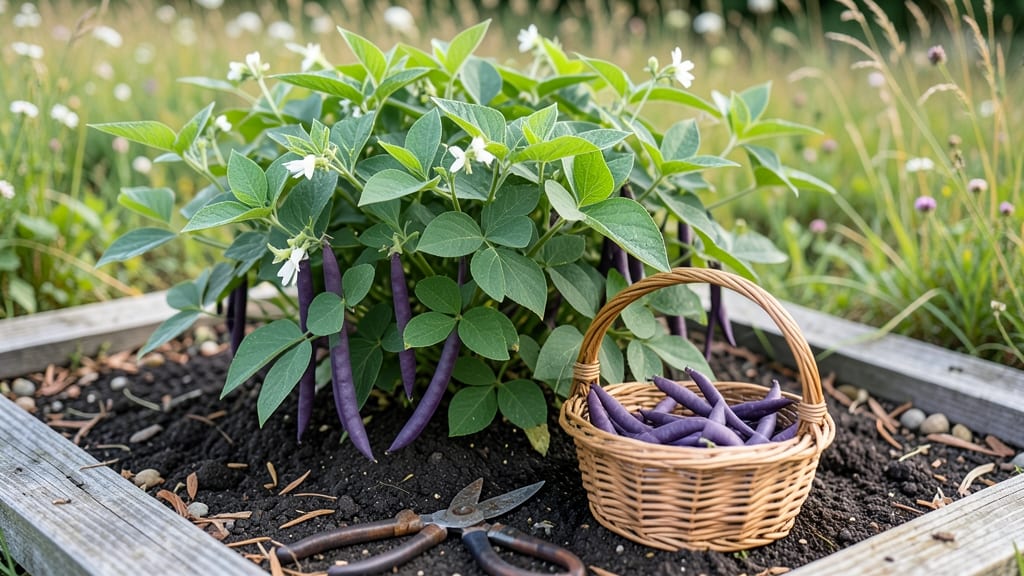
Cooking purple green beans preserves their vibrant hue by boiling them for just 3–5 minutes in salted water, then shocking in ice water. Overcooking turns them mushy, while acidic ingredients like lemon juice enhance their color retention during preparation.
Purple green beans get their striking color from anthocyanins, which are sensitive to both heat and pH levels. 🌿 When you cook them too long, these pigments break down, turning the beans dull green or even grayish.
The ice water shock stops the cooking process instantly, locking in that beautiful purple hue. I’ve found that adding a splash of lemon juice or vinegar to the cooking water not only brightens the color but also adds a subtle tang that complements their natural sweetness.
For best results, aim for bright green (not mushy) stems when testing doneness. These beans work beautifully in stir-fries, salads, or as a side dish—just be sure to cook them quickly to keep that vibrant purple pop.
If you’re storing leftovers, keep them in an airtight container with a paper towel to absorb moisture and preserve color for up to 3 days.
💡 In This Article
- Why Purple Green Beans Lose Color When Overcooked
- Best Quick Cooking Techniques for Purple Green Beans
Why purple green beans lose color when overcooked
The vibrant purple hue in these beans comes from anthocyanins—water-soluble pigments that also give blueberries and red cabbage their color. These molecules are highly sensitive to both heat and pH levels.
When exposed to temperatures above 190°F for more than 5-7 minutes, anthocyanins begin breaking down through a process called thermal degradation. This is why overcooked purple beans often turn dull green or grayish—what you're seeing is the underlying chlorophyll becoming dominant as the anthocyanins degrade.
The pH of your cooking water plays a crucial role too. Anthocyanins are most stable in acidic environments (pH 3-5), which is why adding 1 tablespoon of lemon juice or vinegar per quart of water helps preserve that purple color.
In alkaline conditions (pH 7+), these pigments become unstable and lose their vibrant hue. 💫 Most tap water sits around neutral pH (7), which is why simply boiling in plain water causes faster color loss compared to acidified water.
Texture degradation happens simultaneously with color loss. The cell walls in purple beans contain pectin that begins breaking down after 8 minutes of cooking, causing them to soften and become mushy.
The ideal texture should be crisp-tender with slight resistance when pierced—a fork should slide through easily but not crush the beans completely. This texture window is typically achieved in 3-5 minutes of boiling, depending on freshness.
What most people don't realize is that even after cooking, these beans continue to lose color at room temperature.
The oxidation process accelerates when exposed to air, which is why the ice water bath isn't just about stopping cooking—it's also about rapidly cooling the beans to 40°F or below within 30 seconds to minimize pigment breakdown.
This shock treatment preserves both color and texture far better than simply draining and rinsing with cold water.
For visual comparison, imagine cutting a purple grape and leaving it exposed to air—it quickly turns brown. The same chemical reaction occurs in purple beans, just at a slower rate.
The key difference is that anthocyanins in beans are more heat-sensitive than in grapes, which is why proper cooking techniques make such a dramatic difference in color retention.
Here's what's actually happening at the molecular level: Heat causes the anthocyanin molecules to lose their stable structure, while alkaline conditions (like those in hard water) accelerate this breakdown.
The acid in lemon juice helps stabilize these molecules by maintaining their proper chemical configuration, similar to how citric acid preserves color in jams and jellies. This is why professional chefs often use acidified water when blanching colored vegetables.