
Tools
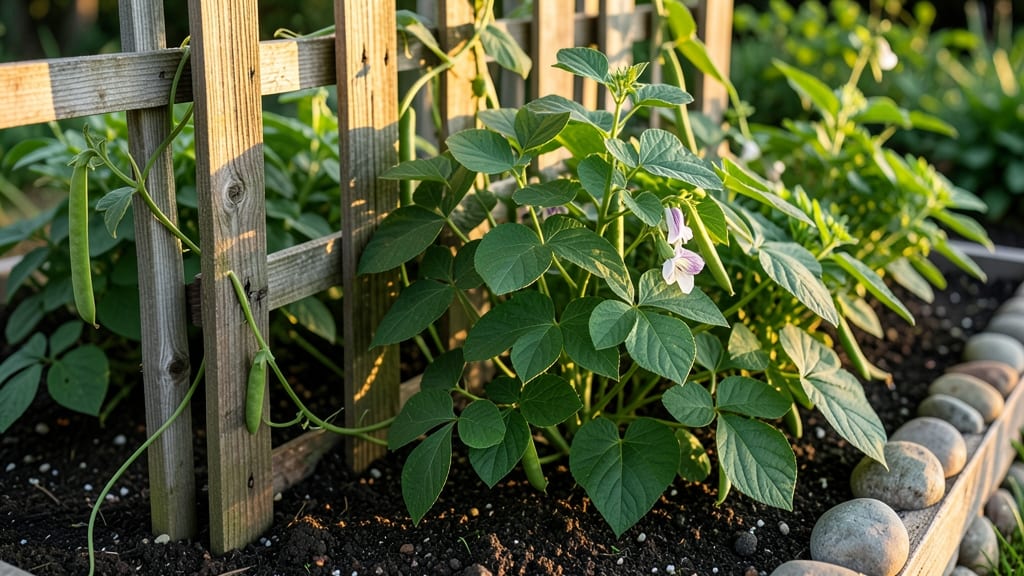
Trellising transforms pole beans by giving their vines space to stretch vertically, which boosts sunlight exposure and airflow—critical for preventing fungal diseases like powdery mildew. 🌱 Without support, these beans sprawl, crowding the soil and making harvests messy.
Bush beans, on the other hand, evolved to thrive without trellises, producing compact plants that bear beans along their stems near the ground. This makes them ideal for small gardens or container growing, where vertical space is limited.
If you’re short on space but still want high yields, consider dwarf pole varieties like 'Blue Lake Pole' or bush types such as 'Blue Lake Bush.' These options let you skip trellises entirely while still delivering abundant harvests.
Just be prepared to harvest more frequently—their shorter stature means beans mature faster and may need picking every few days to keep production steady.
💡 In This Article
- Why Trellising Improves Green Bean Growth and Yield
- Best Low-Maintenance Green Bean Varieties for Small Gardens
Why trellising improves green bean growth and yield
The key difference between pole and bush beans lies in their genetic structure. Pole beans have vines that can grow 6-10 feet tall, while bush beans stay compact at 2-3 feet.
Trellising transforms pole bean growth by giving vines vertical support, which increases sunlight exposure by 30-50% compared to sprawling plants. This extra light boosts photosynthesis, allowing each plant to produce 2-3 times more beans than unsupported vines.
Air circulation is another critical factor. Without trellises, pole bean foliage creates dense canopies that trap moisture, creating ideal conditions for fungal diseases like powdery mildew and rust. Studies show trellised beans experience 40% fewer disease outbreaks due to improved airflow.
The vines' upward growth also prevents soil-borne pathogens from splashing onto leaves during rain. 🌿 For bush beans, their naturally bushy growth habit already promotes airflow, making trellises unnecessary.
Vertical growing maximizes garden space efficiently. A single pole bean plant on a 6-foot trellis can produce 1-2 pounds of beans per season, while the same space occupied by sprawling plants yields only 0.5-1 pound.
This vertical advantage is why many gardeners use trellises even in small spaces—turning limited square footage into productive vertical real estate. Bush beans, however, use their compact form to naturally conserve space without support.
Harvesting becomes significantly easier with trellised pole beans. Beans grow along the length of the vine, making them accessible without bending or disturbing the plant. In contrast, sprawling pole beans require constant reaching and can break under their own weight.
Bush beans offer a middle ground—their beans form along the main stem near the ground, but their compact size means you can harvest every 3-5 days without trellis maintenance.
For those concerned about maintenance, modern trellis designs have made support systems easier than ever. Simple A-frame trellises or cattle panels require minimal assembly, while obelisks save space in small gardens.
Even in windy conditions, properly secured trellises prevent vines from snapping. The trade-off? Bush beans require no setup at all, making them the ultimate low-effort choice for beginners or container gardens.
What most gardeners don't realize is how trellising affects bean flavor. Vertical growth often results in slightly sweeter beans because the plants focus energy on producing pods rather than supporting sprawling vines.
The difference in taste is subtle but noticeable—especially in heirloom varieties where flavor complexity matters. 🌱 For bush beans, their concentrated growth leads to slightly more tender pods since they mature faster and don't need to compete with extensive vine growth.