
Vegetables
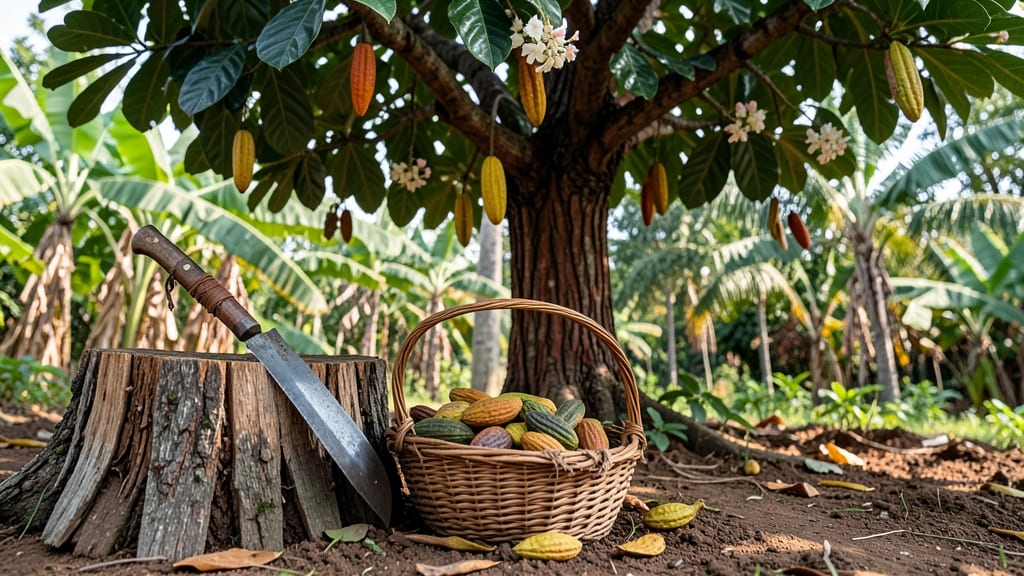
How cocoa beans are grown starts with evergreen cacao trees in tropical climates, where they thrive in shaded, humid environments with temperatures between 70–85°F. Farmers plant seeds from fermented pods, nurture seedlings for 3–5 years, then harvest ripe pods to extract the beans for chocolate production.
Cacao trees need specific conditions to produce those prized beans. 🌿 The trees grow best under the canopy of other trees, mimicking their natural forest habitat, which protects them from harsh sun and wind. Their roots spread wide but shallow, making well-drained, slightly acidic soil (pH 5.0-6.5) ideal for growth.
What's fascinating is how these trees produce flowers directly on their trunks—a process called cauliflory—where pollination often requires manual intervention since natural pollinators are limited in many growing regions.
Once pollinated, the flowers develop into pods that take about 5-6 months to mature. Farmers carefully harvest these pods by hand, then split them open to remove the moist, white beans inside. These beans undergo fermentation for about a week, which develops their signature chocolate flavor.
The entire process from seed to harvest can take up to 5 years before a cacao tree reaches full productivity.
💡 In This Article
- Cacao Tree Growth Conditions and Climate Requirements
- Step-by-Step Cocoa Bean Farming Process
Cacao tree growth conditions and climate requirements
The cacao tree, or Theobroma cacao, thrives exclusively in tropical climates where temperatures hover between 70–85°F year-round. These evergreen trees require high humidity—typically 70–90%—to prevent their delicate leaves from drying out.
The trees grow best under partial shade, mimicking their natural forest habitat where they receive 30–50% sunlight, protected by taller canopy trees. This shade tolerance is critical: direct sunlight can scorch their broad, glossy leaves and reduce pod production by up to 40%. 🌿
The root system of cacao trees spreads horizontally rather than deeply, making well-drained, slightly acidic soil (pH 5.0–6.5) essential. Ideal soil should be rich in organic matter, with a texture similar to loamy garden soil.
Poor drainage or alkaline soil can lead to root rot, a common issue in regions with heavy rainfall. Additionally, cacao trees exhibit a unique growth pattern called "cauliflory," where flowers bloom directly on the trunk and older branches.
These flowers are self-pollinating but often require manual assistance since natural pollinators like midges are scarce in many growing regions.
Seasonal growth varies by region, but cacao trees produce two main harvests per year in equatorial zones (e.g., West Africa, South America). The first harvest, called "principal," occurs after heavy rains, while the second, "mid-crop," follows the dry season.
Each tree can yield 20–40 pods annually once mature, with pods varying in color from yellow to deep red. The tree’s leaf structure—thick, waxy, and elliptical—helps conserve moisture, a vital adaptation for surviving the tropical climate’s intense heat and humidity cycles. 🌱
One critical factor often overlooked is wind exposure. Cacao trees are sensitive to strong winds, which can damage their delicate branches and reduce pod formation. Farmers in open fields often plant windbreaks like banana or coconut trees to create a microclimate.
The trees also benefit from regular pruning to improve air circulation and sunlight distribution, which enhances pod quality. Without these conditions, yield drops significantly, and the beans develop inferior flavor profiles.
Soil fertility is another key element. Cacao trees are heavy feeders, requiring regular applications of nitrogen, phosphorus, and potassium. Organic fertilizers like composted manure or banana waste are commonly used to maintain soil health without disrupting the ecosystem.
The combination of these factors—climate, soil, shade, and pollination—creates the perfect environment for cacao trees to produce the high-quality beans needed for premium chocolate. 🌟