
Vegetables
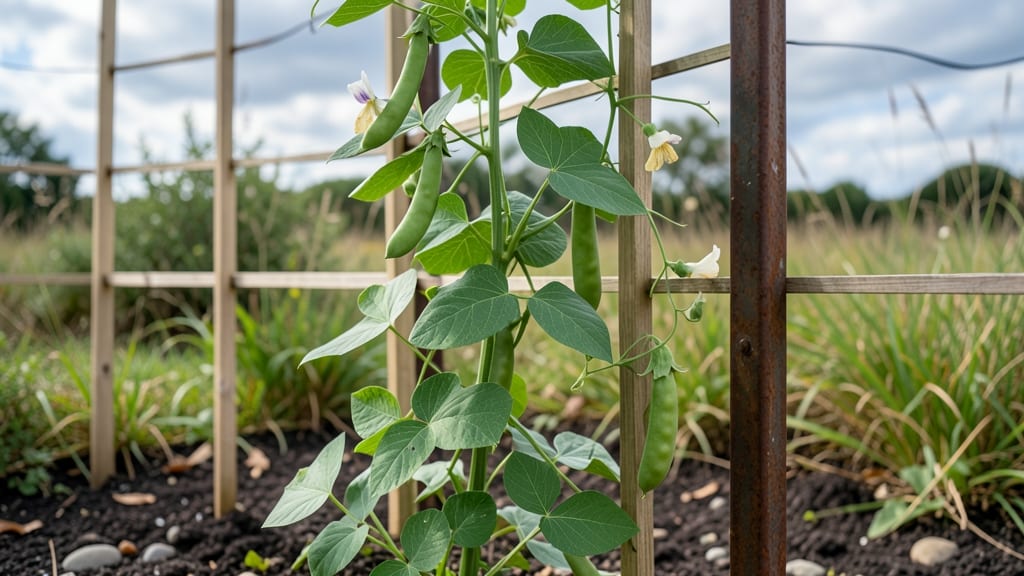
Peas are not a type of bean, though they share the same plant family (Leguminosae) and genetic traits. Their key differences lie in pod structure, seed shape, and culinary uses, despite both being nutrient-packed legumes.
Peas and beans both belong to the Leguminosae family, which explains their shared genetic traits and nutritional benefits. 🌱 However, their botanical differences start with how they grow: peas develop flat pods that contain small, rounded seeds, while beans form swollen pods with larger, irregularly shaped seeds.
This distinction affects everything from how you cook them to their texture in dishes—peas stay tender and sweet, while beans hold their shape better when heated. Understanding these differences helps you choose the right ingredient for your meals, whether you're making a creamy pea soup or hearty bean chili.
Beyond the kitchen, this classification matters for gardeners too. Pea plants typically climb vines, while many beans grow as bushy plants or vines. Both fix nitrogen in the soil, but their growth habits mean they thrive in different planting arrangements.
For example, peas often do better in cooler weather, while beans prefer warmer temperatures. These practical differences show how even closely related plants can have distinct needs and uses.
💡 In This Article
- Botanical Family: Why Peas and Beans Are Related
- Nutritional and Culinary Differences Between Peas and Beans
Botanical family: why peas and beans are related
The Leguminosae family, also known as Fabaceae, is one of the largest plant families, encompassing over 700 genera and 19,000 species. Both peas and beans belong to this family, sharing a common evolutionary ancestor that developed around 60 million years ago.
This shared lineage explains why they exhibit similar traits, such as nitrogen-fixing root nodules that enrich the soil. These nodules house symbiotic bacteria that convert atmospheric nitrogen into a form plants can use, making both peas and beans valuable crops for sustainable agriculture.
The key botanical difference lies in their pod structure. Pea pods are typically flat and contain small, rounded seeds that develop within a shriveled pod wall. In contrast, bean pods are more swollen and contain larger, irregularly shaped seeds that fill the pod cavity.
For example, a garden pea pod measures about 2-3 inches long and contains 4-10 seeds, while a black bean pod can reach 4-6 inches and hold 3-6 larger seeds.
This structural difference affects how they grow and how we harvest them—peas are often shelled directly from the pod, while beans are typically harvested whole before shelling.
Genetically, peas and beans share a similar DNA sequence for key traits like seed protein storage and pod development, but their growth habits differ significantly. Pea plants are typically vining climbers, requiring trellises or stakes to grow vertically, while many beans grow as bushy plants or trailing vines.
This distinction isn't just about appearance—it impacts how they're cultivated. For instance, pea vines can grow up to 6-10 feet tall with proper support, while bush beans typically max out at 2-3 feet without additional structure. These differences make them complementary crops in rotation systems.
Evolutionarily, peas and beans diverged into distinct subfamilies within Leguminosae. Peas belong to the Faboideae subfamily, while many beans fall under Phaseoloideae. This classification explains why peas often have a sweeter, more delicate flavor compared to the earthier, heartier taste of beans.
The genetic divergence also affects their cooking properties—peas soften quickly when cooked, while beans require longer simmering times to break down their tougher seed coats. This is why a 10-minute cook time might fully tenderize peas, while beans often need 45-60 minutes of simmering.
What's fascinating is how these botanical differences translate to culinary uses. The flat pod structure of peas makes them ideal for dishes where texture matters, like snap peas that are eaten whole or split peas used in soups.
Meanwhile, the larger seeds of beans make them perfect for hearty stews or as a standalone protein source. This functional diversity within the same family showcases nature's adaptability—both peas and beans have evolved to thrive in different ecological niches while maintaining their core legume characteristics. 🌱