
Pests and Diseases
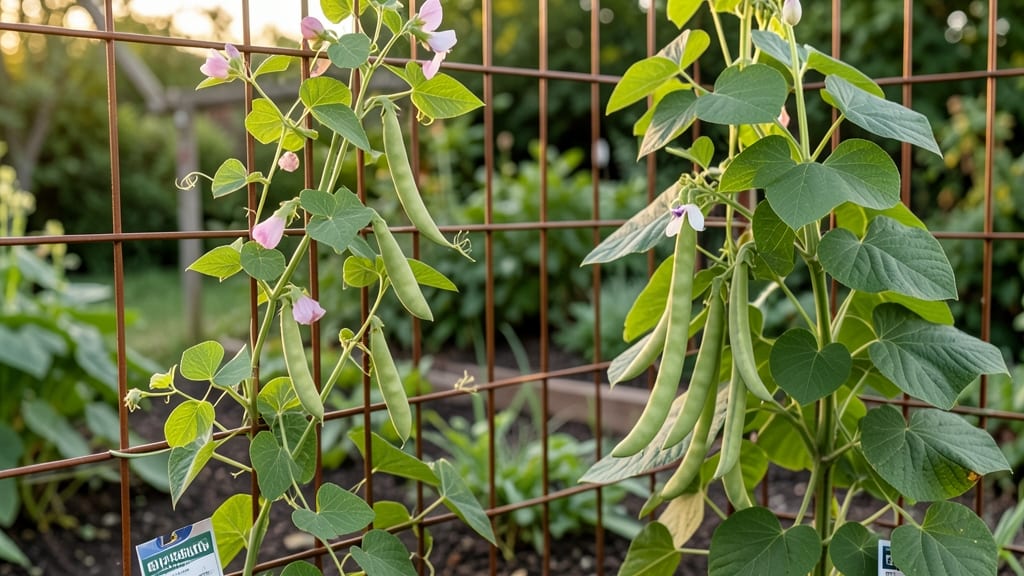
This pairing works because both plants belong to the legume family, meaning they form natural relationships with soil bacteria called rhizobia. 🌱 When peas fix nitrogen in the soil, beans absorb it through their roots, creating a self-sustaining nutrient cycle.
Many gardeners swear by this combo to improve soil health over time, especially in raised beds or small spaces where rotation isn't practical.
For best results, plant bush varieties rather than pole types—bush beans mature faster and won't compete with pea vines for vertical space. I recommend spacing them 12-18 inches apart in rows at least 2 feet apart to allow good airflow and prevent fungal issues.
The key is balance: too close, and they'll fight for nutrients; too far, and you miss the symbiotic benefits.
💡 In This Article
- How Companion Planting Boosts Peas and Beans
- Best Practices for Planting Peas and Beans Together
How companion planting boosts peas and beans
The magic happens underground where peas and beans team up with soil bacteria called rhizobia. These microscopic partners form nodules on plant roots, converting atmospheric nitrogen into a form both plants can use.
Peas, being early-season fixers, get the process started, while beans—especially later varieties—harvest that nitrogen as they grow. Studies show this partnership can increase soil nitrogen levels by up to 200 pounds per acre over a season, making it a gardener's secret weapon for sustainable fertility.
Root structure plays a crucial role too. Peas develop deep, fibrous roots that tap into subsoil moisture, while beans often have shallower but more extensive root networks. This complementary system means they access water and nutrients from different soil layers, reducing competition.
For example, bush beans like 'Blue Lake' pair well with sugar snap peas because their root zones overlap minimally—beans focus on the top 6-12 inches while peas reach 18-24 inches deep.
What most gardeners don't realize is how timing affects this synergy. Plant peas 4-6 weeks before your last frost date, giving them time to establish nitrogen-fixing nodules before beans emerge. The peas act like living fertilizer factories, while beans—being heavier feeders—benefit from this early boost.
This sequential planting mimics natural ecosystems where legumes follow nitrogen-depleting crops like corn, creating a closed-loop system. 🌱
There's also a pest-control angle: the strong scent of pea foliage can deter some bean pests like Mexican bean beetles, while beans' bushy growth provides shade that reduces soil moisture loss around pea vines.
This two-way protection means fewer chemical interventions and healthier plants overall. The key is maintaining that 12-18 inch spacing between plants to prevent overcrowding, which would force them to compete rather than cooperate.
For maximum benefits, consider planting 3-4 rows of peas followed by 2 rows of beans in a raised bed. The peas' early growth provides ground cover that suppresses weeds while their nitrogen legacy feeds the beans.
This rotation strategy works particularly well in small gardens where space is limited, as it eliminates the need for synthetic fertilizers while improving soil structure over time.
The science behind this isn't just theoretical—it's measurable. Soil tests from companion-planted gardens often show 30-50% higher organic matter after one season compared to monoculture plantings. That's because legume roots exude sugars that feed beneficial microbes, creating a thriving underground ecosystem that extends beyond just the peas and beans.