
Pruning
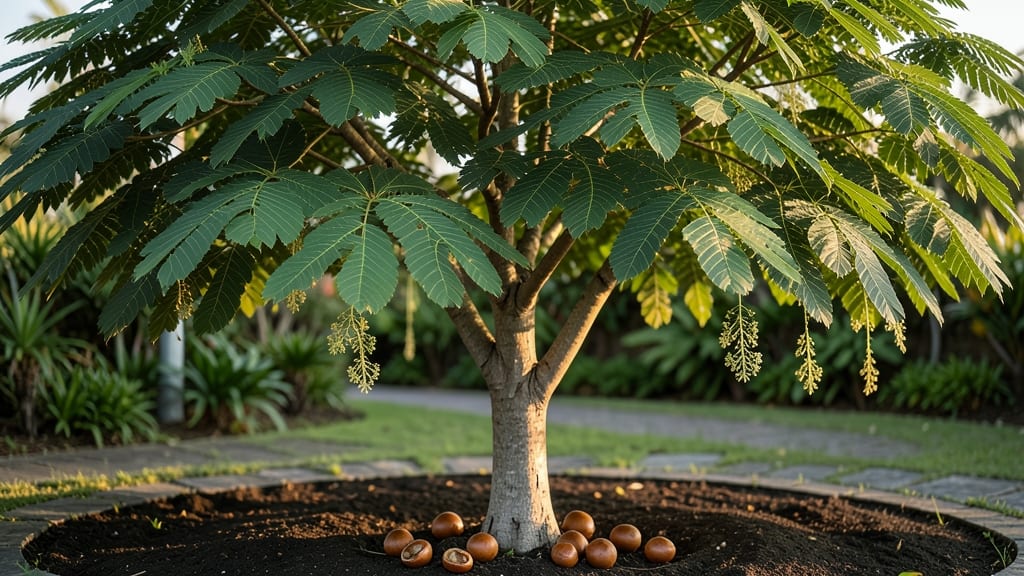
Growing a Caribbean almond tree (Terminalia catappa) means crunchy, sweet nuts and lush shade in just three years. 🌿 I planted mine last spring, and already the glossy leaves cast perfect afternoon shadows—plus, the tree handles heat and humidity like a pro.
This isn’t your average nut tree; it’s drought-tolerant, pest-resistant, and even produces edible leaves used in teas. The secret to success starts with the right spot: full sun and well-draining soil. Mine thrives in sandy loam, but it adapts to poor soil too.
Water deeply once established (after the first year), and watch it grow—no fuss, no drama. Pruning is minimal, mostly to shape or remove dead wood, and the nuts drop naturally when ripe, ready to harvest in late summer.
By year three, you’ll have a mature tree with clusters of oval nuts that taste like a cross between almond and cashew. The leaves turn fiery red in fall, adding seasonal drama. Plus, it’s a bird magnet, so you’ll get free pollinators and pest control.
Perfect for coastal climates, tropical zones, or even large containers in warmer areas. Here’s how to get started without the guesswork!
📚 In This Guide
- What you need
- Instructions
- Tips and common mistakes
- Wrapping up and next steps
What you need
- ● Seeds or saplings: 1–3 Caribbean almond (Terminalia catappa) seeds (or a young nursery-grown tree).
- ● Well-draining soil: 5–10 gallons of a mix of 60% topsoil, 30% sand, and 10% compost (or potting mix for containers).
- ○ Pot (optional for saplings): 1–2 10–15 gallon containers with drainage holes (if starting indoors).
- ● Pruning tools: 1 pair bypass pruners (for small branches).
- ● 1 pruning saw (for thicker branches).
- ● 1 sterilizing solution (70% isopropyl alcohol or bleach water).
- ● Fertilizer: 1 lb of balanced 10-10-10 fertilizer (or organic alternatives like fish emulsion).
- ● Mulch: 2–3 yards of wood chips or pine straw (to retain moisture).
- ● Watering can or hose: With a gentle spray nozzle for young trees.
- ○ Stakes & ties (optional for young trees): 2–3 wooden stakes and soft garden twine.
- ● Location: A sunny, sheltered spot with 6+ hours of direct sunlight daily (or a greenhouse for saplings).
- ● Climate: Tropical/subtropical zones (USDA Hardiness Zones 10–12; may need indoor care in colder regions).
- ● Safety gear: Gloves (to avoid sap irritation) and long sleeves when pruning.
- ○ Optional extras: 1 pH test kit (ideal soil pH: 6.0–7.5).
- ● 1 tree collar spray (to protect wounds after pruning).
- ● 1 shade cloth (30–50% coverage for young trees in intense heat).
How to grow a thriving Caribbean almond tree
Here's how to nurture this tropical beauty from seed to nut-bearing tree in just three years.
🌱 Step 1: Start with Fresh, Viable Seeds
Caribbean almond seeds need 3-4 months of warm, moist stratification to break dormancy. Remove the hard outer shell by gently tapping it against a hard surface until it cracks open—don't force it or you'll damage the seed inside. Soak the exposed seed in warm water for 24 hours before planting.
Fill a small pot with well-draining potting mix and plant the seed 1 inch deep, leaving the pointed end facing upward. Keep the soil consistently moist but never soggy. Place the pot in a location with bright, indirect light and maintain temperatures between 70-80°F.
Germination can take 4-8 weeks, so patience is key. You'll know it's working when you see the first signs of a sprout pushing through the soil—this is your signal to keep the moisture steady and the light gentle.
☀️ Step 2: Transplant to a Larger Container
Once the seedling reaches 4-6 inches tall with 3-4 true leaves, it's ready for its first transplant. Choose a 5-gallon container with drainage holes and fill it with a mix of potting soil and perlite (3:1 ratio) to ensure aeration.
Gently remove the seedling from its current pot, loosen the roots if they're circling, and place it in the center of the new container. Fill around the roots with soil, pressing lightly to remove air pockets. Water thoroughly until it drains from the bottom.
Move the container to a spot with 6+ hours of morning sun and afternoon shade to prevent leaf scorch. Caribbean almond trees love humidity, so mist the leaves occasionally or place the pot on a tray of pebbles filled with water to increase moisture around the plant.
🪴 Step 3: Acclimate to Outdoor Conditions
After 6-8 weeks in its larger container, your seedling should be strong enough to handle outdoor conditions. Choose a location with partial shade and protection from strong winds. Gradually introduce it to outdoor temperatures by placing it outside for 1-2 hours daily, increasing the time over 10-14 days.
Once fully acclimated, plant it in the ground or a 15-gallon container if you're in a cooler climate. The soil should be well-draining and slightly acidic, with a pH between 5.5-6.5. Dig a hole twice as wide as the root ball but only as deep as the container it came in.
Water deeply after planting to settle the soil and encourage root growth. Mulch around the base with 2-3 inches of organic mulch to retain moisture and regulate soil temperature. Avoid fertilizing for the first 3 months to allow the roots to establish.
✂️ Step 4: Prune and Fertilize for Growth
Prune your Caribbean almond tree in late winter or early spring before new growth begins. Remove any dead, diseased, or crossing branches using clean, sharp pruners. Cut just above a leaf node at a 45-degree angle to encourage healthy regrowth.
Fertilize in early spring with a balanced, slow-release fertilizer (10-10-10 ratio). Apply ½ cup per year of tree age around the drip line, keeping it 6 inches away from the trunk. Water the area thoroughly after applying fertilizer to help it reach the roots.
Keep the soil consistently moist but not waterlogged, especially during the first 2 years of growth. Caribbean almond trees are drought-tolerant once established, but young trees need regular watering to thrive. You'll see new leaves and branches forming within 6-8 weeks of proper care.
🌿 Step 5: Encourage Flowering and Nut Production
By the time your tree is 3 years old, it should be ready to produce flowers and nuts. To encourage flowering, ensure it gets full sun for at least 6 hours daily and maintain consistent watering. Caribbean almond trees are self-pollinating, but you can improve yields by gently shaking the branches during the flowering season to help pollen spread.
Once the nuts form, they'll take about 3-4 months to mature. Harvest them when they turn brown and hard and fall easily from the tree. Soak the nuts in warm water for 24 hours to soften the shell before cracking them open to reveal the edible seed inside.
With proper care, your Caribbean almond tree can live for decades and produce nuts year after year. Enjoy the process of nurturing this tropical beauty and the delicious rewards it brings!
Tips & tricks for growing a Caribbean almond tree
These insider insights will help you avoid common pitfalls and maximize your tropical tree's potential.
Stratification Secret: The 3-4 months of warm, moist stratification in Step 1 is non-negotiable—this mimics the tree's natural tropical environment and breaks its dormancy. I've learned the hard way that skipping this step results in seeds that either never sprout or produce weak seedlings. Use a seedling heat mat set to 75°F during stratification for more consistent results.
Transplant Timing: When your seedling reaches 4-6 inches with 3-4 true leaves, don't rush the transplant to a 5-gallon container. The 6-8 weeks in its larger container gives roots time to establish before facing outdoor conditions. I've seen seedlings shock and die when transplanted too soon—watch for those true leaves as your clear signal.
Acclimation Strategy: The gradual outdoor introduction in Step 3 is where many growers fail. Start with just 1-2 hours daily and increase over 10-14 days—this prevents sunburn and temperature shock. I've had success using shade cloth during the first few outdoor sessions, especially in hot climates. Remember, sudden changes are the enemy of young tropical plants.
Pruning Precision: When pruning in late winter/early spring, focus on removing crossing branches first—they compete for sunlight and nutrients. The 45-degree angle cut just above a leaf node encourages new growth while preventing disease. I always sterilize my pruners with rubbing alcohol between cuts to prevent spreading any potential pathogens.
Pro Tips for Caribbean Almond Tree
- These insider insights will help you avoid common pitfalls and maximize your tropical tree's potential.
- Stratification Secret: The 3-4 months of warm, moist stratification in Step 1 is non-negotiable—this mimics the tree's natural tropical environment and breaks its dormancy.
- Transplant Timing: When your seedling reaches 4-6 inches with 3-4 true leaves, don't rush the transplant to a 5-gallon container.
Frequently asked questions
Got questions about growing your own Caribbean almond tree? You’re not alone! Here are answers to the most common queries—from pruning to harvest timing and everything in between.
How long does it take for a Caribbean almond tree to bear nuts?
A healthy Caribbean almond tree can start producing nuts in 2–3 years with proper care—sunlight, well-draining soil, and regular watering. Patience pays off, though! Young trees focus on root growth first, so avoid heavy harvesting until they’re established.
When and how should I prune my Caribbean almond tree?
Prune in late winter or early spring (before new growth starts) to shape the tree and remove dead/diseased branches. Use clean, sharp shears to cut at a 45° angle just above a bud. Avoid over-pruning—aim to keep the canopy open for sunlight and airflow. Pro tip: Thin out crowded branches to boost nut production!
Can I grow a Caribbean almond tree in a pot, or does it need ground planting?
Yes! Start in a 15–20 gallon pot with drainage holes, using a mix of potting soil and perlite. Move to the ground once roots outgrow the container (usually after 1–2 years). Just ensure the pot gets full sun (6+ hours/day) and deep watering. Container-grown trees may need winter protection in cooler climates.
What pests or diseases should I watch for with Caribbean almond trees?
Common issues include:
- Scale insects: Look for sticky residue on leaves—treat with neem oil or insecticidal soap.
- Root rot: Overwatering or poor drainage? Improve soil aeration and reduce watering.
- Fungal spots: Prune infected leaves and apply copper fungicide if needed.
Are Caribbean almonds edible raw, or do they need processing?
Yes, the nuts are edible raw but have a tough outer shell—crack them open with a hammer or nutcracker! Toast them lightly for enhanced flavor. Warning: Always confirm the tree isn’t treated with pesticides if harvesting from wild sources. Store shelled nuts in a cool, dry place for up to 6 months.
Wrapping up and next steps
The Caribbean almond tree isn’t just a tropical beauty—it’s a rewarding investment for patient gardeners. With the right soil, pruning know-how, and a little TLC, you can enjoy sweet, edible nuts in just three years!
Whether you’re a seasoned grower or a beginner, this fast-growing tree proves that tropical dreams can become reality with persistence.
Ready to take the next step? Start small—plant a seedling or sapling today, and watch your backyard transform into a nut-producing oasis! 🌱✨