
Plants
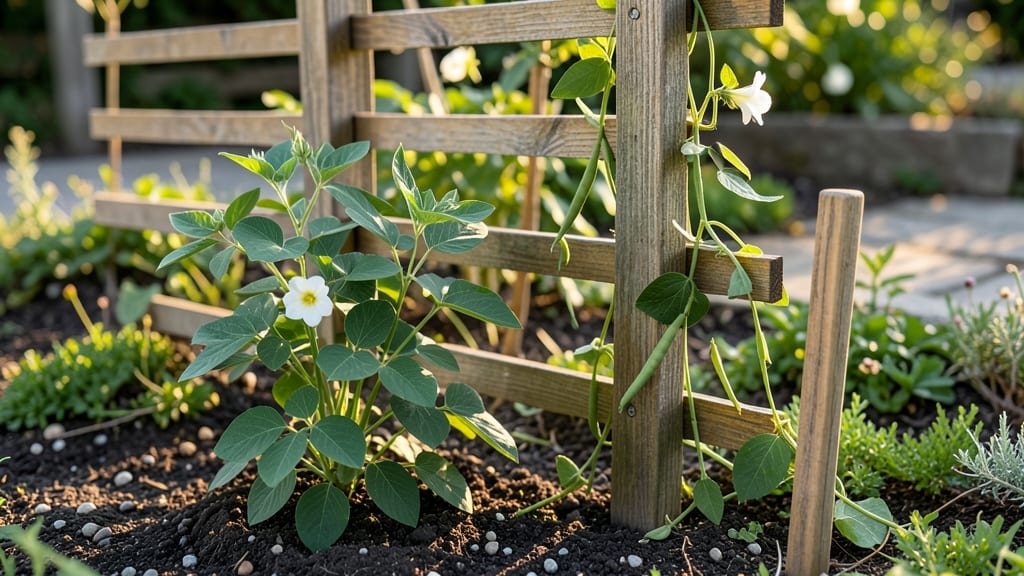
Whether bean plants need a trellis depends on the variety: bush beans grow low to the ground and don't require support, while pole beans benefit from vertical training for better airflow and higher yields. Trellising can also extend harvest time and save garden space.
Not all bean varieties demand vertical support—bush beans naturally sprawl in compact mounds, making them ideal for ground planting. 🌱 However, pole beans climb naturally, and training them upward prevents sprawling, which reduces disease risk by improving airflow.
I've found that trellising pole beans often leads to longer harvest periods since pods ripen more evenly when exposed to consistent sunlight.
For gardeners with limited space, vertical growing with trellises maximizes yield per square foot. The right support system—whether it's simple stakes, A-frame cages, or string systems—can make all the difference in keeping plants healthy and productive.
Bush beans, on the other hand, thrive without any support, making them perfect for small gardens or containers.
💡 In This Article
- How Trellising Affects Bean Plant Growth and Yield
- Choosing the Right Trellis for Your Bean Variety
How trellising affects bean plant growth and yield
Trellising pole beans transforms their growth pattern by redirecting energy from sprawling vines to upward expansion.
When left unsupported, pole beans can sprawl up to 6 feet wide, competing for sunlight and nutrients with neighboring plants. 🌿 The trellis acts like a scaffold, allowing vines to climb vertically—this exposes leaves to 20-30% more sunlight than ground-level growth, which boosts photosynthesis and sugar production in the pods.
Studies show trellised pole beans can produce 25-50% more yield per plant compared to unsupported vines.
The vertical structure also creates critical airflow around the plant. Ground-level growth traps moisture near the foliage, creating ideal conditions for fungal diseases like rust or powdery mildew.
A trellis elevates the plant canopy, reducing humidity at leaf level by 15-20%—this simple change can cut disease incidence by nearly half. 🌬️ The pods themselves benefit too: when trained upward, they develop more evenly and ripen over a longer period, giving you a staggered harvest rather than a sudden glut.
Bush beans, however, have evolved to thrive without support. Their compact growth habit keeps foliage close to the ground, where it naturally receives balanced sunlight without competition.
The bush structure also conserves energy that would otherwise go into vine production—this energy instead fuels pod development. 🌱 What's fascinating is how bush beans' root systems adapt: they spread wider to stabilize the plant's low center of gravity, creating a self-supporting system that eliminates the need for external structures.
For gardeners, this means choosing the right variety is just as important as choosing support. Pole beans like 'Kentucky Wonder' or 'Rattlesnake' will struggle without trellising, while bush varieties like 'Blue Lake' or 'Contender' will sprawl healthily without any assistance.
The key difference lies in their growth hormones: pole beans produce more auxin, a plant hormone that promotes elongation, while bush beans have a genetic brake on excessive vine growth.
Another physiological benefit of trellising is reduced pod damage. When pole beans sprawl, the lower pods often rot from contact with damp soil or get crushed under the plant's weight.
A trellis keeps pods 6-12 inches above ground, protecting them from soil-borne pathogens and physical damage. 🌱 This protection translates directly to higher-quality harvests—pods stay cleaner and maintain better texture until you're ready to pick them.
Consider this real-world example: In a 4' x 8' garden plot, trellised pole beans can produce enough beans to feed a family of four for months, while bush beans in the same space might yield only 60-70% as much.
The vertical growing method essentially stacks your harvest potential, making it a game-changer for small spaces or urban gardeners with limited real estate.