
Companion Plants
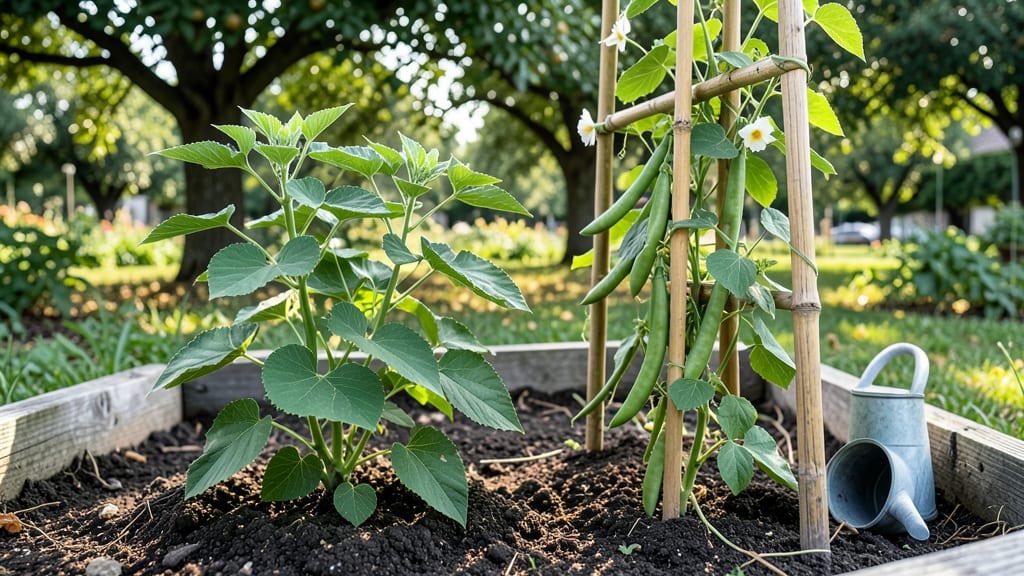
To determine how many green bean plants per person you need, plan for 3 to 5 plants for fresh eating or 10 to 15 plants if you're preserving through drying or freezing. Bush varieties deliver quicker harvests, while pole beans produce more over time but need vertical support.
Green beans are one of those crops where a little planning goes a long way—especially when you're balancing fresh eating with storage needs. 🌱 For fresh harvests, 3-5 plants per person ensures you won't overwhelm your kitchen, while the jump to 10-15 plants makes sense if you're canning or freezing for winter.
The key difference lies in plant type: bush beans give you a 3-4 week harvest window with minimal space, while pole beans climb and produce for 6-8 weeks but require trellises or stakes. I always recommend starting with bush beans for beginners—they're forgiving and fast.
What's interesting is how spacing plays into this math. Bush beans need 4-6 inches apart in rows spaced 18-24 inches apart, while pole beans can stretch to 6-8 inches apart in wider rows. This isn't just about yield—proper spacing prevents fungal diseases like rust, which thrive in crowded, humid conditions.
For small gardens, I've found that hill planting (grouping 3-4 plants together) works surprisingly well, giving you more flexibility with limited space while still maximizing production.
💡 In This Article
- Green Bean Yield Math: Calculating Plants Needed for Harvest Goals
- Optimal Green Bean Plant Spacing and Garden Layout Tips
Green bean yield math: calculating plants needed for harvest goals
The yield difference between bush and pole green beans comes down to their growth habits and production cycles.
A single bush bean plant typically produces 6-10 pods per week during its 3-4 week harvest window, while pole beans yield 10-20 pods per week over a longer 6-8 week period. 🌱 This means one pole bean plant can outproduce a bush plant by 2-3 times over the season, but you'll need vertical space.
For example, if you want 1 pound of fresh beans per week (about 10-12 pods), you'd need just 2 bush plants for a few weeks, but 1 pole plant could sustain that for a full month.
Storage goals change the math dramatically. When drying or freezing, you're preserving the entire harvest, not just fresh pods.
A single bush plant yields about ½ to 1 pound of dried beans per season, while pole beans can produce 1-2 pounds—that's why you need 10-15 plants per person for preservation.
The key is understanding that dried beans are 80% lighter by weight than fresh, so you'll need more raw material to get the same volume.
For instance, 1 pound of fresh beans shrinks to just 2-3 ounces when dried, meaning you'd need 5-6 times more fresh beans to match your fresh harvest quantities.
Harvest frequency also impacts your plant count. Bush beans produce all at once, so you'll need more plants to stagger your harvests. For example, planting 3 plants every 2 weeks ensures a continuous supply.
Pole beans, however, produce continuously as they climb, so 3-4 pole plants can replace 6-8 bush plants in terms of total yield over time. The trade-off? Pole beans require 5-6 feet of vertical space per plant, while bush beans fit neatly in 1-2 feet of space.
This spatial efficiency makes bush beans ideal for small gardens or container growing.
Another factor is seed variety. Some heirloom varieties like 'Blue Lake' produce 20-30% more pods than standard hybrids, while others like 'Kentucky Wonder' (a pole bean) can reach 10 feet tall with yields of 2-3 pounds per plant.
If you're growing for seed saving, you'll need even more plants—typically 20-30 plants per variety to maintain genetic diversity. The rule of thumb is to double your fresh-eating plant count if you're also saving seeds, as many plants won't produce viable seed pods.
For urban gardeners with limited space, consider 'Mascotte' bush beans—they're compact (12-18 inches tall) and produce 5-7 pods per plant per week. In contrast, 'Blue Lake' pole beans can yield 15-20 pods per plant per week but need trellises.
The choice often comes down to whether you prioritize space efficiency (bush) or long-term yield (pole). Both strategies work, but your garden layout will dictate which path makes more sense.
Here's a quick yield comparison to visualize the differences:
- Bush beans: 6-10 pods/week/plant × 4 weeks = 24-40 pods/season/plant (~1-2 lbs fresh)
- Pole beans: 10-20 pods/week/plant × 8 weeks = 80-160 pods/season/plant (~2-4 lbs fresh)
- Dried yield: 1 lb fresh = 2-3 oz dried (so 10-15 plants needed for 1 lb dried)
Understanding these numbers helps you plan not just for fresh eating, but for preserving your harvest through winter. The beauty of green beans is how adaptable they are—whether you're growing in a backyard, balcony containers, or a community garden, the math scales to fit your space and goals. 🌿