
How To
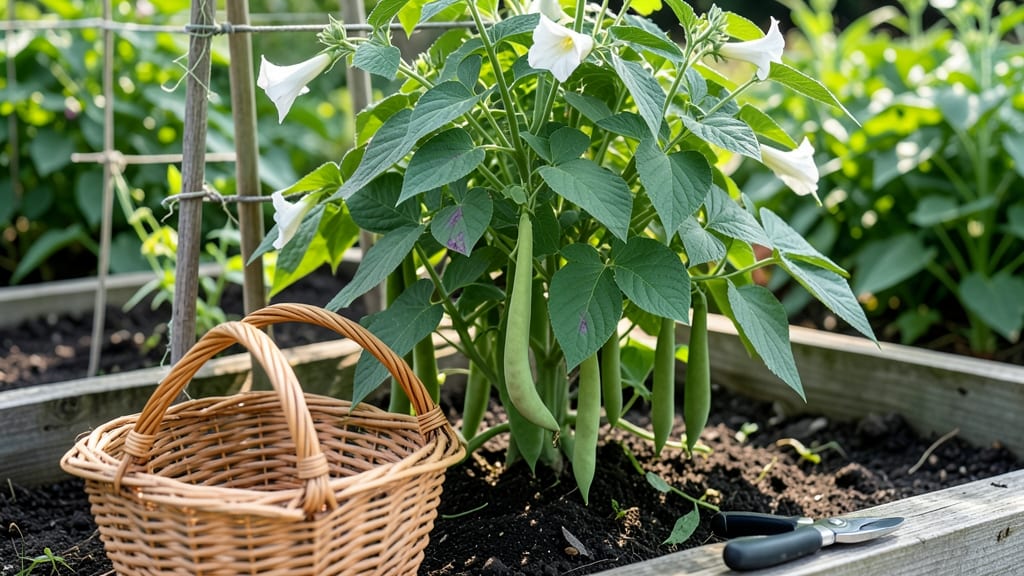
How to know when green beans are ready to harvest means the difference between crisp, tender pods and tough, stringy disappointment—and the secret is simpler than you think.
Picking green beans at the wrong time means the difference between crisp, tender pods and tough, stringy disappointment—so how do you nail that perfect harvest window?
Most gardeners rely on size alone, but the real key is the pod snap test, a quick trick that tells you exactly when your beans are at their peak. A firm, crisp snap means it’s time to pick, while a dull thud signals they’ve overstayed their welcome.
Below, I’ll walk you through the exact steps to test your beans, plus size and color clues to confirm readiness. You’ll never second-guess harvest time again!


The pod snap test: the ultimate green bean harvest indicator
There’s nothing worse than biting into a green bean that’s tough as a shoe string—yet the pod snap test is the foolproof way to guarantee crisp, tender harvests every time. This classic method works for bush beans and pole beans alike, giving you an instant answer without guessing.
The secret lies in how the pod sounds when you bend it, not just how it looks.
Why does this test work? Green beans reach their peak flavor and texture when their cell walls are firm but flexible—like a fresh green bean should be. When pods mature past this stage, their starch content converts to sugars and fibers, turning them woody.
The snap test cuts through the guesswork by letting the plant itself tell you when it’s ready.
- 1
- 2
- 3
- 4
- 5
Pro tip: The snap test works best in the morning when pods are hydrated. If you test in the afternoon heat, pods may feel slightly softer—just wait until the next morning for a more accurate result.
For pole beans, focus on the middle section of the vine where pods are most abundant. Bush beans often ripen more uniformly, so you can test pods from multiple branches. Either way, consistency is key—once you hear that perfect snap, you’ll never second-guess your harvest again!
What if your pods don’t snap at all? This usually means they’re overripe or the plant is underwatered. Check your irrigation schedule and harvest more frequently to encourage new pod development.
The snap test isn’t just a tool—it’s your green bean’s way of whispering, “Pick me now!”
Remember, the earlier you harvest, the more pods your plant will produce. Green beans are continuous producers, so regular harvesting (every 2-3 days) keeps them coming back for weeks. Once you master the snap test, you’ll transform from a guessing gardener to a harvesting pro.
🌱
Size, color, and texture clues beyond the snap test
While the pod snap test is foolproof for most gardeners, I’ve learned to cross-check with size, color, and texture clues to catch those perfect moments—especially when humidity or heat clouds my judgment.
These secondary indicators act as backup confirmation, ensuring you never miss the crisp-tender window that defines great green beans.
For bush varieties, aim for pods that measure between 4 to 6 inches long.
This range ensures they’re fully developed but haven’t started turning woody. Pole beans, which mature slightly slower, should also hit this length, though some heirloom types like 'Kentucky Wonder' can stretch to 8 inches while staying tender.
Always measure a few pods to account for natural variation in your plants.
| Variety Type | Ideal Pod Length | Color Readiness | Texture Check |
|---|---|---|---|
| Bush Beans | 4-6 inches | Bright green (no yellowing) | Firm, crisp when bent |
| Pole Beans | 5-8 inches | Deep green (purple/red varieties: vibrant hue) | Slightly thicker walls, still crisp |
| Heirloom (e.g., 'Blue Lake') | 4-5 inches | Uniform color, no streaks | Thin but firm walls |
| Wax Beans (e.g., 'Blue Lake Wax') | 5-7 inches | Creamy-white with green seams | Slightly waxy texture |
Color is your next clue—bright, uniform green signals peak ripeness for standard varieties.
Watch for yellowing tips or dull patches, which mean the pods are past their prime. Purple or red varieties like 'Dragon Tongue' should retain their vibrant hue, while wax beans will show crisp white stripes along their seams.
Even a single pod with fading color is a sign to harvest sooner.
Texture is where many gardeners trip up. A ready-to-harvest pod should feel firm yet slightly yielding—like a fresh asparagus spear. Press gently: if it springs back instead of denting, it’s perfect.
Overripe beans feel soft or mushy, while underripe ones are hard and woody. Pro tip: Run your thumbnail along the pod’s edge—it should leave a smooth, unbroken line.
Don’t overlook the seed stage inside the pod. At peak ripeness, seeds are tiny and barely visible through the pod’s skin. If you can see large, prominent seeds, the bean has overmatured and will taste bitter.
For flat-podded varieties like 'Contender,' even a slight bulge means it’s time to harvest. I once missed this cue and ended up with stringy, seedy messes—a lesson I won’t repeat!
Finally, pay attention to growth patterns. If most pods on a plant hit your target size simultaneously, harvest them all at once to encourage continuous production. In my Zone 6a garden, I’ve found that morning harvests yield the crispiest beans, as evening heat can accelerate overripening.
Keep a small basket nearby and check your plants every 2-3 days during peak season.