
Flowers
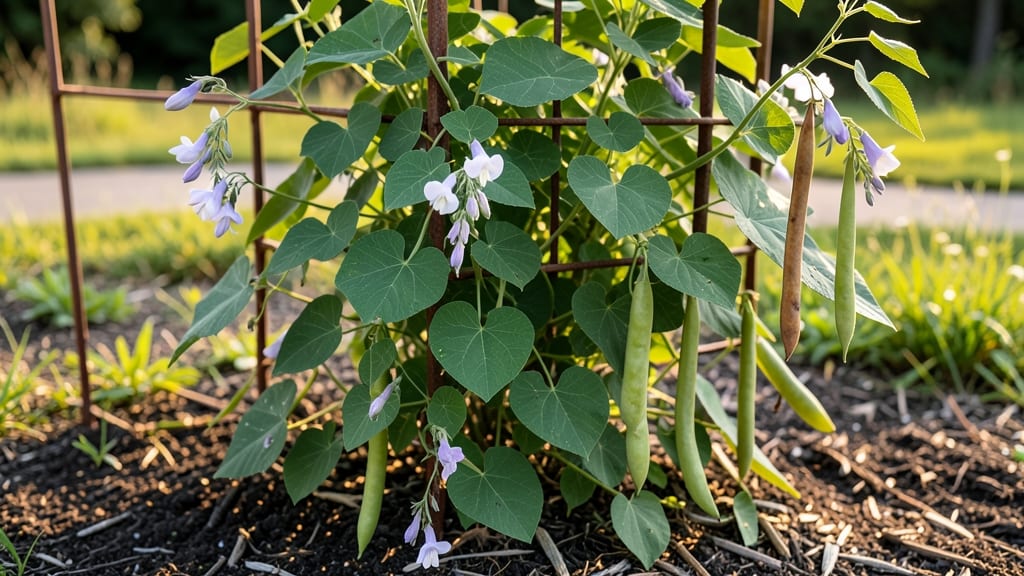
Deciding whether the hyacinth bean vine is annual or perennial depends on your climate: it grows as an annual in most regions but can act like a short-lived perennial in frost-free zones with proper winter care.
This vine's growth cycle is all about temperature sensitivity.
In cooler climates, frost kills the plant back after its first season, but the seeds often sprout again naturally the following spring. 🌱 What makes it special is its ability to self-seed prolifically—if you let it, you might end up with a continuous display of those striking blue flowers year after year without replanting.
The key difference from true perennials is that hyacinth beans don't regrow from the same root system after winter; instead, they rely on fresh seedlings to continue the cycle.
For gardeners in frost-prone areas, the best strategy is to treat it as an annual but let the seeds drop to the ground.
In warmer zones, you can extend its lifespan by providing winter protection like thick mulch or growing it in containers that you can move indoors during cold snaps. This way, you get to enjoy its vibrant blooms for multiple seasons without the commitment of a true perennial.
💡 In This Article
- Why Hyacinth Bean Vines Die Back After One Season
- Extending Hyacinth Bean Vine Lifespan: Annual vs Perennial Care Tips
Why hyacinth bean vines die back after one season
The hyacinth bean vine (Lablab purpureus) follows a growth pattern triggered by temperature shifts. Unlike true perennials such as sweet peas or morning glories, its above-ground parts freeze at temperatures below 28°F, killing the vine entirely.
This happens because hyacinth beans are tropical in origin and lack the cold-hardy root systems of perennials. When frost hits, the entire plant—stems, leaves, and flowers—turns brown and crispy within days, cutting off photosynthesis and energy storage.
The real magic happens underground (or on the ground). While the vine itself dies, its seeds often remain viable for years in the soil.
These seeds germinate naturally when spring warmth returns, creating a self-sustaining cycle. 🌱 The key difference from perennials is that hyacinth beans don't regrow from dormant roots—they start fresh each season from new seedlings. This explains why some gardeners see "volunteer" plants popping up year after year without replanting.
Botanists classify hyacinth beans as "short-day" plants, meaning their flowering cycle is triggered by shorter daylight hours in late summer. This adaptation explains why they bloom prolifically in one season but can't survive the long-term stress of winter.
True perennials like clematis or hostas, however, have specialized root structures that store energy through winter dormancy, allowing them to regrow each spring from the same plant.
What most gardeners don't realize is that hyacinth beans actually prefer this annual cycle. Their rapid growth and seed production make them incredibly efficient at spreading, which is why they're often considered invasive in some regions.
The trade-off is that they deliver stunning blue-purple flower displays for one season before resetting—unlike perennials that might take years to establish.
For comparison, morning glories (another popular vine) can be annual or perennial depending on climate, but they develop woody stems that can survive light frosts. Hyacinth beans, however, lack this resilience—their stems are herbaceous and freeze solid.
This fundamental difference explains why they're classified as annuals in most growing zones, despite their self-seeding habits.
The frost sensitivity isn't just about temperature—it's about the plant's entire metabolic shutdown. When temperatures drop below 32°F, cellular damage occurs within hours, preventing any chance of regrowth.
This is why gardeners in Zone 7 and below typically treat them as annuals, while those in Zone 9+ can sometimes coax multiple seasons from the same plant with careful protection.