
Flowers
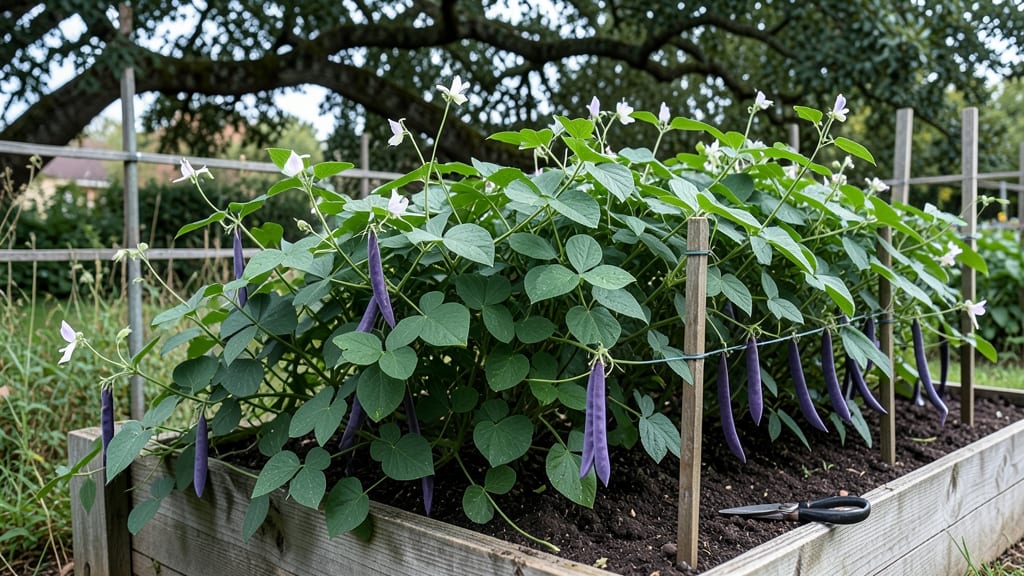
Growing a purple bean vine is like inviting a fast-growing, showstopping star into your garden—its vibrant purple blooms climb trellises in record time. 🌿 I’ve watched mine transform a bare corner into a lush vertical display within just 8 weeks, proving this isn’t just another pretty vine, but a game-changer for small spaces.
The secret? Matching its love for sunlight, well-draining soil, and a sturdy support to twine around. This vine thrives in full sun to partial shade, making it perfect for fences, arbors, or even hanging baskets where its cascading flowers can spill over edges.
Plant seeds ½ inch deep in spring after the last frost, spacing them 4-6 inches apart—they germinate quickly and grow aggressively. Water consistently to keep the soil moist but not soggy, and watch as those purple blooms (and edible beans, if you’re lucky!) appear faster than most annuals.
By midsummer, you’ll have a dramatic floral display that attracts hummingbirds and butterflies while adding vertical interest to patios or balconies. The best part? It’s low-maintenance—just prune back leggy growth to encourage bushier blooms, and you’re set for a season of color.
Even in tight spaces, this vine delivers maximum impact with minimal effort. Whether you’re dressing up a trellis, hiding an unsightly wall, or simply craving a burst of purple, this vine is your go-to.
Just don’t blame me if your neighbors start asking where you got it—it’s that unexpectedly showy.
📚 In This Guide
- What you need
- Instructions
- Tips and common mistakes
- Wrapping up and next steps
What you need
- ● Purple Bean Vine Seeds or Seedlings: 3–5 seeds (if starting from scratch) or 1–2 healthy seedlings (for faster growth).
- ● Choose Phaseolus coccineus (runner beans) or Wisteria sinensis (for climbing wisteria-like blooms).
- ● Growing Containers or Garden Bed: Containers: 1–2 large pots (10–12 inches deep) with drainage holes or
- ● Garden Bed: Well-draining soil in a sunny spot (6+ hours of light daily).
- ● High-Quality Potting Soil: 5–10 gallons of well-draining soil mix (add perlite or compost for aeration).
- ● Trellis or Support Structure: 1–2 sturdy trellises (6–8 feet tall), arbors, or fence panels for climbing varieties.
- ● Watering Can or Hose: With a gentle spray nozzle for hydration.
- ○ Fertilizer (Optional but Helpful): Balanced 10-10-10 fertilizer or compost tea for nutrient boosts.
- ● Garden Gloves: To protect hands while planting or pruning.
- ● Trowel or Small Shovel: For digging and transplanting.
- ● Pruning Shears: For trimming dead leaves or shaping the vine.
- ○ Mulch (Optional): Straw or wood chips to retain moisture and suppress weeds.
- ● Sunlight Check: Confirm your space gets full sun (6+ hours/day)—purple bean vines thrive in warmth!
- ● Patience (Most Important!): 🌱 Vines grow fast but need time to climb and bloom.
Step-by-step instructions for cultivating purple bean vines
Here's how to coax this stunning climber into rapid, vibrant growth—ideal for trellises, fences, or even balcony railings.
🌱 Step 1: Choose the Right Location and Prep the Soil
Purple bean vines thrive in full sun (at least 6-8 hours daily) and warm soil. Pick a spot sheltered from strong winds, as their delicate vines can snap easily. I always test soil drainage first—these plants hate soggy roots. Amend heavy clay with 2-3 inches of compost to improve aeration and fertility.
Work the compost into the top 6-8 inches of soil, breaking up any compacted layers. Purple beans prefer slightly acidic to neutral soil (pH 6.0-7.0). If your soil runs alkaline, mix in peat moss to lower the pH slightly. The goal is loose, crumbly soil that holds moisture without becoming waterlogged.
☀️ Step 2: Install a Sturdy Trellis or Support Structure
These vines grow 10-15 feet tall in a single season, so your support must be at least 6 feet high and anchored securely. I recommend metal or wooden trellises for durability, or use a strong fence with twine or garden netting for vertical guidance. Install the trellis 2-3 weeks before planting to give roots time to establish before rapid vine growth begins.
Space multiple trellises 3-4 feet apart to allow airflow and prevent fungal diseases. Avoid plastic supports—they can overheat in summer and weaken the structure. If using a fence, attach horizontal crossbars every 12-18 inches to give vines something to cling to as they climb.
🌱 Step 3: Plant Seeds at the Right Depth and Spacing
Sow seeds 1 inch deep and 4-6 inches apart in rows 18-24 inches apart. Purple bean seeds germinate best in warm soil (70-85°F), so wait until all frost danger has passed in spring. I like to pre-soak seeds overnight in lukewarm water to speed up germination—this softens the seed coat and encourages faster sprouting.
Plant 4-5 seeds per hill (cluster) to ensure at least one strong vine emerges. Thin to the strongest seedling once they reach 3-4 inches tall. Water gently after planting to settle the soil, but avoid overwatering—this can cause seeds to rot before they sprout.
💧 Step 4: Water Deeply and Train Vines Early
Keep soil consistently moist (not soggy) for the first 4-6 weeks while roots establish. Water deeply 1-2 times per week, aiming for 1 inch of water per week. Purple beans are drought-tolerant once established, but young plants need steady moisture. You'll know you're watering right when the top 2 inches of soil feel damp but not wet.
As vines reach 6-8 inches tall, gently guide them onto the trellis or support structure. Use soft twine or plant ties to secure them loosely—tight bindings can restrict growth. Watch for tendrils (the curly structures at leaf nodes) that help vines climb naturally. Encourage this by weaving vines through the trellis rather than forcing them upward.
✂️ Step 5: Prune and Harvest for Continuous Blooms
Pinch back the top set of leaves when the main vine reaches 3-4 feet tall to encourage bushier growth. This redirects energy from vertical growth to lateral branches, which produce more flowers and pods. Remove any yellowing or diseased leaves immediately to prevent spread—purple beans are susceptible to rust and powdery mildew in humid conditions.
Harvest pods when they're 4-6 inches long and firm to the touch for best flavor. Check vines every 2-3 days during peak production—overripe pods toughen and lose sweetness. Cut stems just above a leaf node when harvesting to encourage more growth. With regular pruning and harvesting, you'll enjoy continuous blooms and pods from early summer through fall.
Tips & tricks for growing lush purple bean vines
Transforming your garden into a vertical purple paradise takes more than just planting seeds—here's what I've learned to accelerate growth and prevent common pitfalls.
Sunlight Optimization: While the instructions call for 6-8 hours of full sun daily, I've found that positioning your trellis to capture morning sun and afternoon shade in hot climates can actually improve vine longevity. Purple beans handle intense afternoon heat poorly, so if you notice leaves wilting, move the trellis slightly to avoid the hottest hours. The goal is consistent light exposure without heat stress—this is especially critical in zones with summer temperatures exceeding 85°F.
Soil Preparation Pro Tip: The instructions recommend 2-3 inches of compost mixed into the top 6-8 inches of soil, but I take this a step further by adding a handful of worm castings (optional) to the planting hole. These provide immediate microbial activity that boosts root development. For containers, use a mix of 60% potting soil, 30% compost, and 10% perlite—this ensures proper drainage while maintaining moisture retention during those critical first 4-6 weeks of establishment.
Trellis Training Technique: When training vines onto your trellis at the 6-8 inch mark, I've discovered that using jute twine instead of plastic ties allows the vines to grow slightly thicker over time. The twine loosens naturally as the vine expands, preventing the constriction that can stunt growth. For particularly vigorous vines, I also weave in horizontal supports every 12 inches to create a lattice effect—this encourages more lateral branching and ultimately more pods.
Harvesting Hack: The instructions specify harvesting pods when they're 4-6 inches long, but I've found that checking for color changes gives an earlier warning. When pods shift from deep purple to a slightly lighter hue near the seam, that's your cue to harvest within 24 hours. This color shift indicates the starches are converting to sugars, which means peak flavor. I also harvest in the morning when pods are coolest—this preserves their crisp texture for longer storage.
Pro Tips for Purple Bean Vine
- Transforming your garden into a vertical purple paradise takes more than just planting seeds—here's what I've learned to accelerate growth and prevent common pitfalls.
- Sunlight Optimization: While the instructions call for 6-8 hours of full sun daily, I've found that positioning your trellis to capture morning sun and afternoon shade in hot climates can actually improve vine longevity.
- Soil Preparation Pro Tip: The instructions recommend 2-3 inches of compost mixed into the top 6-8 inches of soil, but I take this a step further by adding a handful of worm castings (optional) to the planting hole.
Frequently asked questions
Got questions about growing purple bean vine? You’re not alone! Here are some of the most common queries—plus quick, practical answers to help you cultivate this stunning climber with confidence.
How fast does purple bean vine grow, and when will it bloom?
The Clitoria ternatea (purple bean vine) is a fast grower, often reaching 6–10 feet in a single season if given proper support. With ideal conditions—warmth, sunlight, and regular watering—you can expect vibrant purple blooms within 60–90 days after planting. Patience pays off—the first flowers may appear modestly, but once established, it bursts into color!
Can I grow purple bean vine in containers, or does it need a garden bed?
This vine thrives in containers as long as the pot is at least 12–18 inches deep and has drainage holes. Use a lightweight potting mix and a trellis or obelisk for support. For small spaces, a 5-gallon container works well, but larger pots (10+ gallons) are better for heavy blooms. Pro tip: Move containers indoors or to a sheltered spot if night temps drop below 50°F.
Why aren’t my purple bean vine leaves turning purple, and how do I fix it?
Purple foliage is a sun-loving trait—if your leaves stay green, it’s likely due to too much shade. Relocate your vine to a spot with 6+ hours of direct sunlight daily. Overcrowding or poor soil nutrients can also dull the color. Feed with a balanced fertilizer (10-10-10) every 4–6 weeks during the growing season for richer hues.
Is purple bean vine toxic to pets or humans?
Great news: This vine is non-toxic to both pets and humans! While it’s safe to grow around cats, dogs, or kids, always supervise young children to prevent accidental ingestion of large quantities. However, its edible flowers (used in teas and salads) make it a pet-friendly garden star.
What’s the best alternative if I can’t grow purple bean vine?
If your climate is too cool or you’re short on space, try these purple-hued vines:
- Morning Glory (Ipomoea purpurea) – Fast-growing annual with trumpet-shaped blooms.
- Sweet Pea (Lathyrus odoratus) – Fragrant, climbing vine with purple varieties.
- Clematis (Clematis spp.) – Drought-tolerant with purple blooms (needs winter protection).
Wrapping up and next steps
Growing a purple bean vine is a rewarding way to add vibrant color and vertical charm to your small-space garden—without needing a green thumb! 🌿 With the right support, sunlight, and care, this fast-climbing beauty will thrive and bring life to your outdoor space.
Whether you’re a beginner or a seasoned gardener, now’s the perfect time to plant, nurture, and enjoy the stunning blooms and edible pods.
Ready to transform your garden? Start by choosing your spot, gather your supplies, and dive in—your future vine awaits! 🌸