
Vegetables
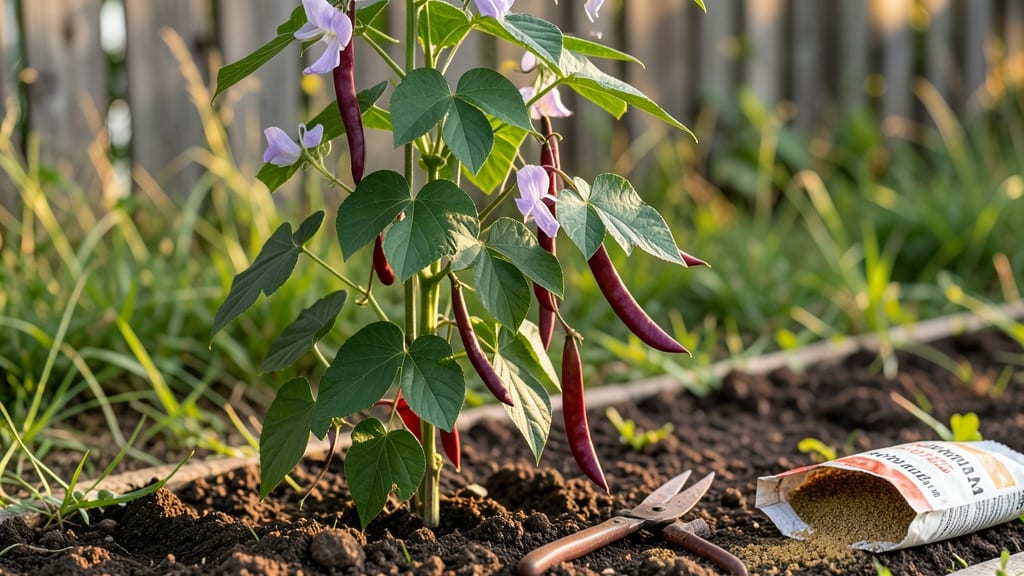
Growing red green beans on poles turns a 4-foot square into a vertical harvest bonanza. 🌱 I planted my first pole beans last summer and harvested three times the yield from the same space—no extra effort, just smarter growing.
The secret lies in choosing the right varieties, setting up supports early, and keeping the vines fed. These beans thrive in well-draining soil with 6-8 hours of sun daily, and they don’t fuss about temperature—just plant after the last frost when soil warms to 60°F. The key to success?
Trellises or sturdy stakes at planting time, so vines don’t waste energy sprawling. I use 6-foot bamboo stakes for my 10-foot rows, and the beans climb like they’re on a jungle gym.
When it’s time to harvest, you’ll pull bright red pods that stay crisp for days—perfect for fresh eating or freezing. Pole beans produce continuously for 6-8 weeks, so you’ll be picking weekly until frost. The more you harvest, the more the plant produces, making this a self-replenishing crop.
Companion planting with cucumbers or corn boosts yields further, while nasturtiums deter pests. Even in small spaces, these pole beans deliver big results with minimal work. Ready to grow upward?
📚 In This Guide
- What you need
- Instructions
- Tips and common mistakes
- Wrapping up and next steps
What you need
- ● Red green bean seeds: Choose a variety like ‘Scarlet Runner’ or ‘Red No. 47’ (1–2 oz or ~50–100 seeds, depending on your space).
- ● Trellis or pole system: Option 1: 6–8 ft tall bamboo stakes or wooden posts (4–6 per 10 ft row).
- ● Option 2: Pre-made trellis netting (5–6 ft tall, 3–4 ft wide).
- ● Option 3: A sturdy fence or pergola (if space allows).
- ● Garden soil: Well-draining, slightly acidic to neutral (pH 6.0–7.0). Amend with compost if needed.
- ● Organic fertilizer: Balanced 10-10-10 or a nitrogen-rich option (e.g., fish emulsion) for early growth.
- ● Mulch: Straw or shredded leaves (2–3 inches) to retain moisture and suppress weeds.
- ● Hand trowel or transplanting tool for planting seeds.
- ● Watering can or hose with a gentle spray nozzle (keep soil moist but not soggy).
- ○ Garden twine or zip ties (optional, to secure vines to trellis).
- ● Pruning shears (for trimming overgrowth or dead vines).
- ● Sunny spot: At least 6–8 hours of direct sunlight daily.
- ● Patience! 🌱 Red green beans take 50–60 days to mature.
- ● Row covers (to protect seedlings from pests or late frosts).
- ● Epsom salt (1 tbsp dissolved in water every 2 weeks for magnesium boost).
- ● Bees or hand pollination tool (if your area lacks pollinators).
- ● Harvest basket or scissors (for easy picking!).
Step-by-step instructions for growing red green beans on poles
Here's how to turn a small garden corner into a high-yielding pole bean factory.
🪴 Step 1: Set Up Your Pole Support System
Choose a sturdy 5-6 foot tall trellis or T-post with 3-4 horizontal wires spaced 12 inches apart. I like using bamboo stakes tied with twine because they're cheap and easy to assemble. Drive the supports into the ground 6-8 inches deep for stability—you don't want them toppling when beans get heavy.
Position poles where they'll get full sun (6+ hours daily) and have at least 18 inches of clear space around them. Red beans need room to sprawl before they climb. If you're using a trellis, place it in a corner or along a fence for maximum space efficiency. This is the moment that matters: proper support now means 3x more beans come harvest time.
🌱 Step 2: Prepare the Soil and Plant Seeds
Work 2-3 inches of compost into the top 6 inches of soil where you'll plant. Red beans prefer well-draining, slightly acidic soil (pH 6.0-6.8). If your soil is heavy clay, mix in 1 part sand to improve drainage. I like to test my soil with a simple pH test kit—beans get cranky if the pH is off.
Plant 4-5 seeds per hill, 1 inch deep and 2 inches apart. Space hills 6-8 inches apart in rows that run parallel to the trellis. Water gently after planting to settle the soil. Here's the thing—red beans germinate best in warm soil (70-85°F), so wait until nighttime temperatures stay above 55°F before planting. You'll see sprouts in 7-14 days.
💧 Step 3: Water and Train the Vines
Keep soil evenly moist but never soggy—beans hate wet feet. Water at the base of the plant in the morning so leaves dry quickly. Once vines reach 6-8 inches tall, gently guide them onto the trellis. I use soft plant ties to secure the main stems without crushing them. Watch for first true leaves—that's your signal to start training upward.
Don't rush the climbing process. Let vines grow 4-6 inches between each tie-up so they develop strong stems. You'll see reddish-purple flowers in about 45-50 days—that's when the magic happens. Real talk: if you skip training, vines will sprawl everywhere, and you'll waste valuable space. A well-trained plant produces more pods and bigger yields.
☀️ Step 4: Maintain and Harvest for Maximum Production
Fertilize lightly with balanced 10-10-10 when flowers first appear—too much nitrogen makes leaves grow fast but beans stay small. Red beans need consistent moisture during pod development, so water 1-1.5 inches per week. You'll know you're doing it right when the soil feels damp 2 inches down but not wet.
Harvest begins when pods reach 4-5 inches long and are firm but tender. Pick every 2-3 days to encourage more production. I like to harvest in the morning when pods are crispest. If you wait too long, beans turn tough and stringy. You'll get continuous harvests for 6-8 weeks if you stay on top of it. Don't let pods dry on the vine—they'll shatter and scatter seeds everywhere.
Tips & tricks for growing pole bean climbers
These simple strategies will help you maximize your harvest and avoid common gardening pitfalls with red green beans.
Support System Stability: When setting up your 5-6 foot trellis or T-post system, use at least three supports for better wind resistance. I learned this the hard way after watching a single-post setup lean dangerously during a summer storm. The 6-8 inch deep planting depth is critical—this prevents toppling when vines get heavy with pods. For extra security, add diagonal cross-bracing between your main supports if you're in a windy area.
Soil Preparation Secret: Don't just add compost—mix it thoroughly into the top 6 inches of soil. I like to use a garden fork to create channels for roots to grow into. For clay-heavy soil, mix in sand before adding compost to prevent compaction. A soil pH test kit is worth the investment—red beans are particular about their pH range of 6.0-6.8, and getting it right means healthier plants from day one.
Training Technique: When your vines reach 6-8 inches tall, start training them immediately. I use soft plant ties made from old T-shirts or fabric strips—they're gentle on stems. The key is to let vines grow 4-6 inches between each tie-up. This gradual training prevents stem damage and encourages stronger growth. Watch for the first true leaves—they're your signal to begin the upward journey.
Harvest Timing: The 4-5 inch pod length is your sweet spot for tender beans. I harvest every 2-3 days in the morning when pods are crispest. Use sharp scissors or pruners to snip pods cleanly—this prevents damaging the plant. If you see pods starting to dry on the vine, harvest immediately to prevent shattering. Morning harvests give you the freshest beans for cooking that same day.
Pro Tips for Red Green Beans
- These simple strategies will help you maximize your harvest and avoid common gardening pitfalls with red green beans.
- Support System Stability: When setting up your 5-6 foot trellis or T-post system, use at least three supports for better wind resistance.
- Soil Preparation Secret: Don't just add compost—mix it thoroughly into the top 6 inches of soil.
Frequently asked questions
Got questions about growing red green beans? You’re not alone—these vibrant climbers are a favorite, but they do come with a few quirks! Here are some of the most common queries to help you grow a thriving, space-saving harvest.
How long does it take for red green beans to grow and produce?
Red green beans typically take 50–60 days from seed to harvest, depending on the variety and growing conditions. Early varieties may produce pods in as little as 45 days, while some heirlooms take closer to 70 days. Plant seeds 1 inch deep and expect the first tender pods to appear when vines are 4–6 feet tall and flowers fade.
Can I grow red green beans in containers or small spaces?
These beans are perfect for vertical gardening—they thrive in 5-gallon containers, hanging baskets, or trellises as long as the roots have room to spread. Choose a container at least 12 inches deep and provide a sturdy trellis or pole for climbing. Just ensure it gets 6–8 hours of sunlight daily and keep soil consistently moist.
What are the most common pests for red green beans, and how do I prevent them?
Watch out for bean beetles, aphids, and Mexican bean beetles, which love munching on leaves and pods. Preventative tips:
- Handpick pests early in the morning when they’re sluggish.
- Use row covers to block flying insects.
- Plant marigolds or nasturtiums nearby as natural repellents.
- Apply neem oil or insecticidal soap if infestations occur.
Can I save seeds from red green beans for next year?
Yes! Red green beans are easy to save if you choose open-pollinated or heirloom varieties. Let a few pods mature fully on the vine (they’ll turn dry and papery), then harvest the seeds inside. Clean, dry, and store them in a cool, dark place for up to 3–4 years. Avoid hybrid varieties, as their seeds won’t produce true-to-type plants.
Are red green beans sweeter than regular green beans?
Many gardeners swear by their slightly sweeter, nuttier flavor compared to standard green beans! The red streaks (from anthocyanins) add a mild earthy taste, though the texture remains tender and crisp. Try them raw in salads, sautéed with garlic, or roasted for a unique twist. Pro tip: Harvest when pods are 4–6 inches long for peak flavor!
Wrapping up and next steps
Growing red green beans is a rewarding journey that transforms your garden into a thriving, space-saving oasis! With their vibrant color and high yield, these pole climbers are perfect for small plots or vertical gardening.
Whether you're a beginner or a seasoned gardener, the key is patience, proper support, and a little love—your future harvest will thank you! 🌱
Ready to turn your green thumb into a red one? Start by planting your seeds this season and watch your garden grow—literally! Share your progress with fellow gardeners or experiment with new varieties. Happy growing! 🌟