
Vegetables
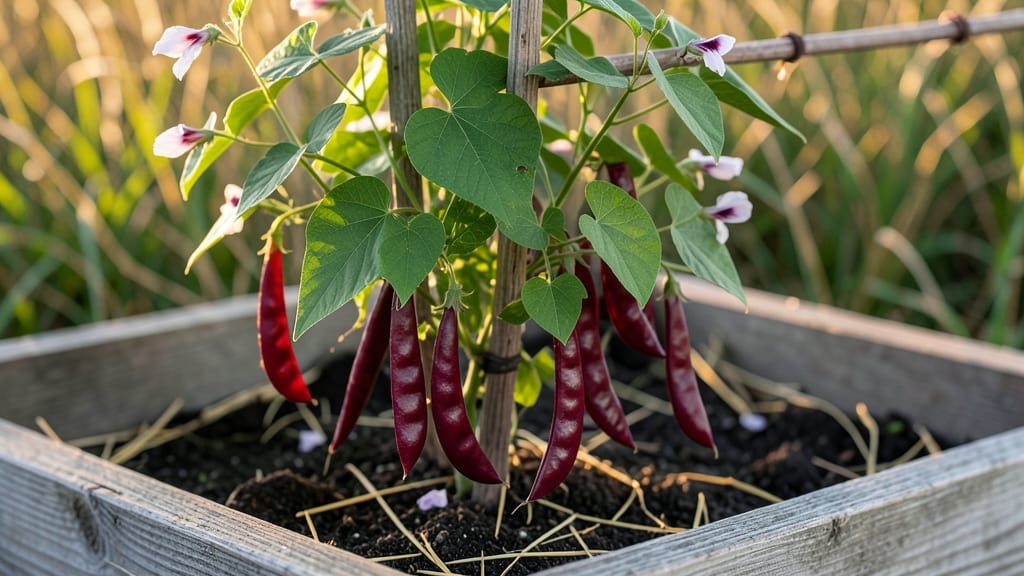
Growing Scarlet Emperor runner beans means turning a small corner of your garden into a vertical jungle of vibrant blooms and crisp pods. 🌱 These pole-climbing giants don’t need a sprawling trellis—just a sturdy post or two—and they reward you with deep red flowers that hum with bees and tender pods perfect for stir-fries or salads.
Start with seeds sown directly in well-drained soil after the last frost, about 1 inch deep and 3 inches apart. They thrive in full sun (6+ hours daily) and love warmth, so wait until soil temps hit 60°F before planting.
A 5-foot trellis or even a strong fence works—these beans climb like acrobats, twisting their way up with minimal support.
Water consistently to keep soil moist but not soggy, and watch for those first heart-shaped leaves within 2 weeks. Once vines reach the trellis, they’ll explode with 5-inch-wide blooms by midsummer, followed by flat, stringless pods ready to harvest in 60-70 days.
The key? Prune regularly to encourage more flowers and pods instead of letting the plant go wild.
Even experienced gardeners underestimate how fast these beans grow—so mark your calendar for planting and harvesting, or you’ll miss the window. They’re drought-tolerant once established but hate heavy clay soil, so amend with compost if your garden’s soil is dense.
With the right setup, you’ll have a neighborhood showstopper by July.
📚 In This Guide
- What you need
- Instructions
- Tips and common mistakes
- Wrapping up and next steps
What you need
- ● Scarlet Emperor runner bean seeds – 10–15 seeds (or 3–5 plants if buying seedlings). Look for Phaseolus coccineus varieties labeled for climbing.
- ○ Trellis or support structure – A 5–6 ft tall, 2–3 ft wide trellis (e.g., A-frame, teepee, or sturdy wire mesh). Optional: Use a single bamboo pole (6+ ft) if space is tight.
- ● Well-draining potting mix or garden soil – Amend garden soil with compost (2–3 inches) for richer nutrients. For containers: Use a 5-gallon pot or larger with drainage holes.
- ○ Organic fertilizer – A balanced 10-10-10 or compost tea to boost growth. Optional: Slow-release pellets for convenience.
- ● Watering can or hose with gentle spray – Runner beans hate soggy roots, so avoid heavy water pressure.
- ● Plant ties or soft twine – 3–4 ft lengths to gently secure vines to the trellis (avoid plastic ties—they can cut into stems!).
- ● Pruning shears – For trimming overly leggy vines or harvesting pods.
- ● Last frost date – Wait until soil temps reach 60°F+ (runner beans are not frost-tolerant). Start seeds indoors 2–3 weeks early if your zone has a short growing season.
- ● Sunlight – Full sun (6–8+ hours/day). Partial shade (4–6 hours) works but may reduce yield.
- ● pH level – Aim for 6.0–7.0 (test soil with a kit if unsure). Adjust with lime (to raise) or sulfur (to lower).
- ● Soak seeds overnight in warm water to speed up germination (especially in cooler climates).
- ● Mulch around plants with straw or grass clippings to retain moisture and deter weeds.
- ● Harvest regularly—every 2–3 days—to encourage more flower and pod production!
Step-by-step instructions for growing Scarlet Emperor runner beans
These vibrant climbers reward patience with stunning flowers and sweet pods—here's how to coax their best growth.
🌱 Step 1: Prepare the Soil and Planting Site
Scarlet Emperor beans thrive in rich, well-draining soil with a pH between 6.0 and 7.0. Work in 2-3 inches of compost or well-rotted manure into the top 12 inches of soil before planting. These heavy feeders need nutrients to support their 15-20 foot vines, so don't skimp on organic matter. I always test my soil first—you'll see better growth if you know your starting point.
Choose a location with full sun (6+ hours daily) and shelter from strong winds. The beans' tender vines can snap easily when young. If your soil drains poorly, raise beds or plant in containers with drainage holes. Amend heavy clay with sand or perlite to prevent waterlogging, which causes root rot.
🪴 Step 2: Plant Seeds at the Right Depth and Spacing
Direct-sow seeds 1-2 inches deep after all danger of frost has passed and soil temperatures reach 60°F or warmer. Scarlet Emperor beans are sensitive to cold, so wait until nighttime temperatures stay above 50°F. Plant 4-6 seeds per foot along your trellis line, spacing rows 3 feet apart to allow airflow and reduce disease risk.
I like to plant seeds in small clusters rather than single rows—this creates a denser canopy that produces more flowers. Water the soil thoroughly after planting to help seeds settle. Keep the soil consistently moist (not soggy) until germination, which typically occurs in 7-14 days. If seeds rot in the soil, they've either been planted too deep or the soil is too wet.
☀️ Step 3: Provide Support and Train Vines Early
Install your trellis or support structure before planting—these beans grow fast and need immediate guidance. Scarlet Emperor beans are vigorous climbers that twine counterclockwise, so use strong, sturdy supports like wooden posts, metal arches, or heavy-duty netting. I prefer 6-foot tall teepee supports for small spaces, as they save room while still accommodating the vines' length.
As soon as the first true leaves appear, gently guide the main stems up the support. These beans don't need training like some pole beans—they'll naturally twine if given something to grasp. Watch for side shoots that form at the leaf axils; these will produce flowers and pods. Remove any that grow toward the ground to focus energy upward.
💧 Step 4: Water and Fertilize for Maximum Yield
Runner beans need 1-2 inches of water per week, delivered at the soil level to avoid wetting the leaves (which invites fungal diseases). I water deeply 2-3 times per week, aiming for the base rather than overhead spraying. Mulch with 2-3 inches of straw or grass clippings to retain moisture and suppress weeds—these plants hate competition.
Feed plants with a balanced organic fertilizer (10-10-10) when flowers first appear, then switch to a low-nitrogen, high-phosphorus formula (5-10-10) to encourage pod development. I avoid high-nitrogen fertilizers after flowering—they promote leafy growth at the expense of pods. Harvest regularly to stimulate more production; you'll see new flowers within 2-3 weeks of removing spent blooms.
✂️ Step 5: Prune and Harvest for Continuous Production
Begin harvesting when pods reach 4-6 inches long and are firm to the touch. Check plants every 2-3 days—these beans produce prolifically, and pods quickly become stringy and tough if left too long. Use pruning shears to snip stems just above the next leaf node; this encourages branching and more production points.
Remove any yellowing or diseased leaves immediately to prevent spread. If vines become overcrowded, trim back 1-2 side shoots to improve airflow. I always leave the top 3-4 feet of the main vine intact—this ensures continued flowering. By mid-summer, you'll have a lush, flowering vine producing pods for 8-10 weeks if properly maintained.
Tips & tricks for growing Scarlet Emperor runner beans
These pole beans are a gardener's dream once you master a few key tricks—here's how to maximize your harvest.
Soil Prep Secret: Before amending your soil with compost, mix in a handful of wood ash (if your soil is acidic) to help reach that ideal 6.0-7.0 pH. I test my soil every year—last season, my slightly acidic soil needed just a sprinkle of ash to hit the sweet spot. These beans are heavy feeders, so don't be shy with the 2-3 inches of compost—think of it as their energy drink for those 15-20 foot vines.
Planting Strategy: The 7-14 day germination window can feel like an eternity, but there's a trick to speed things up: soak your seeds overnight in lukewarm water before planting. I've found this cuts germination time by about 3 days—just make sure they're not sitting in standing water. Also, plant your 4-6 seeds per foot in clusters rather than evenly spaced rows. This creates a thicker canopy that produces more flowers and pods once they start climbing.
Support System Hack: When installing your trellis before planting, bury the supports 6-8 inches deep and stake them securely. I've seen too many teepee supports topple when the vines get heavy. For small spaces, my 6-foot tall teepee supports work perfectly, but I reinforce them with 3 additional stakes tied at the base for extra stability. These beans twine counterclockwise, so don't be surprised if your vines seem to spiral upward—it's completely normal and actually helps them grip the support better.
Watering Wisdom: The 1-2 inches of water per week guideline is perfect, but timing matters just as much. Water in the early morning so leaves have time to dry before evening. I've noticed that watering at night can lead to fungal issues, especially when combined with the 2-3 times weekly deep watering routine. Use a soaker hose or drip irrigation to deliver water at the soil level—this keeps the leaves dry while giving roots exactly what they need.
Pro Tips for Scarlet Emperor Runner Beans
- These pole beans are a gardener's dream once you master a few key tricks—here's how to maximize your harvest.
- Soil Prep Secret: Before amending your soil with compost, mix in a handful of wood ash (if your soil is acidic) to help reach that ideal 6.0-7.0 pH.
- Planting Strategy: The 7-14 day germination window can feel like an eternity, but there's a trick to speed things up: soak your seeds overnight in lukewarm water before planting.
Frequently asked questions
When is the best time to plant Scarlet Emperor runner beans?
These heat-loving beans hate frost! Plant after your last frost date (usually late spring) when soil temps hit 60°F (15°C). For longer harvests, succession-plant every 2–3 weeks until mid-summer. Pro tip: If your zone has short summers, opt for early-maturing varieties (like ‘Scarlet Emperor’) to maximize yields.
Do Scarlet Emperor beans need a special trellis or can I use anything?
No fancy (or expensive) trellis required! These beans are self-clinging—they’ll grip almost anything sturdy. Use bamboo stakes, wire cages, or even a sturdy fence. Just ensure it’s at least 6–8 feet tall (they grow fast!). Warning: Avoid flimsy netting; these beans can get heavy (up to 1 lb per pod!).
What pests or diseases should I watch for with Scarlet Emperor beans?
Keep an eye out for bean beetles, aphids, and Japanese beetles—they love these beans! Handpick pests or spray with neem oil for organic control. For diseases, ensure good airflow to prevent fungal issues like rust or powdery mildew. Rotate crops yearly to avoid soil-borne problems.
How long does it take for Scarlet Emperor beans to produce pods?
Patience pays off! From seed to harvest, expect 60–70 days in ideal conditions. First pods usually appear 8–10 weeks after planting. For continuous harvests, pick pods regularly—they’ll keep producing as long as temps stay warm.
Can I grow Scarlet Emperor beans in containers or small spaces?
These beans are perfect for containers if you provide a 5-gallon pot or larger with a trellis. Just ensure it has drainage holes and deep roots (they’re heavy feeders). For small spaces, try a vertical tower garden or wall-mounted trellis. Bonus: Their vibrant flowers attract pollinators!
What’s the secret to getting Scarlet Emperor beans to climb faster?
Give them a head start! Plant seeds near the trellis so vines can latch on immediately. Water consistently (but avoid soggy soil) and fertilize lightly with compost or balanced 10-10-10 when flowers appear. Morning sunlight and warmth = faster growth.
Wrapping up and next steps
Growing Scarlet Emperor runner beans is a rewarding journey that transforms even the smallest garden into a vibrant, space-efficient haven.
With their striking red blooms and delicious pods, these pole-climbing giants prove that big yields don’t require big spaces—just a little creativity and care! 🌱✨ Whether you’re a seasoned gardener or a beginner, these beans offer a taste of success with minimal effort.
Now that you’re armed with the right tips, roll up your sleeves and plant those seeds—your future harvest (and Instagram-worthy trellis) await! Start small, experiment with companion plants, and enjoy the process. Happy growing! 🌿🍽️