
Flowers
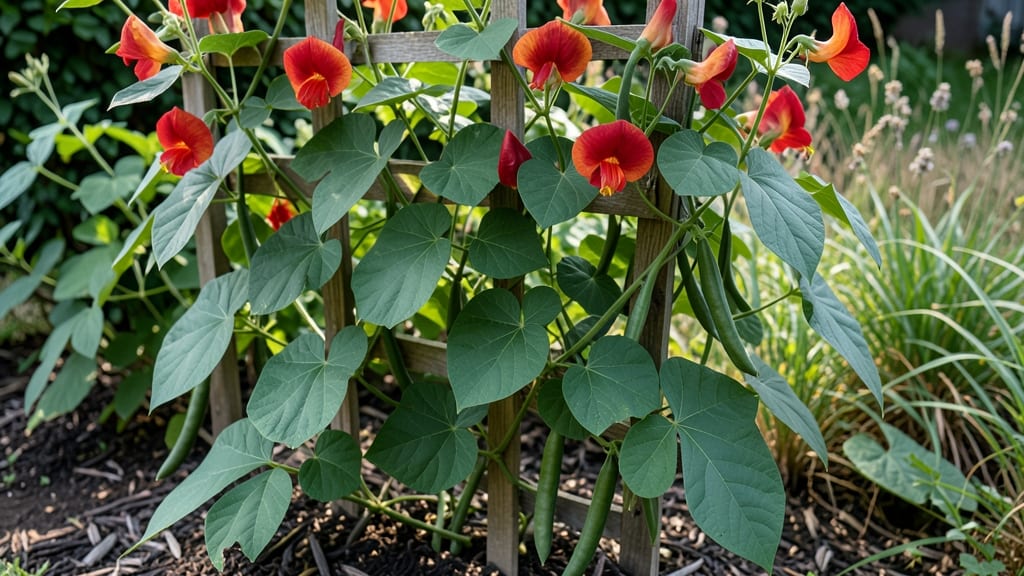
Scarlet runner bean flowers transform any garden into a vertical masterpiece with their fiery red blooms and lush green vines. 🌿 I planted mine last spring and within weeks, they claimed my trellis like a living tapestry—each bloom a bold splash of color that hummed with bees.
The best part? These aren’t just pretty faces; they’re edible too, adding a peppery kick to salads when the flowers fade into pods.
These vigorous climbers thrive in full sun and well-draining soil, but they’re surprisingly adaptable—even my less-than-perfect garden spot delivered stunning results. Start seeds indoors 8-10 weeks before last frost or sow directly when soil warms to 60°F, and watch them scramble upward with minimal effort.
The key is consistent moisture; let them dry out and you’ll see those vibrant blooms slow to a trickle.
By midsummer, your trellis will burst with 3-inch-wide flowers that last all season if you deadhead spent blooms. The pods that follow? Perfect for drying or fresh eating. Plus, their deep roots improve soil health, making them a two-for-one win.
Whether you’re training them on fences, arbors, or even old ladders, these beans turn empty vertical space into a showstopper.
Fair warning: they grow fast—sometimes too fast. Prune regularly to encourage bushier growth and more blooms, and keep an eye out for Mexican bean beetles. A quick spray of neem oil keeps them at bay without harming pollinators.
With the right care, your scarlet runners will reward you with color, flavor, and a garden that turns heads all season long.
📚 In This Guide
- What you need
- Instructions
- Tips and common mistakes
- Wrapping up and next steps
What you need
- ● Scarlet Runner Bean Seeds – Choose Phaseolus coccineus seeds (5–10 seeds for a small trellis, 15+ for a larger display). Opt for heirloom or organic seeds for vibrant blooms!
- ● Trellis or Vertical Support – A sturdy 5–8 ft tall trellis, fence, or obelisk (metal, bamboo, or wooden). Ensure it can support 10–15 lbs per plant as vines grow.
- ● Well-Draining Potting Mix – 10–15 gallons of high-quality, organic potting soil (or a mix of 60% garden soil + 40% compost for in-ground planting). Avoid heavy clay soil.
- ○ Containers (Optional but Recommended) – 5–7 gallon pots with drainage holes (for container gardening).
- ● Fabric grow bags (10–12 gallons) for better root aeration.
- ● Gardening Gloves – To protect hands while handling soil and seeds.
- ● Trowel or Hand Shovel – For planting seeds 1–2 inches deep.
- ● Watering Can or Hose with Gentle Nozzle – Scarlet runner beans need 1–1.5 inches of water per week (more in hot climates).
- ○ Fertilizer (Optional but Helpful) – Balanced organic fertilizer (e.g., 5-5-5 or compost tea) at planting time.
- ● Low-nitrogen, high-phosphorus fertilizer (e.g., 3-4-6) when flowers appear.
- ● Pruning Shears – To trim dead flowers or overgrown vines (encourages more blooms!).
- ● Sunlight Access – A full-sun location (6+ hours of direct sunlight daily). Partial shade may reduce flowering.
- ● Patience & Warmth – Seeds germinate best in soil temps 60–85°F (15–29°C). Start indoors 4–6 weeks before last frost if your climate is cool.
How to grow stunning scarlet runner bean flowers in your vertical garden
These bold, fiery blooms aren't just beautiful—they're easy to grow once you know the right steps.
🌱 Step 1: Choose the Perfect Location and Plant Your Seeds
Scarlet runner beans need full sun (at least 6-8 hours daily) and a sturdy trellis or fence to climb. I always plant mine along a south-facing wall where they'll get maximum warmth. The soil should be well-draining—amend heavy clay with compost if needed.
Sow seeds 1 inch deep, 4-6 inches apart, after your last frost date when soil reaches 60°F. I like to plant mine in late spring so they have plenty of time to establish before summer heat arrives. Water thoroughly right after planting to settle the soil around the seeds.
☀️ Step 2: Provide Support and Encourage Vertical Growth
As soon as seedlings emerge (usually within 7-14 days), install your trellis or support structure. I use a simple wire trellis for mine because it's sturdy and allows good airflow. The vines will naturally twine around the support as they grow—you don't need to tie them.
Watch for the first true leaves to appear (they'll be compound, with three leaflets). This is your signal that the plant is well-established and ready for regular care. Keep the soil consistently moist but never soggy—runner beans hate wet feet.
💧 Step 3: Water and Fertilize for Continuous Blooms
Water at the base of the plant 1-2 inches per week, letting the top inch of soil dry out between waterings. I water in the morning so the foliage has time to dry before evening, which prevents fungal diseases. Mulch around the base with 2-3 inches of organic mulch to retain moisture and keep roots cool.
Feed your plants every 4-6 weeks with a balanced, organic fertilizer (like 10-10-10) to encourage lush growth and abundant flowers. You'll notice the first blooms appear about 8-10 weeks after planting. The flowers start as bright red buds that open into stunning trumpet-shaped blooms.
✂️ Step 4: Prune and Maintain for Long-Lasting Beauty
Deadhead spent flowers regularly to encourage more blooms. Simply pinch off the faded blossoms with your fingers or snip them off with clean pruners. This keeps the plant focused on producing new flowers instead of seed pods. I also trim any leggy or overcrowded vines to improve airflow and prevent disease.
Harvest seed pods when they're young and tender (about 4-6 inches long) for the best flavor. If you want to save seeds for next year, leave a few pods to mature fully on the vine. The pods will turn brown and dry out—this is your cue to collect them before they split open.
🌿 Step 5: Extend the Season with Proper Care
Scarlet runner beans are annuals, but you can get a second flush of blooms by giving them a little extra care. After the first frost, cut back the vines to 12 inches tall and fertilize lightly. Water consistently, and you might be rewarded with a second round of flowers in late summer or early fall.
In colder climates, the plants will die back with the first hard frost. I always mark the location of my runner beans so I can plant them in the same spot next year—they do well in the same soil without needing to be rotated.
Tips & tricks for growing stunning scarlet runner bean flowers
These fiery climbers transform any vertical space into a living masterpiece—here's how to make them thrive with minimal effort.
Location is Everything: While the instructions mention full sun, I can't stress enough how critical this is! Scarlet runner beans truly need that 6-8 hours of direct sunlight daily—any less and you'll get sparse blooms. I've seen them struggle even with just 5 hours of sun, so position them where they'll get morning light at minimum. If your space gets afternoon shade, place them where they'll catch the strongest sun hours.
Timing Secret for Seedlings: The 7-14 days for seedlings to emerge can feel like forever, but here's what I've learned: if your soil stays consistently above 60°F, they'll pop up faster. I use a soil thermometer to check—if it's cooler, I cover the bed with black plastic for a few days to warm it up. Also, those first true leaves (the compound ones with three leaflets) are your green light to start regular care. Until then, keep watering lightly but consistently.
Pruning Technique: When deadheading those spent flowers, I always use clean pruners and make the cut just above a leaf node. This encourages new growth from that spot. For leggy vines, I trim back to where the plant shows strong growth—never cut into bare stems. And here's a pro move: if you see too many seed pods forming, snip off a few to redirect the plant's energy into more flowers instead of beans.
Season Extension Hack: That second flush of blooms after the first frost? It's totally real! I've gotten beautiful late summer flowers by cutting back vines to 12 inches and giving them a light feeding. The key is to keep them watered consistently—these plants are tough but appreciate the extra care when temperatures drop. In my zone 5 garden, I've seen them push out new blooms even in early October!
Pro Tips for Scarlet Runner Bean Flowers
- These fiery climbers transform any vertical space into a living masterpiece—here's how to make them thrive with minimal effort.
- Location is Everything: While the instructions mention full sun, I can't stress enough how critical this is!
- Timing Secret for Seedlings: The 7-14 days for seedlings to emerge can feel like forever, but here's what I've learned: if your soil stays consistently above 60°F, they'll pop up faster.
Frequently asked questions
Got questions about nurturing scarlet runner bean flowers? You’re not alone! Here are some of the most common queries—plus quick answers to keep your climbing beauty thriving.
When do scarlet runner bean flowers bloom, and how long do they last?
These showstoppers typically bloom from mid-summer to early fall (July–September in most U.S. zones). Each flower lasts just 1–2 days, but new buds open daily, creating a continuous cascade. For extended blooms, deadhead spent flowers (gently pinch them off) to encourage more production. Pro tip: Plant in full sun (6+ hours) for the longest season!
Why aren’t my scarlet runner bean flowers opening?
No blooms? Check these fixes:
- Not enough sun: Move to a sunnier spot (they need 6+ hours of direct light).
- Over-fertilizing: Too much nitrogen = leafy vines, no flowers. Use a low-nitrogen, high-phosphorus fertilizer instead.
- Stress: Drought or extreme heat can delay blooms. Water deeply 1–2 times per week (more in heatwaves).
- Young plants: First-year vines focus on growth. Be patient—they’ll bloom next season if well-cared-for!
Can I grow scarlet runner beans from seed, or should I buy plants?
You absolutely can grow from seed—it’s the most rewarding (and budget-friendly!) method. Start seeds indoors 4–6 weeks before your last frost or sow directly after soil warms to 60°F+. Seeds germinate in 7–14 days and grow fast. Buy plants only if you’re short on time, but seeds give you more variety and a deeper connection to the process!
Are scarlet runner bean flowers good for pollinators?
Yes! These vibrant blooms are a magnet for bees, hummingbirds, and butterflies. Their tubular shape makes them perfect for long-tongued pollinators like hummingbirds. To boost their impact, plant near other pollinator-friendly flowers (like zinnias or coneflowers) for a thriving ecosystem. Plus, the more pollinators visit, the more beans you’ll harvest later!
How can I extend the life of cut scarlet runner bean flowers?
Cut flowers last 3–5 days in water with these tricks:
- Trim stems at a 45° angle before placing in cool water.
- Change the water every 2 days and add a flower food packet (or a pinch of sugar + bleach).
- Avoid direct sunlight—keep them in a shady, breezy spot.
Bonus: Their striking red-orange blooms make dramatic bouquets—pair with greenery like eucalyptus for a tropical vibe!
Wrapping up and next steps
Scarlet runner bean flowers bring a burst of vibrant color and life to vertical gardens, transforming even small spaces into lush, eye-catching displays. Whether you're a seasoned gardener or a beginner, these easy-to-grow climbers offer beauty, sustainability, and a touch of whimsy. 🌸
Ready to unleash your green thumb? Start by gathering your supplies, choosing the perfect spot, and planting with confidence. Before you know it, your garden will be adorned with cascading blooms that attract pollinators and turn heads! What’s your next gardening adventure? 🌱