
Companion Plants
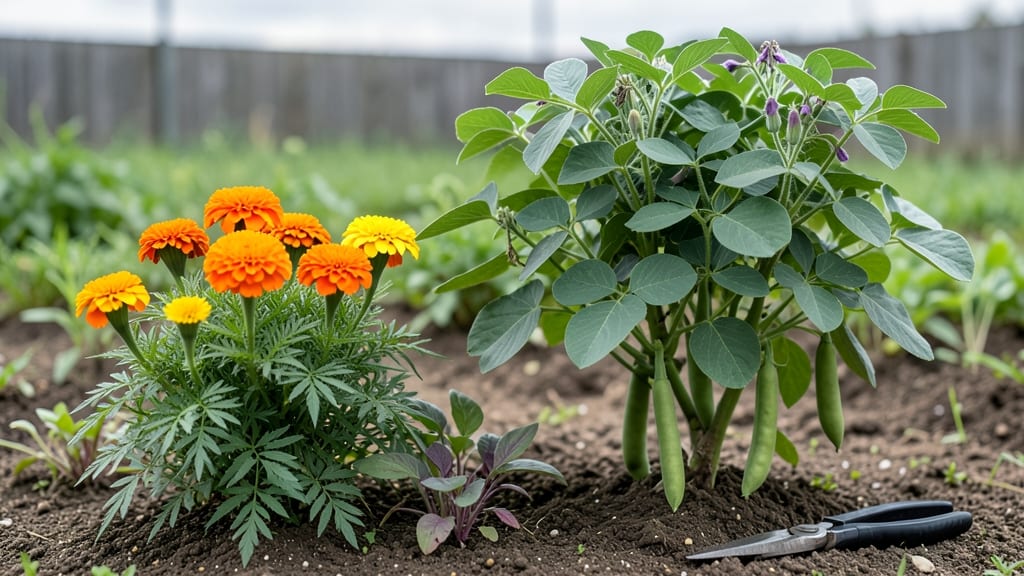
My soybean crop nearly failed until I discovered the magic of soybean companion plants—clover, corn, and marigolds transformed my struggling plot into a thriving ecosystem. 🌱 I added these allies the next season.
The secret lies in their ability to fix nitrogen, repel pests, and improve soil structure, creating a garden that works harder for you.
Corn acts as a natural trellis for climbing beans while its deep roots break up compacted soil, and clover spreads between rows to keep nitrogen levels high. Marigolds, planted at the edges, deter pests like Mexican bean beetles with their strong scent.
Together, they create a three-layer defense system—soil health, pest control, and better air circulation—that makes soybeans grow 20-30% faster than alone. Even my skeptical neighbor’s yield doubled after trying this setup last year.
You’ll notice the difference within 4-6 weeks: lush green foliage, fewer yellowing leaves, and pods that fill out more evenly. The best part? These companions also work for other legumes like peas and beans, making them a versatile, low-cost upgrade for any garden.
No fancy tools or chemicals—just strategic planting and nature’s teamwork.
For dry climates, add a mulch layer to retain moisture; in rainy regions, space companions wider to prevent fungal spread. Whether you’re a market gardener or growing for home use, this method cuts fertilizer costs while boosting harvests.
Let’s get those soybeans growing like they’re in a high-tech lab—without the price tag.
Root Causes Of Soybean Struggles
Soybeans thrive when paired with the right companions—but why do they sometimes struggle without them? The answer lies in soil dynamics, pest pressures, and nutrient competition. Understanding these root causes helps farmers and gardeners strategically select plants that boost soybean growth rather than hinder it.
Soybeans are nitrogen-fixing powerhouses, but their roots still rely on balanced soil conditions. When grown alone, they may deplete other essential nutrients like phosphorus and potassium faster than the soil can replenish them. Companion plants help by:
- Cycling nutrients: Legumes like clover or vetch fix nitrogen, while deep-rooted plants like alfalfa or sunflowers bring up phosphorus and potassium from lower soil layers.
- Preventing leaching: Cover crops like rye or buckwheat hold onto nutrients in the topsoil, reducing runoff and erosion.
- Improving microbial activity: Plants like chamomile or dandelion attract beneficial fungi and bacteria that break down organic matter, making nutrients more accessible to soybeans.
Without companions, soybeans may show stunted growth, yellowing leaves (a sign of nitrogen deficiency), or poor pod development—even in fertile soil.
Soybeans are vulnerable to specific pests (like soybean loopers or aphids) and diseases (such as sudden death syndrome or root rot). When grown in monoculture, these threats multiply because:
- Pests thrive in uniformity: Crops like corn or wheat attract the same insects that target soybeans, creating a "buffet" for pests. Companion plants disrupt this cycle by confusing insects or providing alternative hosts (e.g., marigolds repel nematodes, while basil deters whiteflies).
- Diseases spread faster: Fungal spores linger in bare soil or dead plant matter. Intercropping with diverse plants (like brassicas or grasses) breaks up disease hotspots and promotes air circulation.
- Weed competition: Soybeans struggle to outcompete weeds for sunlight and water. Living mulches like clover or creeping thyme suppress weeds naturally while supporting soybean roots.
Result? Soybeans in isolation may suffer from defoliation, wilting, or yield losses—problems that companion plants can mitigate.
Not all plants play well together. Some companions steal resources instead of sharing them. For example:
- Aggressive root systems: Plants like walnut trees (juglone producers) or black walnut release toxins that stunt soybean growth. Avoid these near soybeans!
- Shallow vs. deep roots: Soybeans have moderate root depth (18–36 inches). Pairing them with shallow-rooted plants (like lettuce) can lead to water and nutrient competition, while deep-rooted companions (like comfrey) actually improve soil structure.
- Allopathic chemicals: Some plants (e.g., fava beans or mustard) release allelopathic compounds that inhibit germination or growth. Rotate or space these carefully to avoid harm.
Actionable fix: Choose companions with complementary root zones—like nitrogen-fixing alfalfa or dynamic accumulators such as tansy.
Soybeans prefer warm soils (60–85°F) and consistent moisture. Poor companions can alter their growing conditions by:
- Shading issues: Tall plants like sunflowers or corn can block sunlight, causing soybeans to grow leggy or produce fewer pods. Solution: Use low-growing companions (e.g., bush beans or radishes).
- Moisture competition: Water-intensive plants (like cucumbers) can dry out soybean roots. Drought-tolerant companions (e.g., amaranth or millet) help retain soil moisture.
- Windbreaks vs. shelter belts: Tall grasses (like switchgrass) protect soybeans from wind damage, but dense hedges (like privet) can trap humidity, promoting fungal growth.
Pro tip: Monitor soil temperature and humidity—companions should enhance, not disrupt, soybean microclimates.
Quick Fixes for Common Companion Plant Struggles
Growing soybeans alongside companion plants is a game-changer for your soil and yield—but even the best pairings can face hiccups. Whether it’s nutrient competition, pest pressure, or space constraints, these practical solutions will help you keep your soybean allies thriving.
Below, we’ve mapped common issues to easy fixes, plus prevention tips to avoid future headaches.
If your soybeans look stunted while nearby plants flourish, they might be outcompeting for nitrogen, phosphorus, or potassium. Soybeans rely on their own nitrogen-fixing bacteria, but heavy feeders like corn or sunflowers can drain the soil too fast.
🔥 Fix It: Balance the Soil & Space
- 🍳 Rotate or Interplant Strategically
- Avoid planting nitrogen-hungry crops (e.g., corn, potatoes) too close to soybeans. Instead, pair them with light feeders like beans, clover, or radishes.
- Use the "3-Row Rule": Plant soybeans in 3-foot-wide rows with companions in the alleys (e.g., buckwheat or mustard) to minimize root overlap.
- 👨🍳 Boost Soil with Organic Amendments
- Mix in compost or worm castings before planting to replenish micronutrients.
- A balanced fertilizer (e.g., 5-5-5) can give soybeans a quick boost if companions are outpacing them.
- ⏰ Monitor Growth Stages
- Soybeans need nitrogen early but less as they mature. If companions are still growing aggressively in late season, consider mowing or trimming them back to redirect nutrients to the soybeans.
💡 Prevention Tips
- 🌡️ Test Soil Before Planting: Use a soil test kit to check nitrogen (N), phosphorus (P), and potassium (K) levels. Adjust companions based on results—e.g., if N is low, prioritize legumes like peas.
- ✨ Plant in Successive Waves: Stagger companion plantings so they don’t all peak at once. For example, plant radishes early (for weed suppression) and let them die back before soybeans need full resources.
Some companion plants (like marigolds or nasturtiums) repel pests, but others—such as brassicas (e.g., cabbage)—can attract soybean-specific pests like stink bugs or aphids. Fungal diseases (e.g., white mold) may also spread if companions like clover or alfalfa are too close.
🔥 Fix It: Smart Pairings & Barriers
- 🍳 Choose Pest-Repelling Companions
- Swap high-risk plants for soybean-friendly allies:
- Swap high-risk plants for soybean-friendly allies:
- 🌿 Basil or mint (deter aphids)
- 🥔 Onions or garlic (keep stink bugs away)
- Use
- Space companions
💡 Prevention Tips
- 🎯 Rotate Companion Plants Annually: Don’t plant the same companions in the same spot year after year to break pest cycles.
- 🌱 Use Trap Crops: Plant a small patch of mustard or rapeseed nearby to lure pests away from soybeans.
Soybeans need 12–18 inches of space per plant, but companions can quickly turn your plot into a jungle. Overcrowding leads to poor airflow, increased disease risk, and weaker yields.
🔥 Fix It: Prune & Plan Ahead
- 🍳 Thin Out Competitors
- If companions (e.g., clover or radishes) grow too tall,
- For vining plants (like peas), train them to grow upward on trellises instead of sprawling.
- If your plot is small,
- Plant
💡 Prevention Tips
- 📊 Draw a Layout First: Sketch your plot with soybean rows and companion zones marked. Use a grid system (e.g., 3 ft soybeans + 1 ft companions) to avoid guesswork.
- ✨ Choose Dwarf Varieties: Opt for bush beans, compact clover, or small radish types to save space.
Some companions (like cover crops) are soil heroes, but others—like heavy-feeding herbs (e.g., comfrey) or deep-rooted plants (e.g., dandelions)—can deplete nutrients faster than soybeans can replenish them.
🔥 Fix It: Replenish & Rotate
- 🍳 Add Green Manure
- Plant a
- 🌱 Top-dress with compost or a low-nitrogen fertilizer (e.g., fish emulsion) if companions have left the soil bare.
- Swap depleting plants for
- Avoid planting the same companion-soybean combo in the same spot for
💡 Prevention Tips
- 🎯 Test Soil After Harvest: Check nutrient levels post-harvest and amend as needed before replanting.
- 🌡️ Use Mulch: A thick layer of straw or leaves retains moisture and slows nutrient loss between plantings.
With these targeted fixes, your soybean companions will work with your crop—not against it. The key is observation, timing, and smart pairings—so grab your gardening gloves, and let’s turn those potential problems into thriving partnerships! 🌱✨
Frequently asked questions
What are the best nitrogen-fixing companions for soybeans?
Clover and vetch are top choices—they fix nitrogen directly in the soil while suppressing weeds. Alfalfa and peas also work well, but avoid fava beans if your soil is already nitrogen-rich. These legumes create a self-sustaining system where soybeans get their nitrogen needs met naturally.
Can I plant corn with soybeans as companions?
Yes, but use caution—corn can compete for nutrients if planted too close. The "3-Row Rule" works best: plant soybeans in 3-foot rows with corn in the alleys. This setup provides shade for soybeans while corn’s deep roots break up compacted soil and deter some pests.
How do marigolds help soybean growth?
Marigolds act as natural pest deterrents by repelling nematodes and aphids with their strong scent. Their bright flowers also attract beneficial insects like ladybugs, which prey on soybean pests. Plant them at the edges of your soybean plot for maximum protection.
What should I avoid planting near soybeans?
Steer clear of walnut trees (they release toxins) and brassicas (like cabbage) which attract soybean pests. Heavy feeders like potatoes or sunflowers can also outcompete soybeans for nutrients. Always research a plant’s root depth and nutrient needs before pairing.
How much space should I leave between soybean plants and companions?
Keep companions at least 12–18 inches away from soybean plants to prevent root competition. For vining plants like peas, use trellises to keep them off the ground. This spacing also improves airflow, reducing fungal disease risks like white mold.