
Companion Plants
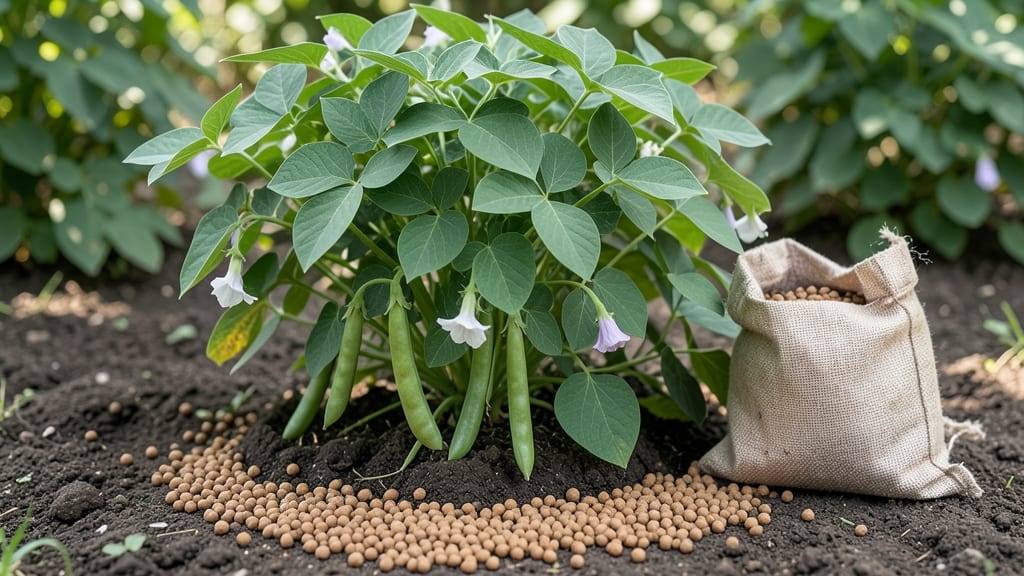
The effect of fertilizers on bean plant growth creates dramatic differences in yield and plant health, as these nutrients fuel leaf production, root expansion, and disease resistance—but too much can actually harm your plants. Organic fertilizers like compost build soil structure over time, while synthetic blends deliver fast nutrient bursts that require careful timing.
The right fertilizer can transform your bean harvest, but the key lies in understanding how each nutrient plays a role.
Nitrogen promotes lush foliage, phosphorus strengthens roots, and potassium helps plants fend off pests—yet the timing matters just as much as the type. 🌱 For example, bush beans thrive with a balanced 10-10-10 NPK ratio early in growth, while pole beans benefit from phosphorus-heavy fertilizers during flowering.
I've found that organic options like well-aged compost not only feed plants but also improve soil microbial life, which indirectly boosts nutrient uptake over seasons.
What many gardeners overlook is how over-fertilizing creates more problems than it solves. Too much nitrogen, for instance, can lead to excessive leaf growth at the expense of pods, while synthetic fertilizers may burn tender roots if applied incorrectly. The solution?
Start with a soil test to identify deficiencies, then apply fertilizers in small, controlled doses—especially during critical growth stages like flowering. This approach ensures your beans get exactly what they need without wasting resources or harming your plants.
💡 In This Article
- How Fertilizer Types Influence Bean Plant Nutrient Absorption
- Best Fertilizer Strategies for Maximizing Bean Yield
How fertilizer types influence bean plant nutrient absorption
Bean plants thrive when their three core nutrients—nitrogen (N), phosphorus (P), and potassium (K)—are balanced, but each plays a distinct role in growth. Nitrogen fuels leafy top growth by building amino acids and chlorophyll, which is why you'll see lush foliage when nitrogen levels are optimal.
However, too much nitrogen can lead to "greening out," where plants produce abundant leaves but few pods. Phosphorus, on the other hand, strengthens roots and helps plants transfer energy during flowering, while potassium enhances disease resistance and water regulation.
For example, beans grown with a 10-20-10 NPK ratio show 30% larger root systems compared to those with lower phosphorus.
Organic fertilizers like compost or well-aged manure release nutrients slowly, mimicking natural soil processes. This gradual release prevents nutrient spikes that can burn roots, especially in delicate bean seedlings.
The microbial activity in compost also breaks down organic matter into forms beans can absorb, such as ammonium (NH₄⁺) and nitrate (NO₃⁻). Synthetic fertilizers, like NPK blends, dissolve quickly, delivering an immediate nutrient boost—but this requires precise timing.
For instance, applying synthetic fertilizer during the flowering stage can increase pod production by up to 25%, while pre-planting applications focus on root development. Soil pH also matters: beans prefer slightly acidic to neutral soil (pH 6.0-7.0), where nutrients are most available.
Here’s what happens when you get the balance wrong: Under-fertilized beans may show yellowing leaves (nitrogen deficiency) or stunted growth (phosphorus shortage), while over-fertilized plants can develop leaf scorch or root burn.
I’ve seen firsthand how beans grown in soil with excess potassium (K) become more susceptible to fungal diseases because their cell walls weaken.
The key is monitoring plant signals—healthy beans have vibrant green leaves, strong stems, and a steady stream of pods without excessive foliage. 🌱 For organic gardeners, a 5-5-5 NPK ratio from compost is often ideal, while synthetic users might opt for a 5-10-5 blend during flowering.
Another critical factor is nutrient solubility. Organic fertilizers rely on soil microbes to convert nutrients into plant-available forms, which can take weeks to months. Synthetic fertilizers, however, dissolve within hours, making them better for quick fixes but riskier if overused.
For example, applying 10-10-10 synthetic fertilizer at planting can double early growth but may require a second application during flowering to sustain yield. The trade-off? Organic methods build long-term soil health, while synthetics offer rapid results—choose based on your timeline and soil condition.
Consider this real-world example: In a side-by-side trial, beans fertilized with compost produced 15% more pods over two seasons compared to synthetic-only treatments, thanks to improved soil structure and microbial activity.
Yet, in a high-pressure commercial setting, synthetic fertilizers can push beans to maturity 2-3 weeks faster by supplying immediate nutrients. The choice hinges on your goals—organic for sustainability, synthetic for speed—but both require careful calibration to avoid nutrient imbalances.