
Container Gardens
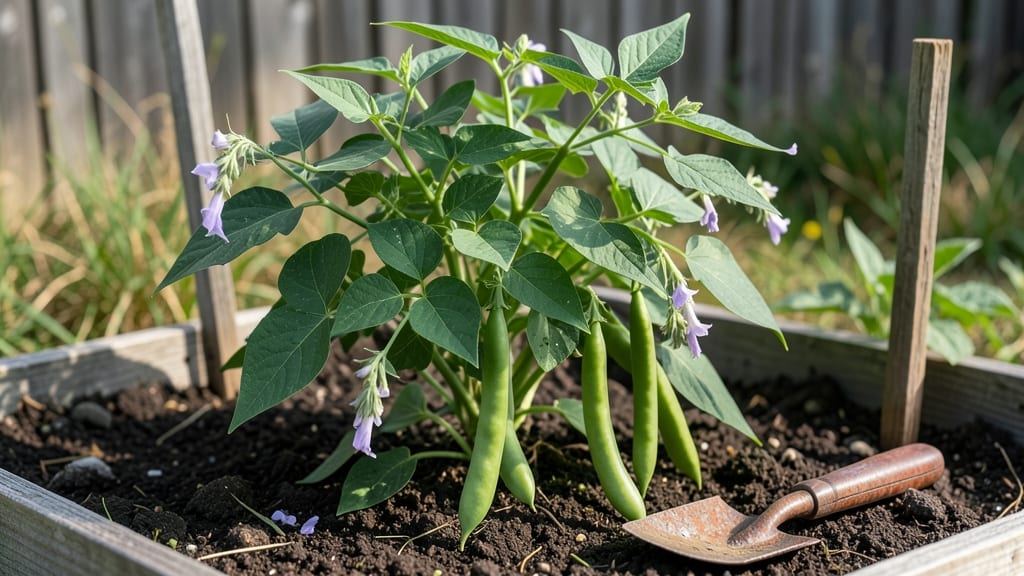
Soybeans start as delicate seedlings with compound leaves that unfold into three leaflets arranged like a fan. 🌱 As they mature, the stems develop a slightly fuzzy texture and can either climb trellises or sprawl along the ground, depending on the variety.
The flowers—small and delicate—appear in clusters before transforming into the signature flat, hairy pods that contain the seeds. This growth pattern makes them easy to spot compared to other legumes, though their early stages can resemble clover or peas.
What sets soybeans apart visually is their trifoliate leaf structure, which remains consistent throughout the plant's life cycle. The pods' fuzzy texture and the way they hang downward also help distinguish them from similar plants.
Understanding these visual cues is key for gardeners who want to identify their plants correctly and ensure they're thriving.
💡 In This Article
- Soybean Plant Growth Stages: Leaf, Flower, and Pod Development
- Identifying Soybeans vs Similar Legumes in the Garden
Soybean plant growth stages: leaf, flower, and pod development
The soybean's iconic trifoliate leaves begin as tiny, folded buds that unfurl into three oval-shaped leaflets connected by a central stem. Each leaflet typically measures 1-2 inches long and 0.5-1 inch wide, with a smooth, slightly waxy surface that reflects sunlight efficiently.
The arrangement of these leaflets—spreading like an open hand—maximizes sunlight absorption while reducing water loss, a key adaptation for their native warm climates. 🌿 This leaf structure remains consistent throughout the plant's life, making it one of the most reliable identification features.
As the plant matures, the stems develop a distinctive pale green to reddish hue, often with a faint fuzzy texture caused by tiny hairs.
These stems can either grow upright to 3 feet in determinate varieties or sprawl along the ground in indeterminate types, which can reach 6 feet or more with proper support.
The growth habit is heavily influenced by sunlight exposure—plants grown in full sun develop thicker stems and darker leaves compared to those in partial shade, where stems may appear leggier and leaves paler.
The flowering stage begins around 45-60 days after planting, when small clusters of 0.25-inch white or lavender flowers appear in the leaf axils. These flowers, which only open for a single day, are self-pollinating but can also attract bees for cross-pollination.
The flowers' delicate petals drop within 24 hours, leaving behind the signature flat, hairy pods that develop over 4-6 weeks. These pods, typically 2-3 inches long and 0.5 inches wide, contain 2-4 seeds each and hang downward from the stem.
Environmental factors play a crucial role in soybean appearance. Adequate moisture during pod development ensures smooth, well-formed pods, while drought stress can cause pods to become misshapen or develop cracks. Temperature also affects growth—ideal conditions of 70-85°F promote vigorous growth, while extreme heat or cold can stunt development.
The plant's height and bushiness are also variety-dependent, with dwarf varieties staying under 2 feet while tall varieties can exceed 5 feet when supported.
One fascinating detail is how the soybean's growth stages align with its nitrogen-fixing capabilities. The roots develop nodules containing bacteria that convert atmospheric nitrogen into a usable form, which becomes visible as the plant's leaves turn a deeper green.
This biological process not only supports the plant's growth but also enriches the soil for subsequent crops. 🌱 The entire growth cycle typically spans 90-150 days, depending on the variety and growing conditions.
For gardeners, recognizing these growth stages helps predict harvest times and identify potential issues early. For example, yellowing leaves may indicate nitrogen deficiency, while stunted growth could signal poor drainage or compacted soil.
Understanding these visual cues allows for proactive care, ensuring healthy plants that produce abundant pods filled with the seeds we recognize in stores and kitchens.