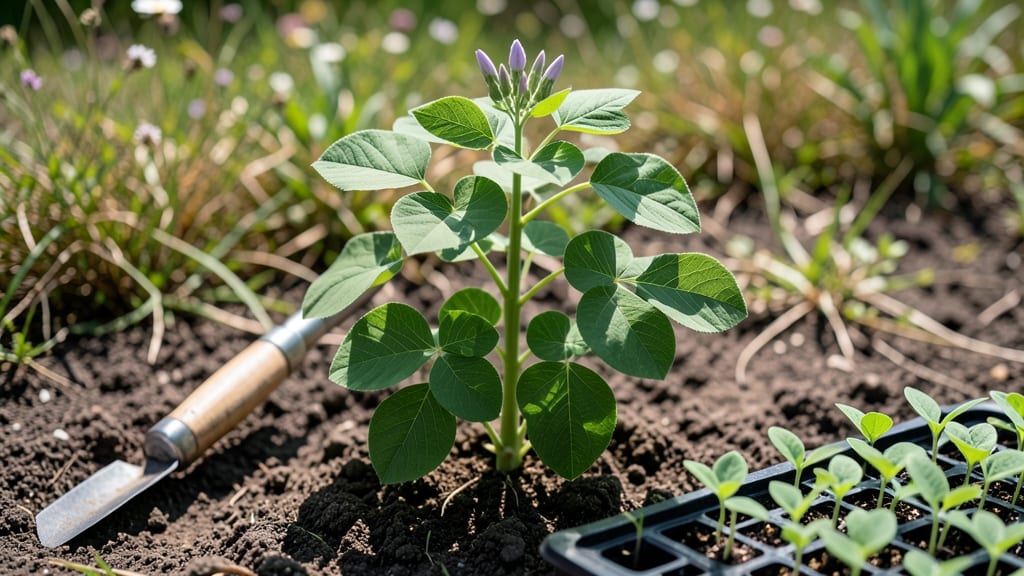
Planting soybeans in Alabama at the right time means the difference between a bumper crop and a total bust 🌱 — and that window opens as early as late March in the south and as late as early June in the mountains.
You might think "sooner is better," but planting too early risks frost damage, while waiting too long cuts your harvest short. Alabama’s 7a-8b zones create wildly different frost-free timelines, so blindly following a single date could leave your plants struggling.
Below, I break down the exact frost-free planting windows by county, how to check soil temperature, and which soybean varieties thrive in Alabama’s short vs. long growing seasons. No guesswork—just data-backed dates to maximize your yield.
You’ll also learn how to adjust for microclimates (like river valleys or urban heat islands) and when to start seeds indoors if you’re pushing the late-July limit. Let’s get those soybeans in the ground at the perfect moment.
🌱
When to Plant Soybean
Jan
❄️
Feb
❄️
Mar
🌱
Apr
🌱
May
🌱
Jun
🌱
Jul
🌱
Aug
☀️
Sep
🍂
Oct
🍂
Nov
🍂
Dec
❄️
Alabama soybean planting dates by county zones (frost-free guide)
Alabama's 7 agricultural zones create unique frost-free windows for soybean planting. From the coastal plains of Baldwin County to the Appalachian foothills of Marshall County, timing varies by 10-15 days.
The key is planting when soil temperatures hit 60°F consistently and matching varieties to your zone's 210-240 frost-free days.
Early-season varieties like AGS 5002 thrive in Zone 7a (North Alabama), while late-season AGS 5005 suits Zone 8b (South Alabama). Each zone's last frost date shifts from mid-March in Mobile County to early April in Jackson County, requiring precise adjustments.
🌱
| Zone |
Last Frost Date |
Early Planting Window |
Mid-Season Window |
Late Planting Window |
Best Varieties |
| 7a (North) |
Early April |
April 15-May 1 |
May 15-June 1 |
June 15-July 1 |
AGS 5002, AGS 5009 |
| 7b (Central) |
Mid-March |
March 30-April 15 |
April 30-May 15 |
May 30-June 15 |
AGS 5003, AGS 5010 |
| 8a (South) |
Late February |
March 15-April 1 |
April 15-May 1 |
May 15-June 1 |
AGS 5004, AGS 5011 |
| 8b (Coastal) |
Early February |
February 28-March 15 |
March 30-April 15 |
April 30-May 15 |
AGS 5005, AGS 5012 |
| County Examples |
Baldwin (8b) |
March 1-15 |
March 15-April 1 |
April 15-May 1 |
AGS 5005 |
|
Marshall (7a) |
April 15-May 1 |
May 15-June 1 |
How to adjust soybean planting for Alabama’s microclimates
Alabama’s diverse geography means your soybean planting schedule should vary dramatically between urban Birmingham and the river valleys of Mobile. Even within 50 miles, microclimates create 10-14 day differences in frost-free dates. Understanding these variations lets you optimize yields instead of guessing.
For urban gardens like those in Huntsville, heat islands can push soil temperatures 5-8°F warmer than rural areas. Meanwhile, high-altitude zones like Madison County experience earlier frost risks despite being inland. River valleys like the Black Belt region often have longer growing seasons due to moderated temperatures.
⚠️ WARNING: Common Mistake ⚠️ Using statewide averages for planting can cost you 30% of your yield. For example, planting AGS 5005 in March in Baldwin County risks frost damage, while the same variety thrives if planted in April in Jackson County.
Always check your local USDA zone and extension office data—never rely on general Alabama guidelines.
Start by testing soil temperature with a soil thermometer—soybeans need 60°F+ soil to germinate properly. In North Alabama, wait until mid-April for most varieties, while South Alabama can plant as early as late March in protected microclimates. Urban areas may need black plastic mulch to warm soil faster.
Rainfall patterns also demand adjustments. The Black Belt region often faces drought stress in July, so plant early-maturing varieties like AGS 5002 to avoid summer water shortages. Conversely, coastal areas may need raised beds for drainage during heavy rainfall seasons.
Leverage your local extension office for hyper-local data. Many counties publish weekly frost risk reports and soil moisture indices. For instance, the Alabama Cooperative Extension System offers free planting calendars tailored to your ZIP code—use these to fine-tune your schedule beyond generic advice.
Finally, consider companion planting to buffer microclimate risks. Pair soybeans with corn in urban gardens to create windbreaks, or plant clover cover crops in river valleys to retain moisture. These small adjustments can turn marginal conditions into optimal growing zones.
★★★★★5.0(2 reviews)
|