
Leaf Blower
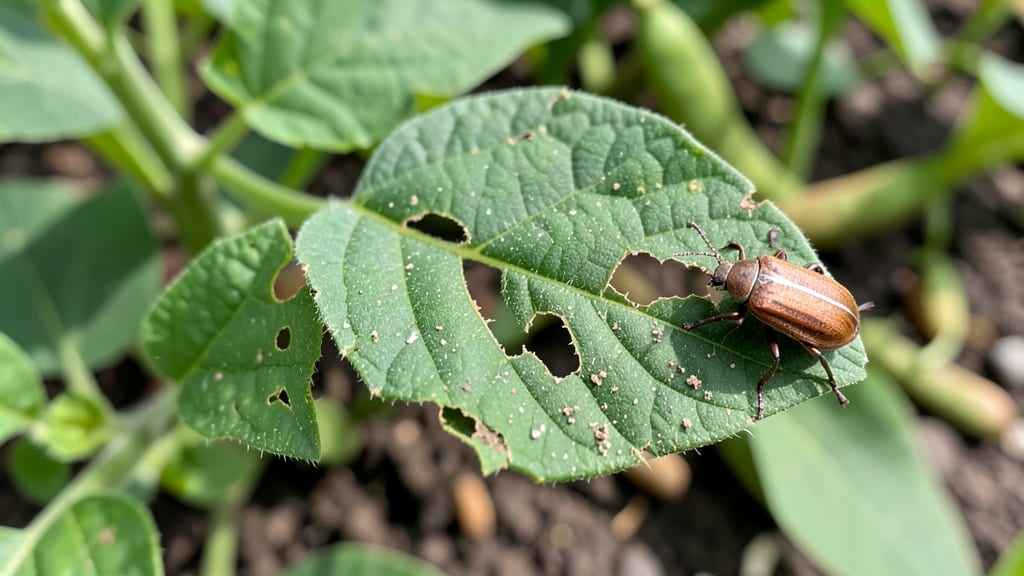
Bean leaf beetle damage turns your thriving bean plants into skeleton leaves overnight. 🌱 I’ve watched entire rows go from lush green to shredded in just a few days—until I learned the early signs and how to stop it before it spreads.
These tiny black beetles with yellow markings don’t just chew leaves; they spread viruses too. The damage looks like lacework or scattered holes, and the beetles themselves hide under leaves during the day. Catching them early means saving your entire crop before they multiply.
You’ll learn to identify the damage, disrupt their lifecycle with simple organic sprays, and even turn their natural predators into your garden’s cleanup crew. No more helplessly watching your beans wither—just actionable fixes that work. From companion planting to mechanical removal, these methods protect your harvest without harsh chemicals.
Let’s get your beans back to healthy and productive!
Root Causes Of Beetle Feeding
When your bean plants start looking like Swiss cheese—thanks to tiny, voracious Cerotoma trifurcata (bean leaf beetles)—it’s not just bad luck. These pests thrive due to a mix of environmental, agricultural, and ecological factors.
Understanding why they target your crops is the first step in stopping them before they strip your plants bare. Below, we break down the science behind their destructive behavior.
Bean leaf beetles are opportunistic feeders, and dense plantings create the perfect buffet. When rows are too close together, airflow is restricted, humidity rises, and plants become stressed—weakened leaves are an all-you-can-eat invitation for beetles.
Research from Journal of Economic Entomology shows that beetle populations surge in high-density soybean and bean crops because:
- Less sunlight penetration slows plant growth, making leaves softer and more palatable.
- Moisture buildup on foliage creates ideal conditions for beetle egg-laying and larval survival.
- Reduced natural predators (like ladybugs or parasitic wasps) struggle to navigate tight spaces, leaving beetles unchecked.
Actionable fix: Space rows 18–30 inches apart (depending on variety) and thin seedlings to 3–4 inches apart to improve airflow and deter beetles.
Bean leaf beetles are cold-blooded—their activity levels skyrocket when temperatures rise. Studies confirm that beetles become most aggressive when:
- Daytime temps hit 75–90°F (24–32°C)—their metabolic rate doubles, increasing feeding and reproduction.
- Drought stress weakens plants, making them 30% more susceptible to defoliation (per Crop Protection research).
- Nighttime temps stay above 60°F (15°C), allowing larvae to survive and pupate faster.
Actionable fix:
- 💡 Irrigate during droughts (but avoid overhead watering at night to prevent fungal issues).
- 🌡️ Plant early-season varieties in cooler climates to avoid peak beetle activity (May–July in most regions).
- ✨ Use reflective mulches (like aluminum foil or silver plastic) to raise soil temps and confuse beetles.
Not all bean plants are created equal—and beetles know the difference. Research from the University of Nebraska-Lincoln found that beetles prefer:
- Young, tender leaves (especially on Phaseolus vulgaris, like kidney and pinto beans).
- Stressed plants (nutrient-deficient or waterlogged).
- Non-resistant varieties like ‘Black Valentine’ or ‘Great Northern’, which lack natural deterrents.
Beetles avoid varieties with:
- High tannin content (bitter taste, e.g., ‘Tendergreen’ snap beans).
- Hairy leaf surfaces (physical barrier, found in ‘Blue Lake’ varieties).
- Early maturity (beetles move on before plants are fully vulnerable).
Actionable fix: Choose beetle-resistant cultivars like ‘MicMac’ (pinto bean) or ‘Othello’ (black bean), or plant cover crops (e.g., clover) to disrupt beetle life cycles.
In healthy ecosystems, predatory insects keep bean leaf beetle populations in check. But modern farming practices—like broad-spectrum pesticides or monocropping—wipe out their allies. Key predators include:
| Predator | How They Help | Why They’re Declining |
|---|---|---|
| Ladybugs (Hippodamia convergens) | Eat 50+ beetle eggs/day; larvae devour hatchlings. | Neonicotinoids and habitat loss. |
| Parasitic Wasps (Tetrastichus brisbenensis) | Lay eggs inside beetle larvae, killing them. | Overuse of pyrethroid sprays. |
| Ground Beetles (Calosoma spp.) | Hunt adult beetles at night. | Tillage destroys their microhabitats. |
Actionable fix:
- 🔥 Avoid neonicotinoid seed treatments (they kill beneficial insects).
- 👨🍳 Plant pollinator-friendly borders (dill, fennel, yarrow) to attract ladybugs.
- ✨ Use kaolin clay sprays to deter beetles without harming predators.
Key takeaway: Bean leaf beetle damage isn’t random—it’s a chain reaction of poor plant health, climate conditions, and lost ecosystem balance. By addressing these root causes, you can starve out the problem before it starts.
Beat Back Beetle Damage Fast
If your bean plants are looking more like Swiss cheese than lush foliage, it’s time to take action. Bean leaf beetles don’t just nibble—they devour leaves, weaken plants, and spread disease. But don’t panic!
With the right strategies, you can turn the tide and protect your garden. Below, we break down solutions by cause and offer practical fixes to stop the damage in its tracks.
When beetles strip leaves faster than you can say "harvest," you need immediate intervention. These pests are relentless, so act fast with these methods:
- 🔪 Handpick Adult Beetles
Morning is the best time—beetles are sluggish and easy to spot. Drop them into soapy water (1 tbsp dish soap per gallon) to kill them instantly. Pro tip: Wear gloves to avoid skin irritation from their secretions!
- 🛡️ Use Row Covers
Lightweight fabric covers (like floating row covers) smother beetles while letting sunlight and water through. Secure edges tightly to block entry. Best for: Early-season prevention or when beetles first appear.
- 💦 Spray with Neem Oil
Mix 2 tbsp neem oil + 1 tsp mild soap per gallon of water. Spray undersides of leaves (where beetles hide) every 5–7 days. Why it works: Disrupts their feeding and reproduction cycles.
If your beans are yellowing, wilting, or producing fewer pods, the beetles (or their scars) are stressing the plants. Help them recover with:
- 💧 Boost Watering & Fertilizer
Deep water 1–2 inches per week (especially during dry spells) and add a balanced fertilizer (10-10-10) to replenish nutrients lost from chewing. Bonus: Mulch with straw to retain moisture.
- 🍃 Prune Damaged Foliage
Trim heavily chewed leaves to redirect energy to new growth. Avoid removing more than 20% of the plant at once—gradual pruning prevents shock.
- 🌿 Introduce Beneficial Insects
Ladybugs, lacewings, and parasitic wasps eat beetle eggs and larvae. Buy them online or attract them with dill, fennel, or marigolds planted nearby.
Beetles don’t just chew—they carry viruses like Bean Common Mosaic Virus. Break the cycle with these steps:
- 🧼 Clean Up Debris
Remove and destroy (don’t compost!) fallen leaves and plant residue where beetles hide. Do this: After harvest or when plants die back.
- 🛡️ Rotate Crops
Avoid planting beans in the same spot for 2–3 years. Beetles and diseases linger in the soil! Alternate with: Corn, squash, or non-legume crops.
- 🌡️ Use Reflective Mulch
Lay silver plastic mulch around plants to disorient beetles (they hate shiny surfaces). It also warms soil for faster growth.
An ounce of prevention is worth a pound of cure. Set up your garden to deter beetles before they arrive:
- 🌱 Plant Trap Crops
Grow mustard or radishes near your beans—beetles prefer these over your prized crop. Sacrifice a few plants to save the rest!
- 🕰️ Time Your Planting
Start beans early (before beetles emerge) or opt for late-season varieties. Beetles peak in June–July, so plan around their lifecycle.
- 🌿 Interplant with Repellents
Beetles avoid onions, garlic, and chives. Scatter these around your bean patch for a natural barrier.
Remember: Consistency is key. Combine one immediate fix (like neem oil) with long-term strategies (like crop rotation) for the best results. With these tactics, your beans will bounce back—and next season, you’ll be one step ahead of those pesky beetles! 🚀
Frequently asked questions
What does bean leaf beetle damage look like on plants?
Look for irregular holes or lace-like patterns in leaves, especially along the edges. Adult beetles chew large, irregular holes, while larvae create fine, web-like damage. You may also spot black beetles (1/4-inch long) with yellow markings hiding under leaves during the day.
Can bean leaf beetles harm my bean crop beyond chewing leaves?
Yes! While they primarily chew foliage, these beetles also transmit viruses like Bean Common Mosaic Virus, which can stunt growth and reduce yields. Infected plants may show yellowing leaves, stunted pods, or deformed stems—symptoms that persist even after the beetles are gone.
How do I tell bean leaf beetles apart from other pests?
Bean leaf beetles are 1/4-inch long, oval, and black with yellow markings on their wing covers (elytra). Their larvae are grayish-brown with black legs and look like tiny, hairy caterpillars. Compare them to Japanese beetles (larger, metallic green) or aphids (tiny, soft-bodied, no wings).
Will homemade sprays (like soap or garlic) work against bean leaf beetles?
Mild sprays like soapy water (1 tbsp dish soap per gallon) can deter them temporarily, but they’re not as effective as neem oil or kaolin clay for long-term control. For best results, combine sprays with handpicking and row covers—beetles are resilient and need multiple defense layers.
When is the best time to treat bean leaf beetle infestations?
Act immediately when you spot the first signs of damage (usually May–July in most regions). Early intervention prevents larvae from hatching and multiplying. Focus on morning treatments when beetles are sluggish, and repeat every 5–7 days until the threat passes.