
Pests and Diseases
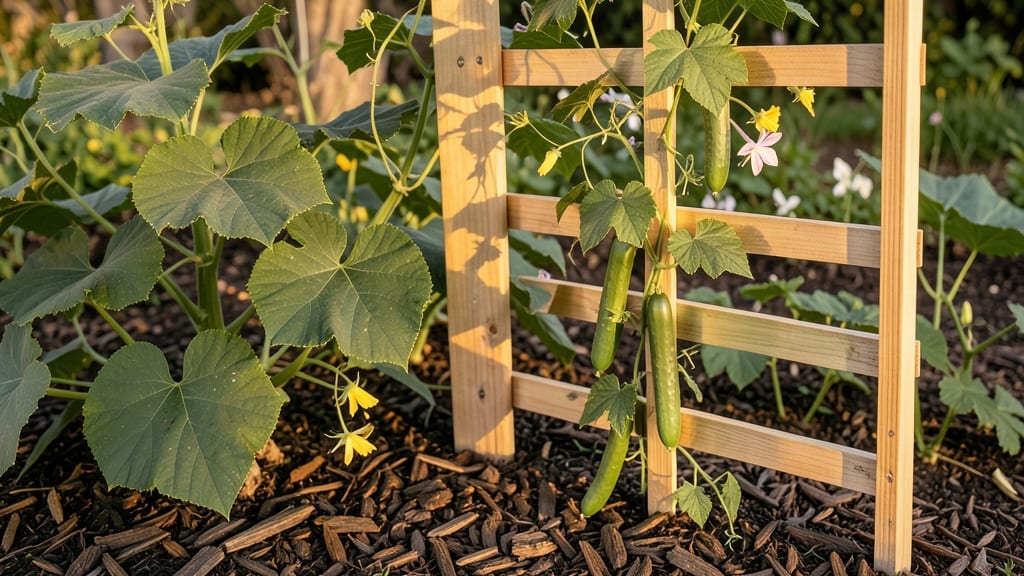
Cucumbers and green beans can grow together in companion planting, as beans fix nitrogen while cucumbers provide shade, but their root systems compete—space them 12+ inches apart and use vertical supports for cucumbers to reduce competition and improve yields.
This pairing works because green beans act as natural fertilizers by pulling nitrogen from the air and depositing it into the soil, which cucumbers—heavy feeders—love to absorb. 🌱 The sprawling cucumber vines also create shade that protects bean pods from sun scorch, especially in hot climates.
However, their shallow roots compete for moisture, so proper spacing and vertical training are essential to prevent stunted growth or reduced harvests.
For best results, plant bush beans in rows alongside trellised cucumbers, keeping them at least 12 inches apart. This setup maximizes space efficiency while minimizing root competition. I've found that adding a thick layer of mulch helps retain moisture and keeps the soil cool for both plants.
💡 In This Article
- Why Cucumbers and Green Beans Are a Smart Companion Pair
- Optimal Planting Layouts for Maximum Yield
Why cucumbers and green beans are a smart companion pair
Green beans excel at nitrogen fixation, a process where bacteria in their root nodules convert atmospheric nitrogen into a form plants can use.
This creates a natural fertilizer for cucumbers, which are heavy nitrogen consumers and can deplete soil nutrients quickly. 🌱 Studies show that beans can add up to 100-200 pounds of nitrogen per acre to the soil over a growing season—enough to support cucumbers' rapid vine growth without synthetic inputs.
The shade provided by cucumber vines is equally valuable. Bean pods are particularly vulnerable to sun scorch, especially when temperatures exceed 85°F. Cucumber leaves create a natural canopy that maintains pod temperatures 5-10°F cooler than exposed beans, which can boost yields by 15-25% in hot climates.
The vines also act as windbreaks, reducing stress on the more delicate bean plants.
Pest management is another critical benefit. Cucumbers attract beneficial insects like ladybugs and lacewings that prey on bean pests such as Mexican bean beetles. Meanwhile, the strong scent of cucumber leaves can mask bean plants from aphids.
This natural pest control reduces the need for chemical interventions, creating a more sustainable growing environment.
However, the root competition is where this pairing requires careful management. Both plants have shallow root systems that spread aggressively—cucumbers through their extensive vine network and beans through their lateral roots.
When planted too closely (6-8 inches apart), they'll compete for water and nutrients, leading to stunted growth, smaller cucumbers, and fewer bean pods. The key is creating physical separation while maintaining proximity for the symbiotic benefits.
Consider the soil microbiome as well. Cucumbers prefer slightly acidic soil (pH 6.0-6.8) while beans thrive in neutral to slightly alkaline conditions (pH 6.0-7.0).
This minor difference means you'll need to monitor soil pH and potentially amend with lime or sulfur to create an optimal balance for both plants. A well-balanced soil supports the nitrogen-fixing bacteria essential for the beans while providing the nutrients cucumbers need to thrive.
For maximum effectiveness, plant bush beans (which stay compact) alongside trellised cucumbers. The vertical growth habit of cucumbers keeps their roots confined to the trellis area, while bush beans spread horizontally.
This creates a natural separation of root zones while maintaining the companion benefits. The result is a more efficient use of garden space with healthier plants on both sides.