
How To
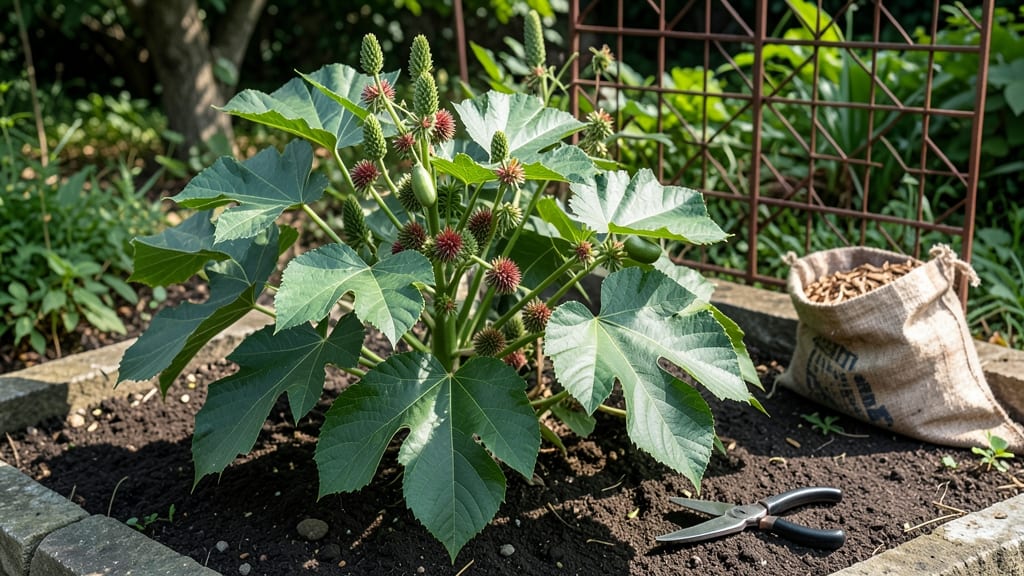
Castor beans pack ricin, a protein that shuts down your body's protein-making machinery, leading to organ failure within days. 🔥 Symptoms start with vomiting and diarrhea but can escalate to seizures or death—there's no antidote.
Even animals avoid them instinctively, which should be your first clue. The seeds' hard outer shell doesn't protect you either; ricin spreads throughout the seed's flesh.
What makes this especially tricky is that castor oil—made from crushed, processed seeds—is completely safe. The ricin is chemically removed during production, leaving only the oil. But the whole seed?
Always toxic. If you're working with castor plants, wear gloves and keep them away from pets or children—accidental ingestion is a real risk.
💡 In This Article
- Why Castor Beans Are Deadly: Ricin Toxicity Explained
- Safe Castor Plant Uses in Gardening and Beyond
Why castor beans are deadly: ricin toxicity explained
Ricin is a ribosome-inactivating protein that specifically targets ribosomes—the cellular structures responsible for protein synthesis. When ingested, ricin binds to the 28S rRNA component of ribosomes, permanently stopping protein production in cells. This causes widespread cell death, particularly in organs with high metabolic activity like the liver, spleen, and kidneys.
A single castor bean contains enough ricin to kill an adult human, with symptoms appearing within 6-8 hours and potentially fatal effects in 3-5 days.
The toxin's potency stems from its chemical stability—ricin resists heat, digestion, and most processing methods. Even boiling castor beans for 30 minutes fails to neutralize ricin, unlike many other plant toxins (e.g., cyanide breaks down with heat).
The lethal dose is estimated at just 1 milligram per kilogram of body weight, making accidental ingestion especially dangerous. For comparison, cyanide requires 50-60 mg to be fatal, while solanine (found in green potatoes) needs 2-5 mg per kg—ricin's toxicity is 50 times stronger than solanine.
Initial symptoms mimic food poisoning: severe vomiting, diarrhea, and abdominal pain, but these progress to dehydration, organ failure, and internal bleeding. Unlike ricin's slow-acting effects, cyanide causes rapid respiratory failure within minutes, while solanine poisoning primarily affects the nervous system.
The lack of an antidote makes ricin poisoning particularly grim—supportive care focuses on managing symptoms until the body either recovers or succumbs.
What makes castor beans uniquely dangerous is their appearance—smooth, glossy, and often mistaken for edible seeds like coffee beans or peppercorns. The hard outer shell doesn't protect against ricin, which is evenly distributed throughout the seed's flesh. Even animals instinctively avoid them, though livestock have died after consuming contaminated feed.
This visual deception has led to multiple fatal poisoning cases, including a 1978 incident where a chef accidentally used castor beans in a salad, killing two people.
Ricin's mechanism also explains why castor oil is safe—the oil is extracted through mechanical pressing and solvent removal, which separates ricin from the lipid content. The resulting oil contains 0.0001% ricin or less, making it harmless for medicinal, industrial, and even culinary uses (like in some laxatives).
This stark contrast highlights why seed identification is critical—never assume a seed is edible based on appearance alone.
For those curious about castor plants, the key takeaway is simple: admire them from afar. Their ornamental value lies in their striking palm-like leaves and vibrant red seed pods, but their seeds should never be handled without protection.
Even touching them can cause skin irritation, and inhalation of ricin-containing dust has been linked to respiratory issues in industrial settings.