
Tools
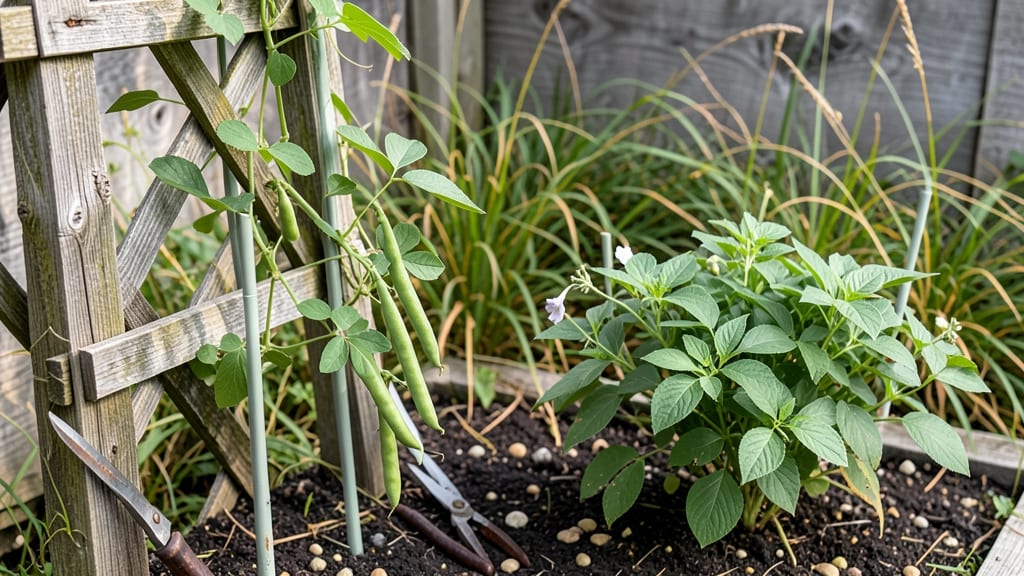
Whether string beans need a trellis depends on the variety: bush beans grow compactly without support, while pole beans require vertical training for better airflow and higher yields. Select based on your garden layout and growth goals.
Bush beans stay low to the ground, making them perfect for small gardens or containers, while pole beans climb naturally and produce more beans per plant when supported. 🌱 The right choice depends on your space—bush beans need less maintenance but yield fewer pods, while pole beans demand trellises but reward you with continuous harvests.
Trellising also reduces disease risk by improving airflow around the plants.
For pole beans, a sturdy trellis made from bamboo stakes or wire mesh works best, with vines needing gentle guidance as they grow. This vertical approach not only saves garden space but also makes harvesting easier.
If you're short on room, consider growing bush beans instead—they're just as productive for their compact size.
💡 In This Article
- String Bean Varieties: Bush vs Pole Growth Habits
- Maximizing Yield: When to Use Trellises for Pole Beans
String bean varieties: bush vs pole growth habits
The key difference between bush and pole beans lies in their vine structure and growth patterns. Bush beans develop a compact, bushy shape with multiple branches growing from the base, reaching heights of 12-24 inches without support.
Their determinate growth means they produce all their pods within a 4-6 week window, making them ideal for smaller gardens or container growing. Pole beans, on the other hand, grow indeterminately, sending out long vines that can climb 6-10 feet or more, producing beans continuously throughout the season.
Sunlight exposure plays a critical role in their growth habits. Bush beans thrive with 6-8 hours of direct sunlight daily and benefit from their low profile by receiving even light distribution. Their dense foliage creates a self-shading effect that can reduce disease risk by keeping leaves dry.
Pole beans, however, need full sun (8+ hours) and vertical support to maximize photosynthesis.
Without a trellis, their vines sprawl across the ground, blocking sunlight to lower leaves and increasing the risk of fungal diseases like rust or powdery mildew. 🌿 The vertical growth also improves air circulation around the plant, which is crucial for preventing moisture buildup.
Root development differs significantly between the two types. Bush beans develop a fibrous root system that spreads widely but not deeply, typically reaching 6-12 inches below the soil surface. This makes them less competitive with weeds but more susceptible to drought stress in hot climates.
Pole beans, however, develop a deeper, more robust taproot system that can extend 2-3 feet down, allowing them to access moisture and nutrients more efficiently. This deeper root system also helps pole beans stay anchored to trellises during wind or heavy rain.
Spacing requirements reflect these growth differences. Bush beans should be planted 3-4 inches apart in rows spaced 18-24 inches apart to prevent overcrowding. Pole beans, however, need 4-6 inches between plants with rows 3-4 feet apart to allow for proper trellis support and vine spread.
Overcrowding bush beans can lead to poor air circulation and increased disease pressure, while pole beans without adequate spacing will compete for sunlight and nutrients, reducing overall yield.
Consider your garden's layout and maintenance preferences when choosing between varieties. Bush beans are perfect for small spaces, raised beds, or container gardens, while pole beans excel in larger gardens or vertical growing systems.
For example, in a 4x8-foot raised bed, you could fit about 16-20 bush bean plants but only 4-6 pole bean plants with proper trellising. The trade-off is that pole beans typically produce 2-3 times more beans per plant over a longer harvest period compared to bush beans.
Another factor to consider is the harvesting experience. Bush beans produce all their pods at once, requiring frequent picking over 2-3 weeks to maintain quality. Pole beans, however, offer a continuous harvest from 60-90 days after planting, making them ideal for extended fresh pod production.
This prolonged harvest window also means pole beans can be more productive in cooler climates where the growing season is shorter.