
Planting
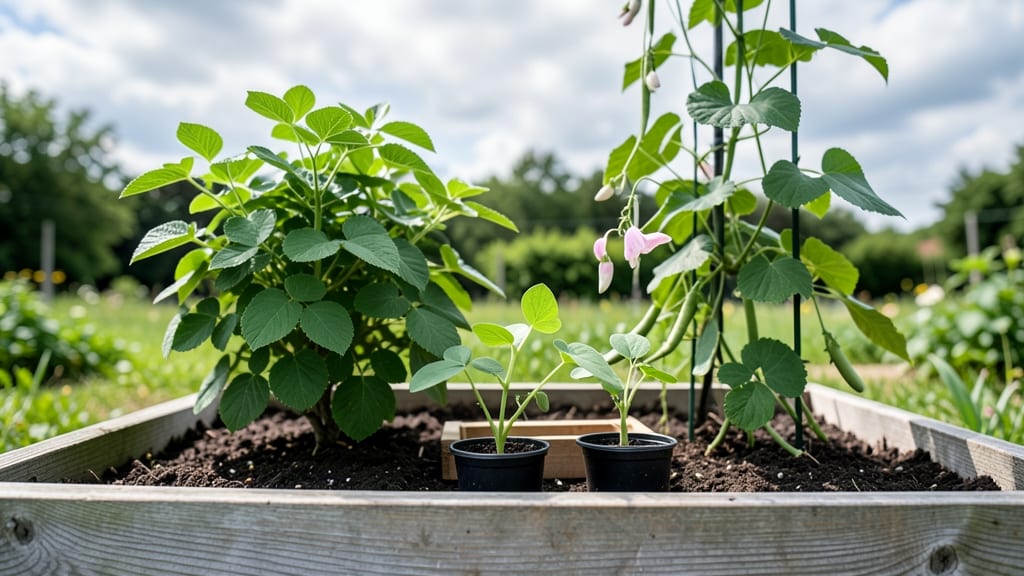
Spacing matters because it directly impacts how well your beans grow and how much you'll eventually harvest. 🌱 Bush beans need less room since they grow in compact bushes, while pole beans require extra space to climb and spread properly.
I've found that proper spacing also reduces competition for nutrients and water, helping your plants stay strong and disease-free. In a raised bed, you can fit more plants by staggering rows or using vertical supports for pole varieties.
If you're working with limited space, consider planting fast-maturing varieties or using companion plants like radishes or lettuce between your beans. These companions help break up soil compaction and deter pests, making the most of your raised bed's real estate.
Just remember—pole beans need that extra room to thrive, so don't crowd them even if your garden feels tight!
💡 In This Article
- Why Proper Green Bean Spacing Boosts Yield and Health
- Raised Bed Green Bean Layout Tips for Small Gardens
Why proper green bean spacing boosts yield and health
Green bean spacing isn't just about fitting more plants—it's about creating an environment where each plant can thrive. When you space bush beans 4 to 6 inches apart, you're giving their shallow root systems room to spread horizontally without competing for nutrients.
This spacing also allows sunlight to reach all leaves, preventing the lower foliage from turning yellow—a sign of insufficient light. 🌿 The science here involves photosynthesis: crowded plants block light from lower leaves, reducing sugar production and weakening the plant's ability to produce pods.
Pole beans, which climb 6 to 8 feet tall, need even more room—6 to 8 inches between plants—to support their vines and prevent overcrowding. Their deep root systems (reaching up to 2 feet) require ample space to access water and nutrients without competing.
In raised beds, this vertical growth habit means you can maximize space by training vines along trellises or cages, but the base spacing remains critical. Without it, pole beans become tangled, increasing the risk of fungal diseases like rust or powdery mildew, which thrive in humid, crowded conditions.
Airflow is another key factor. Proper spacing creates microclimates where air circulates freely, reducing humidity around the foliage. This is especially important in raised beds, where soil warms faster and can create steamy conditions after watering.
When plants are too close, moisture lingers, creating ideal conditions for bacterial and fungal pathogens. I've seen firsthand how a 12-inch row spacing (instead of the recommended 18-24 inches) can turn a healthy crop into a disease-ridden mess within weeks.
Root development also benefits from spacing. Bush beans develop a fibrous root system that spreads outward, while pole beans send down a primary taproot. Crowding forces roots to grow in tight circles, limiting their ability to explore the soil for water and minerals.
In a raised bed, where soil volume is limited, this competition becomes even more critical. Proper spacing ensures roots can expand freely, leading to stronger plants that produce more pods over a longer harvest period.
Here's a quick comparison to illustrate the difference:
- Bush beans: Compact growth, 4-6 inches apart, ideal for small raised beds or interplanting with shallow-rooted crops like lettuce
- Pole beans: Tall vines, 6-8 inches apart, best grown along trellises or cages to save space while maintaining airflow
In my experience, following these spacing guidelines can increase your yield by 20-30% simply by reducing stress on the plants. The extra effort in planning your layout pays off in healthier plants, fewer pests, and a longer harvest season. 🌱