
Planting
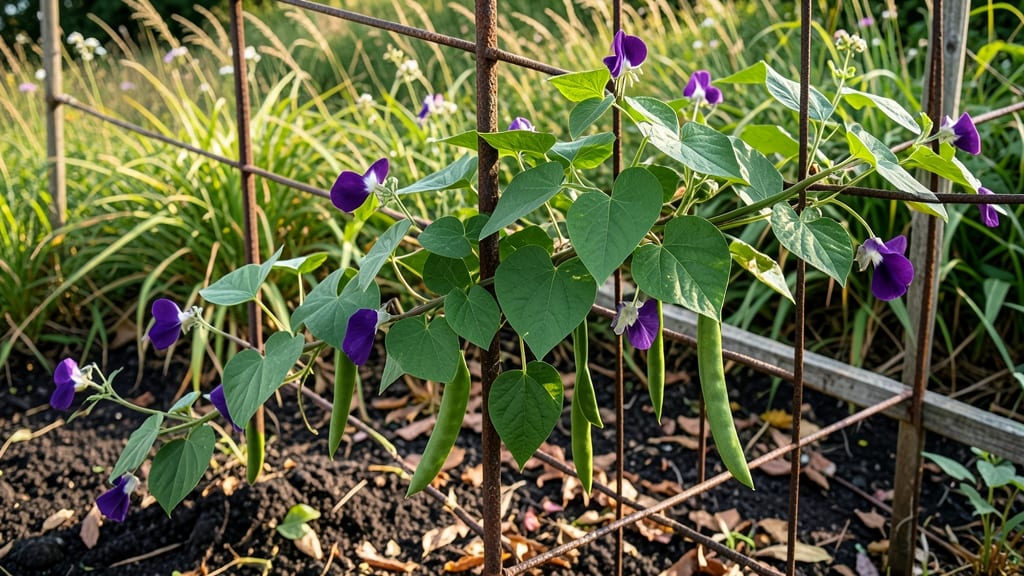
Growing purple hyacinth beans transforms shady corners into vibrant vertical gardens that hum with life. 🌿 I learned the hard way that these fast-growing climbers need the right support and care to thrive—especially in partial shade where other plants struggle.
The secret lies in matching their needs with simple adjustments that make all the difference. These beans aren't just pretty—they're productive too. With the right trellis, they'll climb 10-15 feet in a single season, producing fragrant purple flowers followed by edible pods.
The key is well-draining soil, consistent moisture, and regular pruning to keep them climbing instead of sprawling. Even beginners can master this with just a few basic tools and patience.
You'll end up with a lush, fragrant living wall that attracts bees and butterflies while providing shade for other plants below. The pods taste like string beans when young, making this a dual-purpose plant that works in gardens and containers alike.
Perfect for small spaces or urban yards where vertical growing maximizes every inch. Here's where most gardeners go wrong: neglecting the trellis until the vines are already struggling. Start support early, and you'll avoid the heartbreak of tangled, unruly growth. Let's get those seeds in the ground!
📚 In This Guide
- What you need
- Instructions
- Tips and common mistakes
- Wrapping up and next steps
What you need
- ● Seeds: 5–10 purple hyacinth bean seeds (non-GMO, organic if preferred).
- ● Potting mix: 2–3 gallons of well-draining, peat-based or coconut coir mix (pH 6.0–7.0).
- ● Containers or garden bed: For containers: 5–7 gallon pots with drainage holes (1 per plant).
- ● For in-ground planting: A sunny-to-partially shaded spot with loose, fertile soil (amend with compost if needed).
- ● Support structure: A trellis, fence, or sturdy stakes (5–6 ft tall) for climbing.
- ● Fertilizer: Balanced 10-10-10 or organic compost (1 cup per plant at planting).
- ● Watering can or hose: With a gentle spray nozzle for hydration.
- ● Garden trowel or transplant spade (for digging).
- ● Pruning shears (for trimming vines or deadheading).
- ● Mulch (straw or wood chips) (to retain moisture and suppress weeds).
- ○ Plant food (optional): Liquid fertilizer (like fish emulsion) for a mid-season boost.
- ● Gloves (to protect hands from thorns on mature plants).
Step-by-step guide to growing purple hyacinth beans
Here's how to cultivate these striking climbers that thrive in partial shade and deliver bold purple blooms.
🌱 Step 1: Choose the Right Location and Prepare the Soil
Purple hyacinth beans (Dolichos lablab) love partial shade to dappled sunlight—ideal for spots under trees where other climbers struggle. Test your soil first: these plants prefer well-draining, slightly acidic to neutral soil (pH 6.0-7.0). Amend heavy clay with 2-3 inches of compost mixed into the top 12 inches of soil to improve aeration.
Here's the thing—these beans grow fast, so prepare a support structure before planting. A 6-foot tall trellis, arbor, or sturdy fence works best. I like to install mine at planting time so the vines have something to grab immediately. If your soil is particularly poor, add a slow-release fertilizer (5-10-10 ratio) at planting to give them a nutrient boost.
🌱 Step 2: Plant Seeds at the Right Depth and Spacing
Start seeds indoors 8-10 weeks before your last frost date or direct-sow after all danger of frost when soil reaches 60°F. Plant seeds ½ inch deep—they need light to germinate, so don't bury them too deeply. Space seeds 4-6 inches apart in rows 18-24 inches apart for proper airflow. Real talk: these beans grow 10-15 feet tall, so give them room to sprawl.
Water gently after planting to settle the soil without disturbing seeds. Keep the soil evenly moist but not soggy until germination, which takes 7-14 days depending on temperature. You'll see first true leaves (not the initial seed leaves) within 2-3 weeks—that's your cue to start fertilizing lightly with a balanced liquid fertilizer (10-10-10) every 2 weeks.
☀️ Step 3: Provide Support and Train Vines Early
As soon as vines reach 6 inches tall, guide them toward your trellis or support structure. I weave the tendrils gently through the trellis slats—don't force them, just encourage upward growth. Purple hyacinth beans are twining climbers, meaning they'll coil around supports naturally, but a little help early prevents tangled messes later.
Watch for new leaves forming at the tips—this is when vines will start climbing most aggressively. Prune any side shoots that grow below the first 3-4 feet to direct energy upward. If you notice leaves yellowing, it's usually a sign of overwatering or nutrient deficiency. Adjust your watering to 1 inch per week (more in extreme heat) and switch to a phosphorus-rich fertilizer (like 10-20-10) to encourage blooming.
💧 Step 4: Water and Fertilize for Continuous Blooms
Once established, purple hyacinth beans are drought-tolerant but produce best with consistent moisture. Water deeply 2-3 times per week during dry spells, aiming for 1-1.5 inches of water per week. The key is even moisture—let the top 1-2 inches of soil dry out between waterings to prevent root rot. I water in the early morning to reduce fungal risks from prolonged leaf wetness.
Feed plants every 4-6 weeks with a low-nitrogen, high-phosphorus fertilizer (like 5-10-10) to promote abundant flowering. You'll notice buds forming along the stems about 8-10 weeks after planting. Deadhead spent blooms regularly to encourage continuous flowering through the season. Here's where it gets fun—these beans produce edible pods and seeds, but if you're growing them purely for their vibrant purple flowers, you can harvest the pods before they mature.
✂️ Step 5: Prune and Prepare for Winter
In late summer, when blooms slow down, prune back any leggy or overgrown vines to half their height. This encourages new growth and a second flush of flowers in some climates. Stop fertilizing 6-8 weeks before your first frost to harden off the plants. Purple hyacinth beans are tender perennials—they'll die back in frost but often resprout from the roots in spring if the climate is mild.
Before winter, cut back the vines to ground level and add a 2-inch layer of mulch (like shredded leaves or straw) to protect the roots. In colder zones, you can dig up the tubers (if they're large enough) and store them in a cool, dry place over winter. If you're in a Zone 8 or warmer, the plants may overwinter in the ground with just mulch protection. Either way, mark the spot—they'll pop up earlier and more vigorously the next season.
Tips & tricks for growing stunning purple hyacinth beans
Mastering these vibrant climbers comes down to understanding their unique needs—and avoiding common pitfalls that can turn your garden into a tangled mess.
Location and Soil Strategy: Purple hyacinth beans thrive in partial shade, but the real secret lies in soil preparation. I've found that mixing in 2-3 inches of compost into the top 12 inches of soil creates the perfect environment for root development. For heavy clay soils, add a handful of perlite to improve drainage. The goal is to mimic their natural habitat where they grow alongside larger trees receiving dappled sunlight. Test your soil's pH—these plants prefer slightly acidic to neutral (6.0-7.0), and you can adjust with lime or sulfur if needed.
Timing Secret: The 8-10 week indoor starting window is crucial for northern climates, but here's what nobody tells you—if you're in Zone 8 or warmer, you can direct-sow after your last frost when soil hits 60°F. I've had great success with this method, especially when planting near established trellises. For cooler climates, use this time to get a head start indoors with grow lights if natural light is limited. The 60°F soil temperature threshold is non-negotiable for germination, so plan accordingly if you're in transitional zones.
Support System Pro Tip: Install your 6-foot support structure at planting time—don't wait until the vines are already sprawling. I use a simple wooden trellis because it's sturdy enough to handle the 10-15 foot growth these plants achieve. The key is to train vines early when they reach 6 inches tall by gently weaving them through the slats. This prevents that dreaded tangled mess later. If you notice vines struggling to climb, it's often because the support isn't secure enough—check for wobbling after heavy rain or wind.
Fertilizer Timing: The instructions mention switching to phosphorus-rich fertilizer (10-20-10) when you see yellowing leaves or bud formation, but here's the real insight: this is when the plants are signaling they need a bloom boost. I've found that applying this fertilizer every 4-6 weeks during the growing season creates that spectacular continuous flowering. For organic gardeners, bone meal makes an excellent phosphorus source. And remember—stop fertilizing 6-8 weeks before frost to allow the plants to harden off naturally.
Pro Tips for Purple Hyacinth Bean Plant
- Mastering these vibrant climbers comes down to understanding their unique needs—and avoiding common pitfalls that can turn your garden into a tangled mess.
- Location and Soil Strategy: Purple hyacinth beans thrive in partial shade, but the real secret lies in soil preparation.
- Timing Secret: The 8-10 week indoor starting window is crucial for northern climates, but here's what nobody tells you—if you're in Zone 8 or warmer, you can direct-sow after your last frost when soil hits 60°F.
Frequently asked questions
Got questions about growing or caring for your purple hyacinth bean plant? You’re not alone! Here are answers to the most common queries to help you cultivate this stunning climber with confidence.
Is the purple hyacinth bean plant toxic to pets or humans?
The purple hyacinth bean (Dolichos lablab) contains lablabine, a toxin that can cause mild gastrointestinal upset in pets and humans if ingested in large quantities. Symptoms may include vomiting or diarrhea. Keep plants out of reach of curious pets and children, and avoid consuming the seeds or leaves.
How long does it take for purple hyacinth beans to flower and produce pods?
With proper care, expect blooms to appear 60–90 days after planting, followed by bean pods in another 4–6 weeks. Fast-growing vines thrive in warm climates (zones 9–11) but may take slightly longer in cooler regions. Pro tip: Pinch back early flowers to encourage bushier growth and more abundant blooms later!
Can I grow purple hyacinth beans in containers, or do they need a garden bed?
These vigorous climbers adapt well to large containers (10+ gallons) with drainage holes. Use a trellis or sturdy stake for support. Ensure the pot gets 6+ hours of sunlight daily and water consistently—containers dry out faster than garden beds. Bonus: Move pots indoors if frost threatens!
What should I do if my purple hyacinth bean leaves turn yellow or develop holes?
Yellowing leaves often signal overwatering or nutrient deficiency (e.g., nitrogen). Holes or chewed edges? Likely pests like aphids or beetles. Fix it: Reduce watering, fertilize with balanced plant food, and spray leaves with neem oil or insecticidal soap. Prune damaged foliage to encourage new growth.
Are there purple hyacinth bean varieties with different colors or growth habits?
Yes! While the classic purple hyacinth bean sports lavender blooms, varieties like ‘Black-Eyed Susan’ (white flowers with purple streaks) and ‘Scarlet Runner’ (red flowers) offer diverse options. Dwarf varieties (3–5 ft) suit small spaces, while standard vines reach 10–15 ft. Check local nurseries for seed options!
Wrapping up and next steps
The purple hyacinth bean plant is a stunning, low-maintenance addition to shade gardens, offering vibrant blooms and lush foliage with minimal effort. Whether you're drawn to its dramatic purple flowers or its ability to thrive in partial shade, this climbing beauty is perfect for adding vertical interest to your space.
Ready to transform your garden? Grab your supplies, choose a sunny or partially shaded spot, and start growing! 🌿✨