
Planting
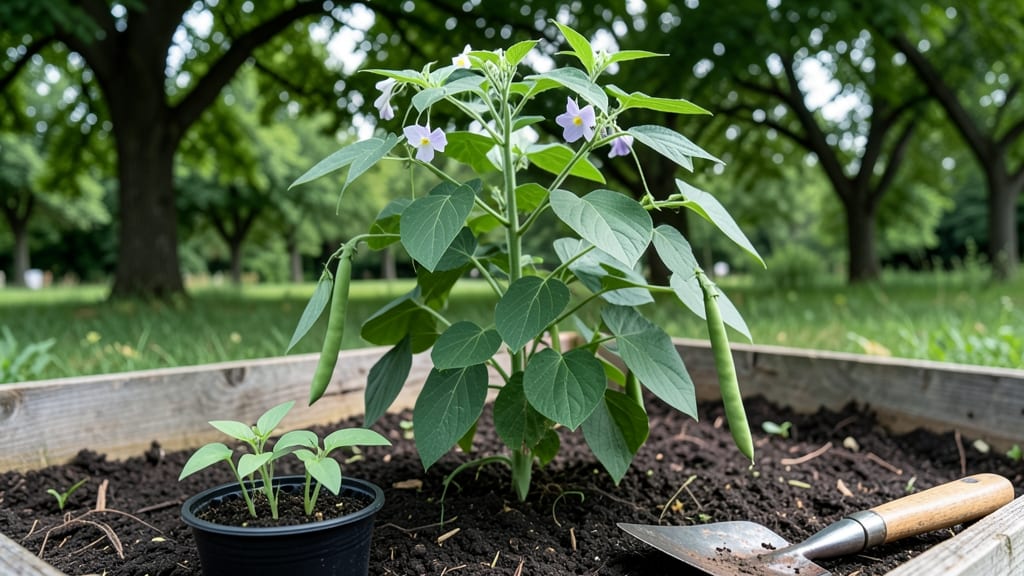
To plant string beans in a garden, start by choosing your variety—whether bush or pole—and prepare soil rich in organic matter for fast germination and strong growth.
String beans are one of the fastest-growing, easiest-to-harvest vegetables—but planting them wrong can mean poor yields or even failed crops. Whether you're working with bush beans or pole varieties, getting the spacing and soil right is the key to a bountiful harvest.
In Zone 6a, like much of the U.S., the best time to plant is after your last frost in April or May, ensuring warm soil and steady temperatures for optimal growth. A few simple steps—like loosening the soil and adding compost—can make all the difference.
Below, I’ll walk you through soil prep, spacing secrets, and everything else you need to know to grow healthy, productive string beans all summer long.
Perfect soil conditions and prep for string beans: what your plants need to thrive
String beans thrive when planted in soil that mimics their natural environment—warm, nutrient-rich, and well-draining. The key to a bountiful harvest starts with preparing your soil at least 2-3 weeks before planting.
Unlike many vegetables, string beans are not fussy about soil type, but they do demand proper organic matter and balanced pH levels to prevent stunted growth or poor germination.
Most gardeners overlook soil texture, assuming all soil works equally. However, clay-heavy or sandy soils can create major challenges. For example, clay soil compacts easily, suffocating roots, while sandy soil drains too quickly, starving plants of moisture.
The solution? Amending your soil with compost, aged manure, or coconut coir to improve structure and water retention.
String beans prefer a slightly acidic to neutral pH range of 6.0 to 7.0. Testing your soil’s pH is a game-changer—many gardeners skip this step and end up with weak seedlings.
If your soil is too acidic (below 6.0), mix in lime; if it’s alkaline (above 7.0), add sulfur or peat moss. A simple home pH test kit (around $10) makes this task effortless.
Bush beans and pole beans have slightly different soil preferences. Bush beans, which grow in compact mounds, benefit from loose, well-aerated soil to support their shallow root systems. In contrast, pole beans, which climb trellises, need deeper, nutrient-rich soil to anchor their tall vines.
Both varieties, however, hate soggy roots, so prioritize soil with good drainage.
Here’s my foolproof soil prep checklist before planting:
- Remove weeds and debris from the planting area
- Loosen soil to a depth of 12 inches using a garden fork
- Mix in 2-3 inches of compost or well-rotted manure
- Add a balanced fertilizer (10-10-10) at planting time
- Rake the surface smooth for even seed placement
| Soil Requirement | Ideal Specification | Amendment for Clay Soil | Amendment for Sandy Soil |
|---|---|---|---|
| pH Level | 6.0–7.0 (slightly acidic to neutral) | Add lime (1 lb per 100 sq ft) | Add sulfur or peat moss |
| Organic Matter | 3–5% (compost or aged manure) | Mix in 3 inches of compost | Add coconut coir or leaf mold |
| Drainage | Well-draining (no standing water) | Add perlite or coarse sand | Incorporate peat moss or compost |
| Nutrient Density | Moderate (balanced NPK) | Add bone meal (1 tbsp per plant) | Use worm castings for slow-release nutrients |
| Texture | Loamy (ideal for root growth) | Work in gypsum (1 lb per 100 sq ft) | Add composted wood chips |
One of the biggest mistakes gardeners make is over-fertilizing string beans. Too much nitrogen leads to leafy growth at the expense of pods. Instead, opt for a low-nitrogen, high-phosphorus fertilizer (like 5-10-10) to encourage flowering and pod development.
I’ve seen gardeners double their yield simply by adjusting their fertilizer blend!
If you’re planting in containers or raised beds, use a lightweight potting mix blended with 30% compost. String beans in containers need at least 12 inches of depth to support their roots.
For bush beans, a 5-gallon container per plant works well, while pole beans require larger, deeper pots (10+ gallons) to accommodate their vines.
After amending your soil, water it deeply 24 hours before planting to settle the amendments. This step ensures seeds make direct contact with nutrients and moisture, giving them the best start.
Pro tip: Mulch with straw or grass clippings after planting to retain moisture and suppress weeds—this simple habit can boost your harvest by up to 20%!
Finally, avoid planting string beans in the same spot year after year. They’re heavy feeders and deplete soil nutrients quickly. Rotate them with nitrogen-fixing plants like
String bean spacing secrets: how far apart to plant bush vs. pole varieties for maximum yield
Getting the spacing right when planting string beans is the difference between a bountiful harvest and a disappointing yield. Bush beans and pole beans have completely different spacing needs, and crowding them can lead to disease, poor airflow, and stunted growth.
Whether you're working with a large garden bed or container gardening, these proven spacing guidelines will help you maximize every square inch.
Bush beans are compact plants that stay low to the ground, typically reaching just 1-2 feet tall. They thrive when planted in closely spaced rows but need enough room to prevent fungal diseases like rust.
Pole beans, on the other hand, are vigorous climbers that can grow 6-10 feet tall with proper support. Their sprawling habit means they need vertical space and wide row spacing to avoid tangling and shading each other.
| Variety | Plant Spacing | Row Spacing | Support Needed | Yield Impact |
|---|---|---|---|---|
| Bush Beans (Compact) | 3-4 inches apart | 18-24 inches apart | None | High (3-5 lbs per 10 sqft) |
| Bush Beans (Sprawling) | 4-6 inches apart | 24-30 inches apart | None | Moderate (2-4 lbs per 10 sqft) |
| Pole Beans (Trellis) | 4-6 inches apart | 36-48 inches apart | Trellis or fence | Very High (5-8 lbs per 10 sqft) |
| Pole Beans (Teepee) | 6-8 inches apart | 30-36 inches apart | Teepee structure | High (4-6 lbs per 10 sqft) |
| Container Gardening | 2-3 inches apart | N/A (1 plant per 5-gallon pot) | Small trellis or cage | Moderate (1-2 lbs per container) |
For bush beans, start by planting seeds 3-4 inches apart in rows that are 18-24 inches apart. If you're growing a sprawling variety, increase the spacing to 4-6 inches apart to prevent overcrowding.
This spacing ensures good airflow and reduces the risk of fungal diseases like powdery mildew. Use a string and stakes to mark your rows for precision, especially if you're new to gardening.
Pole beans require more space between plants and rows because they grow vertically and aggressively. Plant seeds 4-6 inches apart in rows that are 36-48 inches apart when using a trellis system.
If you're using a teepee structure, space plants 6-8 inches apart with rows 30-36 inches apart. This gives their vines room to climb and spread without competing for sunlight or nutrients.
If you're container gardening, opt for bush varieties or dwarf pole beans.
Plant one bush bean per 5-gallon pot or two pole beans per 10-gallon container, using a small trellis or cage for support. Companion planting can also help maximize space—try pairing beans with corn and squash (the "Three Sisters" method) to deter pests and improve soil health naturally.
Proper spacing isn't just about yield—it's about plant health. Overcrowded beans develop weak stems, yellow leaves, and fewer pods. Always thin seedlings to the recommended spacing once they're 2-3 inches tall, and avoid planting beans in the same spot year after year to prevent soil-borne diseases.
With the right spacing, you'll enjoy a longer harvest season and healthier plants all summer long. 🌱