
Pests
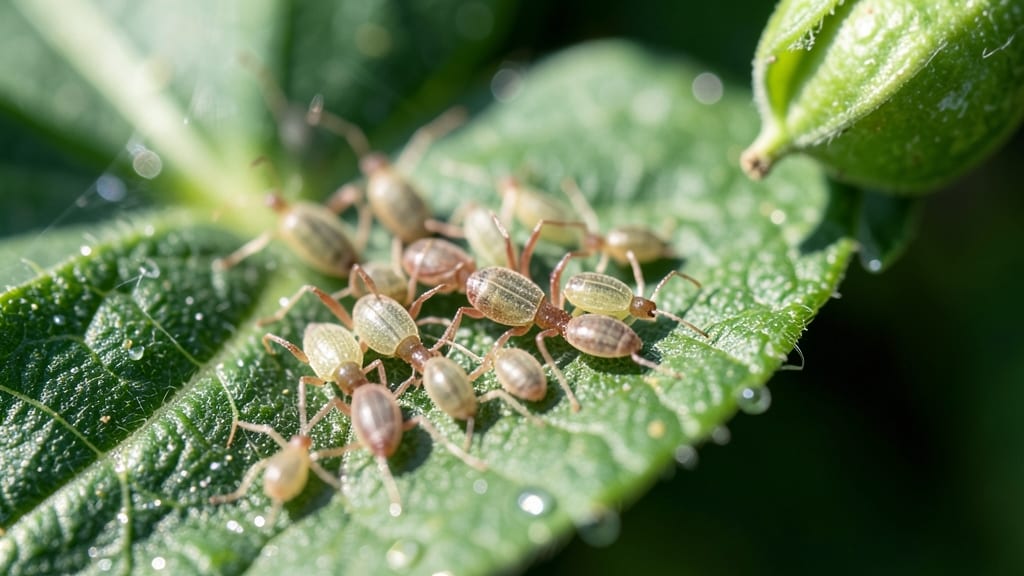
Spider mites in soybeans turn lush green leaves into dusty skeletons faster than you can say "harvest season." 🌱 I've watched entire fields go from thriving to struggling in weeks—until I learned these organic control methods that actually work without breaking the bank or the ecosystem.
The problem starts with tiny, nearly invisible pests that thrive in hot, dry conditions. They suck sap from leaves, leaving behind a fine webbing that stunts growth and weakens plants. Most farmers reach for harsh chemicals first, but those solutions often backfire by killing beneficial insects and harming soil health.
What you'll discover here are targeted, sustainable fixes—neem oil sprays, predatory mites, and simple cultural tweaks—that keep soybeans healthy while protecting the bigger picture. Within two weeks of treatment, you'll see new growth pushing through, and those once-spotted leaves turning vibrant green again.
These methods work for both small-scale gardeners and larger farms. The key is acting early—before the mites spin their webs and take over. Let's get those soybeans back on track!
Root Causes of Soybean Spider Mite Outbreaks
Spider mites thriving in your soybean fields aren’t just a random bad luck scenario—they’re a response to specific environmental and agricultural conditions. Understanding these triggers is the first step to prevention.
Below, we break down the key factors that turn soybeans into a spider mite buffet, along with the science behind why they happen.
Spider mites love hot, dry conditions—think of them as the desert survivors of the soybean world. When temperatures rise above 85°F (29°C) and humidity drops below 40%, these tiny pests multiply like rabbits in a greenhouse.
Why it happens:
- Plant stress signals: Soybeans under drought or heat stress produce volatile organic compounds (VOCs) that attract spider mites. These compounds act like a dinner bell, luring mites to feed on weakened plants.
- Reduced predatory pressure: Beneficial insects like lady beetles and lacewings (which normally keep mites in check) become less active in extreme heat. Without natural predators, mite populations explode.
- Thinner cuticles: Heat-stressed soybeans develop thinner leaf cuticles, making them easier for mites to pierce and suck out sap.
Actionable insight: 💡 Monitor soil moisture and leaf temperature—mites thrive when leaves feel warm to the touch. Drip irrigation or shade cloth can create a less hospitable microclimate.
Farmers often reach for chemical pesticides to combat other pests, but this can backfire spectacularly when it comes to spider mites. These mites are resistant to many common insecticides and thrive in pesticide-treated fields—especially if the chemicals kill their natural enemies first.
Why it happens:
- Predator die-off: Pesticides like neonicotinoids, pyrethroids, and organophosphates wipe out predatory mites, lacewings, and spiders that would otherwise keep spider mite populations in balance.
- Resistance buildup: Spider mites have two-spotted mite (Tetranychus urticae) and soybean spider mite (Tetranychus evansi) species that develop resistance to synthetic pesticides faster than most insects. Over time, repeated applications make them nearly untouchable.
- Secondary pest outbreak: When primary pests (like aphids) are killed off, spider mites move in to fill the ecological void, unchecked by competition.
Actionable insight: ✨ Rotate pesticides and prioritize selective, mite-specific treatments (like horticultural oils or neem oil) that spare beneficial insects. Always check labels for IPM (Integrated Pest Management) compatibility.
Fields planted with only soybeans year after year create a perfect storm for spider mite infestations. Monocultures offer no refuge for natural predators and provide uninterrupted food sources for mites.
Why it happens:
- No predator habitat: Diverse plantings (like cover crops or border rows of marigolds, dill, or clover) attract predatory insects that feed on spider mites. Monocultures leave them nowhere to hide.
- Continuous food supply: Spider mites don’t migrate far—they stay put if their favorite meal (soybeans) is always available. Rotating crops breaks this cycle.
- Reduced competition: In a mixed ecosystem, other pests (like aphids) might compete with mites for resources, keeping populations in check. Monocultures remove this natural competition.
Actionable insight: 🌿 Plant trap crops (e.g., sunflowers or alfalfa) around soybean fields to lure mites away. Intercropping with clover or buckwheat can also boost beneficial insect populations.
Spider mites hitchhike on plant debris, equipment, and even wind currents. If old soybean residue or infested weeds are left in the field, mites overwinter and return stronger the next season.
Why it happens:
- Overwintering sites: Mites survive winter in cracked soil, leaf litter, and plant stubble. If these aren’t removed, they reinfest fields come spring.
- Equipment spread: Contaminated tractors, harvesters, and irrigation systems can unintentionally transport mites to clean fields.
- Weed hosts: Weeds like pigweed, lambsquarters, and morningglory are alternative food sources for spider mites, allowing them to build up before moving to soybeans.
Actionable insight: 🔥 Clean equipment thoroughly between fields with soapy water or a 70% alcohol spray. Till or burn residue (where legal) to eliminate overwintering sites. Scout weed edges and treat them early.
Soybeans starved of key nutrients (especially potassium and nitrogen) become weaker and more susceptible to spider mite attacks. Healthy plants are harder to penetrate and less appealing to pests.
Why it happens:
- Low potassium (K) levels: Potassium strengthens cell walls, making it harder for mites to feed. Deficient plants are easier targets.
- Excess nitrogen (N): While nitrogen promotes leafy growth, it can weaken plant defenses and make soybeans more attractive to mites.
- Micronutrient deficiencies: Lack of zinc, magnesium, or boron can lead to stunted growth and thin leaves, inviting mite infestations.
Actionable insight: 📊 Test soil regularly and balance fertilizers—aim for a 3:1 nitrogen to potassium ratio. Compost or organic matter can also boost soil health and plant resilience.
Warmer winters and earlier planting dates are pushing soybean growth into peak mite season (late summer/early fall). Mites reproduce faster in heat, and young, tender plants are easier prey.
Why it happens:
- Longer growing season: Early-planted soybeans stay vulnerable longer, giving mites more time to establish colonies.
- Warmer winters: Milder winters mean more mite survivors carry over to spring, leading to earlier and worse infestations.
- Delayed maturity: Heat stress can slow soybean development, keeping plants in a mite-friendly growth stage for weeks longer.
Actionable insight: ⏰ Adjust planting dates to avoid peak mite activity (late July–August in most regions). Use shade cloth or mulch to cool canopy temperatures if early planting is unavoidable.
Beat Back Spider Mites Naturally
Spider mites may be tiny, but they don’t stand a chance against the right mix of early action, organic treatments, and smart prevention.
Whether your soybeans are showing the first signs of webbing or you’re dealing with a full-blown infestation, these targeted solutions will help you restore your crop’s health without harsh chemicals. Below, we’ll break down fixes by cause and symptom, plus pro tips to keep mites from returning.
Not all spider mite damage looks the same—identifying the issue early saves time and effort. Here’s how to diagnose and act:
🕵️♂️ Webbing on Leaves? (Early Infestation)
Cause: Mites are just starting to multiply; they spin silk to protect their colonies. Fix: - Blast them off 💦: Use a strong stream of water (from a hose or sprayer) to knock mites off leaves.
Do this early in the morning when mites are least active. - Introduce predators 🐞: Release predatory mites (Phytoseiulus persimilis) or lacewings—these natural enemies feast on spider mites.
For best results, apply when temps are 60–85°F. - Neem oil spray 🌿: Mix 1–2 tbsp neem oil + 1 tsp mild soap per gallon of water. Spray both sides of leaves (mites hide underneath!). Reapply every 5–7 days for 2–3 weeks.
> 💡 Pro Tip: Test your spray first on a small leaf—neem oil can burn young soybean plants if overused!
🍂 Yellow or White Spots? (Moderate Damage)
Cause: Mites are feeding aggressively, causing stippling and leaf discoloration. Fix: - Kaolin clay barrier 🏗️: Spray kaolin clay (Surround WP) on leaves to create a physical barrier mites can’t cross.
Reapply after rain. - Insecticidal soap 🧼: Use a horticultural oil-based soap (like Safer® Brand). Spray directly on mites (avoid blooming soybeans—soap can harm pollinators).
Apply in the evening to reduce harm to bees. - Diatomaceous earth (DE) 🪨: Lightly dust food-grade DE on leaves (avoid overapplying—it can harm beneficial insects). Reapply after rain.
> ⚠️ Warning: DE loses effectiveness when wet, so it’s best for dry conditions only.
🌪️ Severe Defoliation or Stunted Growth? (Advanced Infestation)
Cause: Mites have gone unchecked for weeks; the plant is stressed. Fix: - Pyrethrin-based sprays 🔥 (last resort): If organic methods fail, use pyrethrin (from chrysanthemums), which is fast-acting but must be used carefully.
Spray at dusk to protect bees. Limit to 1–2 applications—overuse can harm beneficial insects. - Cultural reset 🌱: Prune heavily damaged leaves (but don’t remove more than 20% of the plant).
Focus on strengthening the soybean’s health with: - Balanced fertilization (too much nitrogen = softer leaves = mite buffet). - Thinning crowded plants (better airflow = fewer hiding spots for mites).
> 🌡️ Heat Tip: Mites thrive in hot, dry weather. Increase shade cloth or mulch to retain moisture and cool the soil.
The best defense is a consistent routine—these habits will keep spider mites from moving in:
| Prevention Step | How to Do It | Best Time |
|---|---|---|
| Monitor regularly | Check undersides of leaves weekly with a magnifying glass. | Every 5–7 days |
| Encourage predators | Plant marigolds, dill, or yarrow near soybeans to attract ladybugs and lacewings. | Planting season |
| Maintain humidity | Use drip irrigation (not overhead) to keep leaves damp—mites hate humidity. | Growing season |
| Clean up debris | Remove fallen leaves and weeds where mites overwinter. | Off-season (fall/winter) |
| Rotate crops | Avoid planting soybeans in the same spot yearly—mites build up in soil. | Long-term farm planning |
> ✨ Bonus Hack: Garlic spray (1 chopped garlic bulb + 1 quart water, steep 24 hrs, strain) acts as a mite repellent and mild fungicide. Spray every 10 days for prevention.
- ❌ Skip the undersides – Mites hide there!
Always spray both sides of leaves. - ❌ Use synthetic pesticides first – They kill beneficial insects that eat mites. - ❌ Ignore early signs – A few mites can turn into thousands in 7–10 days. - ❌ Overwater – Soggy soil attracts fungal diseases, weakening plants.
By combining targeted treatments with preventive care, you’ll keep your soybeans lush, mite-free, and high-yielding. Start with one or two methods, monitor progress, and adjust as needed—your plants (and future harvests) will thank you!
Frequently asked questions
How do I tell if my soybeans have spider mites before the damage is obvious?
Look closely at the undersides of leaves with a magnifying glass—you’ll spot tiny yellow or red mites (about 0.5mm long) or fine webbing. Early signs include tiny white/yellow specks (stippling) on leaves. Check new growth first, as mites prefer tender leaves.
Can I use regular dish soap to kill spider mites in soybeans?
No—regular dish soap can harm soybeans and beneficial insects. Use horticultural oil-based insecticidal soap (like Safer® Brand) instead. Mix 1.5 tbsp per gallon of water and spray evening to avoid harming bees. Always test on a small leaf first!
Why do spider mites seem to get worse in hot, dry weather?
Spider mites thrive in hot, dry conditions (above 85°F/29°C) because heat speeds up their reproduction cycle (from 7–10 days to just 3–5 days). Low humidity also reduces natural predators like ladybugs, giving mites free rein. Use shade cloth or mulch to cool plants and retain moisture.
How long does it take for neem oil to work on soybean spider mites?
Neem oil starts working within 24–48 hours, but you’ll need 3–4 applications every 5–7 days for full control. It disrupts mites’ life cycle but doesn’t kill them instantly. For best results, spray both leaf sides in the early morning or evening when mites are less active.
Will predatory mites (like Phytoseiulus persimilis) work in large soybean fields?
Yes, but they’re most effective in smaller plots or greenhouses. For large fields, combine them with refuge plants (like marigolds or dill) to attract their own food sources. Release them early morning when temps are 60–85°F, and avoid spraying pesticides—even organic ones—for 7–10 days before/after release.