
Vegetables
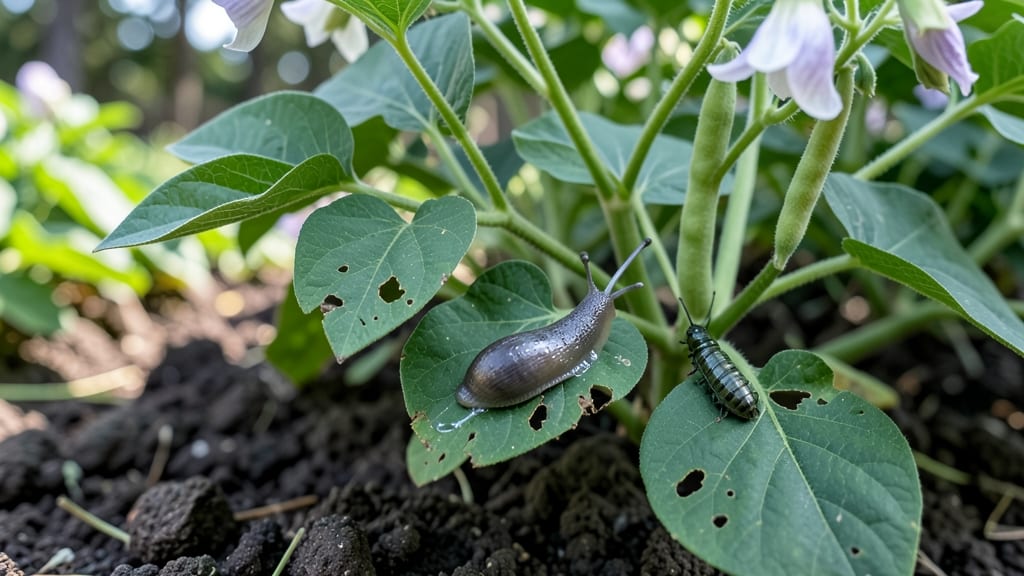
When you notice green bean leaves being eaten at night, the most likely culprits are slugs, cutworms, or rabbits—all active after dark. Look for chewed edges, slime trails, or irregular holes to pinpoint the specific pest and respond with targeted solutions.
Nocturnal garden pests have a taste for tender green bean foliage, and their feeding patterns leave distinct clues.
Slugs leave behind shiny slime trails and ragged, uneven bites, while cutworms create jagged holes near the soil line. Rabbits, on the other hand, tend to strip entire leaves clean, often leaving behind small droppings.
These pests are drawn to green beans because they're soft, nutrient-rich, and easy to consume—especially when other food sources are scarce. 🌙 The key to protecting your harvest is acting quickly, as damage can spread rapidly once these nocturnal feeders find your garden.
To confirm which pest is responsible, check for specific signs: slugs leave silvery trails, cutworms create dark, muddy tubes along stems, and rabbits leave behind clean-cut edges with no slime. Understanding these differences helps you choose the most effective solution, whether it's organic traps, handpicking, or targeted repellents.
Prevention is also critical—mulching around plants and removing hiding spots can deter many of these pests before they become a problem.
💡 In This Article
- Nocturnal Pests Targeting Green Bean Leaves
- Natural and Chemical Solutions for Green Bean Leaf Damage
Nocturnal pests targeting green bean leaves
Green beans are a prime target for nighttime pests because their tender leaves offer an easy, nutrient-rich meal. Slugs, for example, are attracted to the high moisture content in green bean foliage, which they detect using chemoreceptors on their tentacles.
These pests leave behind a telltale silvery slime trail—about 1/8-inch wide—as they glide across surfaces, creating a glistening path that's visible in morning dew. Cutworms, another common culprit, prefer the soft stems and leaves near the soil line, where they create irregular, jagged holes that can quickly defoliate plants.
Rabbits and deer also contribute to nighttime damage, though their feeding patterns differ significantly. Rabbits typically strip entire leaves clean, leaving behind clean-cut edges without the ragged tears caused by slugs. You'll often find small, round droppings (about 1/4-inch in diameter) scattered around the base of plants.
Deer, meanwhile, tend to browse more selectively, targeting younger plants or those with tender new growth. Their feeding leaves behind larger, more irregular damage—sometimes with entire plants uprooted if they're desperate for food. 🌙
The reason these pests target green beans specifically comes down to both availability and nutrition. Green bean leaves contain higher levels of nitrogen and water than many other garden plants, making them an energy-dense snack.
Additionally, the vertical growth habit of green beans provides easy access for ground-dwelling pests like slugs and cutworms, while their broad leaves offer ample surface area for rabbits to feed on.
Seasonal activity peaks also play a role—slugs are most active during warm, humid nights (especially after rain), while cutworms thrive in late spring and early summer when soil temperatures reach 60-65°F.
Identifying the specific pest is crucial because each leaves behind distinct damage patterns. Slug damage often appears as large, irregular holes with smooth edges, while cutworm feeding creates more jagged, uneven tears. Rabbits, as mentioned, leave clean cuts, and you might even spot their tracks in soft soil.
Deer damage is typically more extensive, with entire sections of plants browsed down to the stem. Pay attention to these details—they'll guide your choice of treatment and help you act before the damage becomes severe. 🐇
Timing is another critical factor. Most nocturnal pests are most active between 10 PM and 4 AM, when temperatures drop and predators like birds and lizards become less active. This is why you might not notice the damage until morning, when the evidence is left behind.
Understanding these patterns helps you set traps or apply repellents at the optimal time for maximum effectiveness. For example, beer traps for slugs work best when placed in the evening, while handpicking cutworms is most effective just before dawn when they're sluggish from the cool night air.
One often-overlooked clue is the presence of egg masses. Cutworms, for instance, lay their eggs in clusters near the soil surface, and these can be a warning sign before you see any feeding damage.
Slugs also lay eggs in damp, hidden spots, so checking under mulch or boards can give you an early heads-up. These early warnings allow you to intervene before the pests become established in your garden, giving your green beans a better chance of thriving. 🌱