
Plants
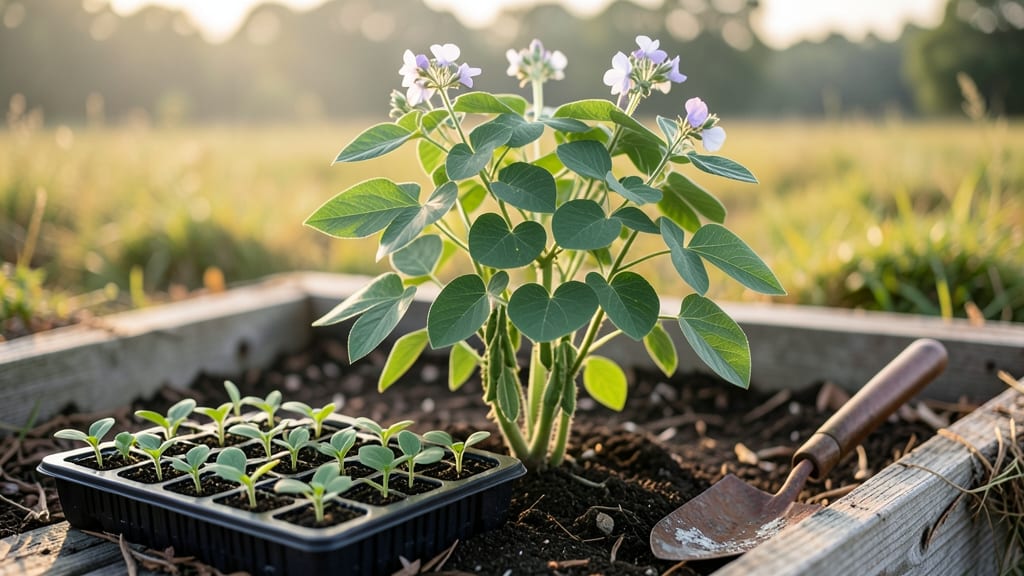
Planting soybeans in Oklahoma after soil reaches 60°F and at least two weeks past the last frost date is the key to strong yields and healthy 🌱 growth.
Miss that window, and you risk stunted plants or pests moving in before the crop matures. The difference between a great harvest and a struggle often comes down to timing—especially in Oklahoma’s varied climate zones.
Here’s how to pinpoint the best planting window for your region, adjust for soil temperature, and avoid common mistakes that cut yields short.
You’ll learn the exact frost-free dates by zone, how to use a soil thermometer, and when to shift from early to late varieties for maximum success.
Oklahoma soybean planting calendar by soil temperature & frost dates
Timing is everything when planting soybeans in Oklahoma, where USDA zones 6b-8a create dramatic differences between the Panhandle and Southeast. The key factors? Soil temperature (minimum 50°F for germination) and last frost dates that vary by 10-14 days across regions.
Plant too early, and frost will kill seedlings; too late, and your harvest shrinks from shorter daylight and heat stress.
For optimal yields, aim to plant when soil reaches 60°F+ and at least 2 weeks after your area's average last frost. In Oklahoma, this typically means April 15-May 15 for early varieties and June 1-July 1 for later-maturing types.
But don't just guess—use a soil thermometer and local frost data to fine-tune your schedule.
Why this matters: Soybeans need 100-120 frost-free days to mature. Planting too early risks seedling rot from cool, wet soils, while late planting cuts harvest time before first frost (average November 15). The Panhandle (Zone 7a-8a) can plant 2 weeks earlier than the Southeast (Zone 6b-7a), where cooler springs delay planting.
Regional variations:
- Panhandle (Amarillo, Guymon): Last frost March 10 → Plant April 1-May 1
- Central OK (Oklahoma City): Last frost March 25 → Plant April 15-May 15
- Southeast (Tulsa, McAlester): Last frost April 5 → Plant May 1-June 1
🌱Pro Tip: Use black plastic mulch to warm soil faster in cooler regions, or plant in raised beds for better drainage. Both tricks help extend your planting window by 1-2 weeks.
| Region | USDA Zone | Avg Last Frost | Optimal Planting Window | Soil Temp Requirement | Risk of Early Planting |
|---|---|---|---|---|---|
| Panhandle | 7a-8a | March 10 | April 1 - May 1 | 60°F+ | Frost damage |
| Central OK | 6b-7a | March 25 | April 15 - May 15 | 60°F+ | Seedling rot |
| Southeast OK | 6b-7a | April 5 | May 1 - June 1 | 60°F+ | Stunted growth |
| All Regions | - | - | June 1 - July 1 (late varieties) | 60°F+ | Reduced yield |
Late planting risks: If you miss the May 15 deadline, switch to heat-tolerant varieties like 'Dare' or 'Hutcheson', which mature faster. But expect 20-30% lower yields if planted after June 15. The trade-off? Later plantings avoid early-season pests like bean leaf beetles.
🌡️Soil temperature tip: Use a soil thermometer to confirm readiness. 50°F is the minimum for germination, but 60°F+ ensures faster growth. In sandy soils (common in western OK), warm up quicker; clay soils (eastern OK) stay cooler longer.
Frost-free days matter: Count 100-120 frost-free days from your planting date to estimate harvest timing. For example, planting May 1 in Central OK (180 frost-free days) leaves 120 days for harvest—ideal for most varieties. But in the Panhandle, planting April 15 gives you 135 days, allowing for later-maturing types.
✂️Action step: Mark your calendar for 2 weeks after your region's last frost date, then test soil temperature. If it's below 60°F, wait 5-7 days or use black plastic mulch to speed up warming. For maximum yields
How to adjust soybean planting timing for Oklahoma’s microclimates
Oklahoma’s diverse climate zones mean one-size-fits-all planting advice won’t work for soybeans. The High Plains region (like Panhandle) often faces earlier frost risks, while eastern Oklahoma (like Tulsa or Muskogee) can handle later plantings.
Even within these zones, soil types—whether clay-heavy or sandy—affect moisture retention and planting windows.
For example, sandy soils in western Oklahoma dry out faster, requiring earlier planting to establish roots before summer heat. Meanwhile, clay soils in eastern Oklahoma retain moisture longer, allowing slightly delayed starts. Irrigation availability also shifts timing—drought-prone areas may need to plant 2-3 weeks earlier than irrigated fields.
Planting too early (before soil hits 60°F) risks rot or stunted growth, while late planting (after June 15) cuts harvest time before first frost. Use a soil thermometer—western Oklahoma soils may need 1-2 weeks longer to warm than eastern regions.
🌡️ Pro Tip: Check USDA Plant Hardiness Zone maps—Oklahoma spans 6b to 8a, with zone 7+ allowing later plantings.
Start by testing soil temperatures at 2-inch depth—soybeans thrive when soils are consistently above 60°F. In western Oklahoma, this often means waiting until mid-to-late May, while eastern Oklahoma can plant as early as mid-April in well-drained soils.
Use a planting depth chart: seeds should go 1-1.5 inches deep, but adjust for soil texture—sandy soils may need slightly deeper planting to retain moisture.
Drought-prone areas (Panhandle, western Oklahoma) should prioritize early-maturing varieties (like 'AGS 5402') planted by May 1 to avoid heat stress. These regions also benefit from mulching to lock in moisture.
In contrast, eastern Oklahoma’s longer growing season lets you plant later varieties (like 'Dare') as late as June 15, provided irrigation is available.
Adjust planting depth based on soil type: clay soils can handle shallower depths (1 inch) due to moisture retention, while sandy soils need 1.5 inches for better seed-to-soil contact.
Pair this with a planting calendar—mark your last frost date (typically March 15 in eastern OK but April 15 in the Panhandle) and plant 2-3 weeks after for safety.
Monitor weather forecasts for heatwaves—soybeans struggle in temperatures above 90°F. In western Oklahoma, this might mean delaying planting until after June 1 to avoid early-season heat. Eastern growers can push July plantings only for short-season varieties with 70-day maturity or less.
Finally, use local extension office data—Oklahoma State University’s Mesonet provides real-time soil moisture and temperature maps. For irrigated fields, you have 2-3 weeks flexibility in timing, but dryland farmers must plant within a 3-week window around ideal soil temps to avoid yield losses.