
Companion Plants
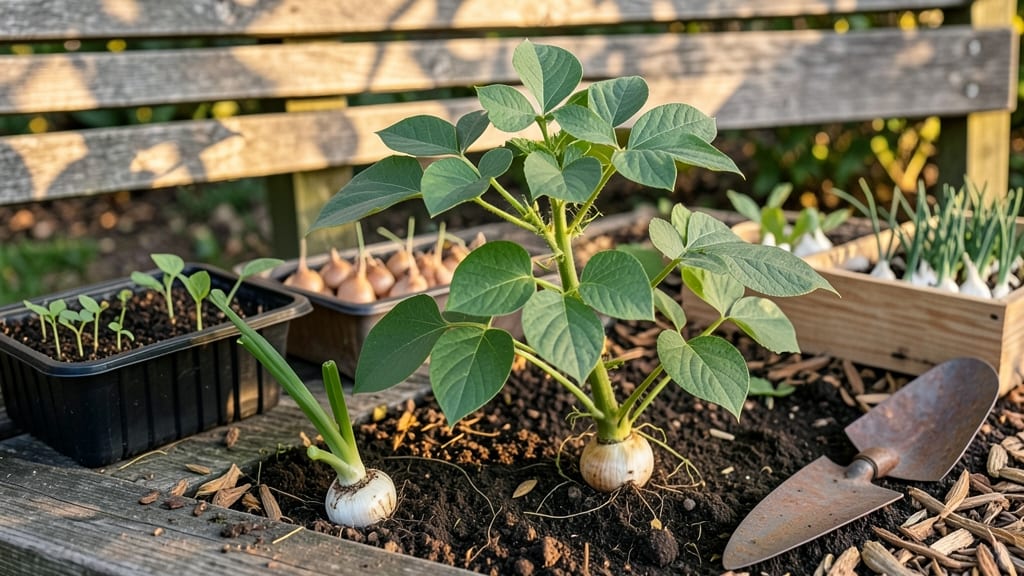
This clever beans and onions companion planting trick saved my onions from slugs—until I planted bush beans right beside them. 🌱 The onions repel pests that attack beans, while beans improve soil nitrogen for onions, creating a self-sustaining duo.
This pairing works best when planted 12-18 inches apart in well-draining soil with full sun. Start onions from sets in early spring, then add beans after the soil warms to 60°F.
The onions act as natural pest deterrents, while beans fix nitrogen in the soil, giving onions a nutrient boost without synthetic fertilizers. By midsummer, you’ll see fewer pests, healthier plants, and a harvest that keeps going until frost.
The onions stay crisp and sweet, while the beans produce more pods than when planted alone. It’s a win-win that cuts down on sprays and saves space in small gardens.
For even better results, add marigolds around the edges to repel more pests or carrots between rows to break up soil compaction. This combo works in raised beds, containers, or in-ground plots—just keep the spacing consistent.
📚 In This Guide
- What you need
- Instructions
- Tips and common mistakes
- Wrapping up and next steps
What you need
- ● Seeds or seedlings: 1–2 lbs of dwarf or bush bean seeds (e.g., Blue Lake, Roma, or Pinto beans) – 20–30 seeds per 10-foot row
- ● 1 lb of onion seeds or sets (e.g., Yellow, Red, or White onions) – 10–15 seeds/sets per 10-foot row
- ● Soil: Well-draining, loamy soil with a pH of 6.0–7.0 (test with a soil pH kit)
- ● Compost or organic fertilizer: 2–3 cups per 10-foot row (e.g., fish emulsion, worm castings, or balanced 10-10-10)
- ● Watering can or hose: With a gentle spray nozzle for seedlings
- ○ Garden twine or stakes: (Optional but helpful for trellising beans if using pole varieties)
- ● Garden plot or containers: Minimum 3–4 feet of space per row (beans and onions thrive when interplanted)
- ○ Optional: Raised beds or large pots (at least 12" deep)
- ● Hand trowel or transplanting tool (for planting seeds/sets)
- ● Gloves (to protect hands from soil and onion skins)
- ● Mulch (straw or grass clippings): 1–2 inches to retain moisture
- ○ Pest deterrents (optional but recommended): Neem oil spray (for early pest control)
- ● Row covers (to protect young seedlings from pests like onion flies)
Step-by-step guide to planting beans and onions together
This natural pest control duo thrives when planted correctly—here's how to maximize their benefits.
🌱 Step 1: Choose the Right Varieties and Planting Time
Select bush beans for compact growth and yellow or red onion sets (not transplants) for easier planting. Both prefer full sun (6+ hours daily) and well-draining soil with a pH between 6.0-7.0. I plant beans after the last frost when soil reaches 60°F, typically mid-to-late spring, while onions go in 2-4 weeks earlier—they tolerate cooler temperatures.
Onions need consistent moisture to form bulbs, while beans thrive in slightly drier conditions. Space onion sets 4-6 inches apart in rows, then plant bean seeds 1 inch deep and 2-3 inches apart in adjacent rows. This spacing prevents competition while allowing both plants to access sunlight and nutrients.
🌿 Step 2: Plant in a Strategic Layout for Pest Control
The magic happens when you interplant beans and onions in a checkerboard pattern—place 1-2 onion sets between every 3-4 bean plants. Onions repel pests like aphids and bean beetles with their strong scent, while beans fix nitrogen in the soil, enriching the onions' growth. I mark planting spots with a stick to maintain even spacing, especially in larger gardens.
Plant beans first to establish roots, then add onions around them. Avoid planting onions directly next to each other—their bulbs need room to swell. If your garden bed is new, mix in 2 inches of compost before planting to give both crops a nutrient boost without overfeeding either.
☀️ Step 3: Water and Maintain for Optimal Growth
Water the pair deeply once a week, aiming for 1 inch of water total. Onions need steady moisture to form bulbs, while beans prefer slightly drier soil to prevent root rot. I water in the morning so foliage dries quickly—this deters fungal diseases that love damp leaves. Mulch with 2 inches of straw to retain moisture and suppress weeds, but keep mulch 2 inches away from onion stems to prevent rot.
Watch for yellowing leaves on onions—a sign of too much nitrogen (from beans). If this happens, reduce water slightly and side-dress onions with compost tea instead of fertilizer. Beans, on the other hand, will show purple stems if they need phosphorus—add a light application of bone meal if you see this.
✂️ Step 4: Harvest Strategically for Maximum Benefits
Harvest beans when pods are firm and fully colored (usually 50-60 days after planting). Pick them regularly to encourage more production. Onions are ready when neck foliage yellows and falls over—this typically happens 90-120 days after planting. Leave the tops on until they dry naturally; this concentrates flavor and storage life.
After harvesting beans, leave their roots in the soil to decompose—this releases even more nitrogen for next year's onions. If you're replanting the same spot, add 2 inches of compost in fall to replenish nutrients. The onion tops can be composted too, but remove any diseased foliage first to prevent soil-borne issues.
🪴 Step 5: Rotate and Plan for Next Season
Never plant beans and onions in the same spot next year—they belong to different plant families and have different nutrient needs. Instead, follow with leafy greens, brassicas, or alliums (like garlic or shallots) to break pest and disease cycles. I keep a simple garden map to track rotations, and it’s paid off with healthier crops every season.
Save seeds from your best bean plants for next year, and store onion bulbs in a cool, dry place (like a mesh bag in the fridge) until planting time. This companion duo works so well that I’ve expanded it to include carrots and leeks—their triangular planting pattern confuses pests even more.
Tips & tricks for perfect beans and onions companion planting
These simple strategies will help you maximize the natural pest control benefits while ensuring both plants thrive together.
Soil Preparation: Before planting, test your soil pH and adjust it to the ideal range of 6.0-7.0 using lime to raise pH or sulfur to lower it. I've found that adding a handful of bone meal to the planting holes for beans gives them a phosphorus boost right from the start, which helps prevent those purple stems that signal phosphorus deficiency. This small step makes a big difference in bean vigor.
Planting Sequence: The order matters! Plant beans first to establish their roots, then add onions around them. This ensures beans get the sunlight they need early on while giving onions time to grow without competing for light. I like to use small sticks to mark planting spots before adding onions—this keeps the checkerboard pattern consistent and prevents overcrowding.
Watering Wisdom: The one-inch weekly watering guideline is perfect for onions, but beans often need slightly less. Watch for those purple stems on beans—they're a clear sign you're overwatering. If you see this, reduce water to just half an inch for beans while keeping onions at the full inch. Morning watering is key for both—it gives foliage time to dry, preventing fungal diseases that love damp leaves.
Pest Prevention: While onions repel many pests naturally, I've found adding a few marigold plants at the edges creates an extra protective barrier. The strong scent confuses pests even more, and the flowers add beauty to your garden. Plus, marigolds attract beneficial insects that prey on garden pests—it's like having a built-in pest control system.
Pro Tips for Beans And Onions Companion Planting
- These simple strategies will help you maximize the natural pest control benefits while ensuring both plants thrive together.
- Soil Preparation: Before planting, test your soil pH and adjust it to the ideal range of 6.0-7.0 using lime to raise pH or sulfur to lower it.
- Planting Sequence: The order matters!
Frequently asked questions
Got questions about growing beans and onions together? You’re not alone!
Here are answers to the most common queries to help you confidently pair these two powerhouse plants in your garden.
Can beans and onions be planted too close together?
While they’re great companions, give them some space! Plant onions around the edges of your bean patch (about 6–12 inches away) to avoid crowding. Beans need room to climb or sprawl, and onions need airflow to prevent rot. Think of it like a cozy, but not cramped, garden hangout!
What’s the best time to plant beans and onions together?
Start onions 4–6 weeks before your last frost (they’re cool-season lovers), then add bush or pole beans 1–2 weeks after the soil warms to 60°F+. This timing ensures onions establish roots while beans get a head start in warmer weather. Pro tip: Use fast-maturing varieties (like ‘Radar’ beans or ‘Red Baron’ onions) for quicker rewards!
Will this combo really keep pests away?
Onions repel aphids, beetles, and even squirrels (thanks to their strong scent), while beans fix nitrogen in the soil, boosting onion health. However, watch for onion maggots—they might target beans too. If pests strike, handpick them or sprinkle diatomaceous earth around the base. Teamwork makes the pest-control dream work!
What if I don’t have space for both? Are there alternatives?
No worries! Onions pair well with carrots, lettuce, or tomatoes, while beans thrive with corn, cucumbers, or radishes. For a similar pest-fighting duo, try planting onions with garlic or beans with marigolds. Every garden’s a puzzle—just mix and match!
Why are my beans wilting near the onions? Troubleshooting tips.
Wilting could mean overcrowding, under-watering, or onion bulb rot spreading to beans. Check soil moisture (1 inch deep should stay damp), thin plants if needed, and ensure good drainage. If rot’s the culprit, remove affected onions immediately and replant in fresh soil. A little detective work goes a long way!
Bonus Tip:
Interplant onions between bean trellises or in the rows of bush beans. This maximizes space and lets you harvest onions early (they’re ready in ~90 days) while beans keep growing. Double the harvest, double the fun!
Wrapping up and next steps
Companion planting beans and onions is a game-changer for gardeners—it’s simple, effective, and packed with benefits! 🌱 From natural pest control to improved soil health, this duo works together to boost your harvest while keeping your garden thriving.
Whether you're a beginner or a seasoned pro, giving these plants a try is a no-brainer for a more productive (and low-maintenance) garden.
Ready to put it into action? Start small this season—plant a few rows of beans alongside your onions and watch the magic happen. Your future self (and your taste buds!) will thank you.