
Vegetables
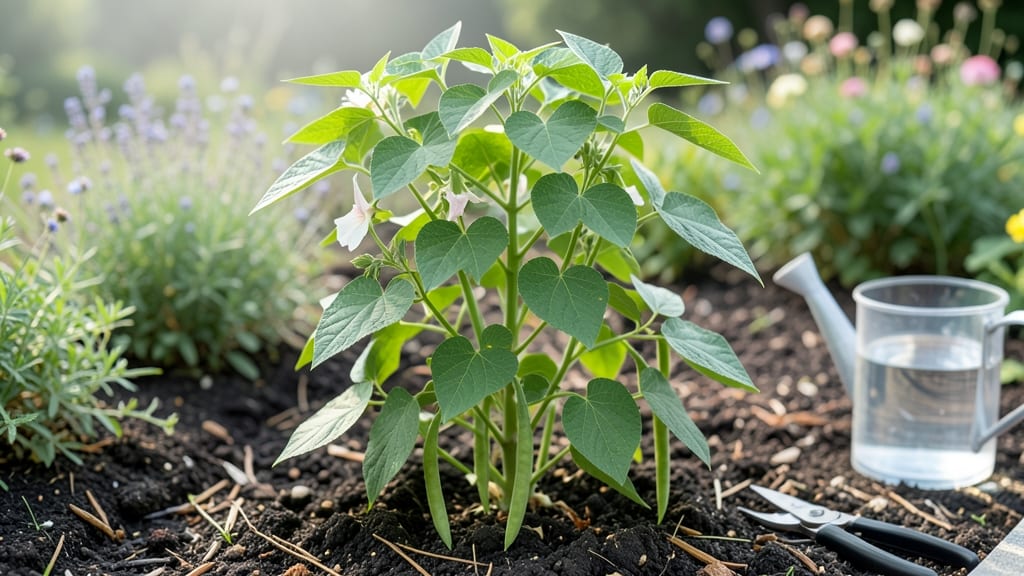
Bush beans don't climb—they grow as dense, low-growing shrubs without vines. Their compact form stays under 2 feet tall, while climbing pole beans reach 5 to 8 feet by wrapping tendrils around supports.
This growth difference comes from their genetics: bush beans have a determinate growth habit, meaning they stop growing once they reach maturity, producing all their pods at once. 🌱 Meanwhile, pole beans grow indeterminately, continuously producing flowers and pods throughout the season.
The key takeaway? If you're short on vertical space, bush beans are your best bet—they thrive in small gardens without needing trellises.
For gardeners working with limited space, bush varieties like Blue Lake or Contender are excellent choices. They mature quickly, typically in 50-60 days, and produce a steady harvest over a shorter window compared to pole beans.
The trade-off? You'll get fewer total pods per plant, but the convenience of no trellising makes them ideal for containers or tight garden plots.
💡 In This Article
- How Bean Plant Growth Habits Differ by Variety
- Best Bush Bean Varieties for Small Gardens
How bean plant growth habits differ by variety
The fundamental difference between bush and pole beans lies in their genetic growth patterns. Bush beans exhibit a determinate growth habit, meaning their main stems grow to a fixed height (typically 1.5 to 2.5 feet) before flowering and producing pods simultaneously.
This creates a dense, bushy structure that resembles a compact shrub. The plant's energy focuses on pod development rather than vertical expansion, which is why they never develop climbing tendrils.
In contrast, pole beans have an indeterminate growth habit, continuously producing new leaves, flowers, and pods throughout the growing season. Their defining feature is the presence of specialized leaf structures called tendrils—thin, coiled stems that wrap around vertical supports.
These tendrils develop from modified leaflets and can extend up to 8 feet when given proper support. The botanical trigger for tendril formation occurs when the plant detects vertical surfaces, prompting it to grow upward in search of sunlight.
The root systems also differ significantly. Bush beans develop a shallow, fibrous root network that spreads horizontally, ideal for compact spaces. This root structure supports their bushy top growth but limits their ability to anchor tall vines.
Pole beans, however, grow a deeper taproot system that provides stability for their vertical growth, often reaching depths of 12 to 18 inches to access water and nutrients for their extended growth cycle. 🌱
Leaf arrangement provides another visual clue. Bush bean leaves grow in a trifoliate pattern (three leaflets per stem) arranged alternately along the stem, creating a dense canopy. Pole bean leaves follow the same pattern but develop tendril-bearing leaflets at the tips of their branches.
These tendrils are sensitive to touch, curling tightly around any support they encounter—a survival mechanism that helps the plant maximize sunlight exposure in competitive growing environments.
Genetically, the difference comes down to specific genes that control growth hormones. Bush beans have higher concentrations of abscisic acid, a hormone that signals the plant to stop growing vertically and focus on pod production.
Pole beans, however, produce more auxin, a growth hormone that promotes cell elongation and tendril development. This hormonal difference explains why bush beans remain low-growing while pole beans continue climbing throughout the season.
Understanding these growth habits helps gardeners make informed choices. If you're working with limited vertical space or prefer a tidier garden layout, bush beans are the clear winner. Their compact form eliminates the need for trellises while still delivering abundant harvests.
For those with vertical space to spare, pole beans offer a continuous harvest over a longer season—making them ideal for larger gardens or vertical farming systems. ✨