
Flowers
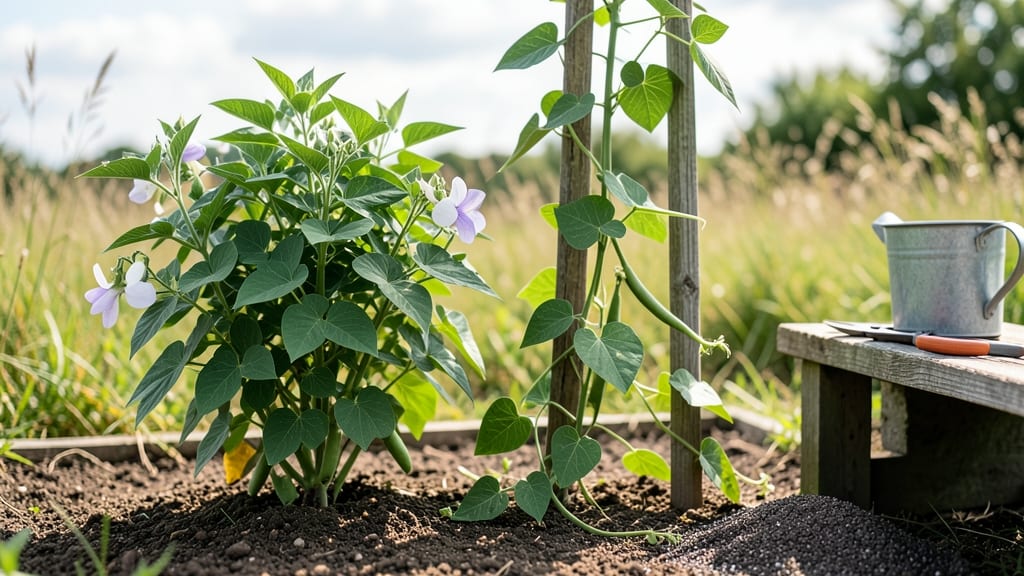
Soybeans do flower as part of their natural growth cycle, producing small white or purple blossoms that develop into pods. Flowering typically occurs 40-60 days after planting and is critical for pod formation and yield potential.
Soybeans enter their reproductive phase through a process called flowering, where tiny blossoms appear along the plant's stem.
These flowers aren't just decorative—they're the foundation for pod development, which directly impacts your harvest. 🌱 The timing of this stage depends heavily on factors like temperature and daylight exposure, with cooler climates often delaying bloom compared to warmer regions.
What's fascinating is how these flowers self-pollinate within hours of opening, ensuring efficient seed production.
To maximize your soybean yield, focus on creating optimal growing conditions during the R1-R2 stages (the critical flowering period). This means maintaining consistent moisture, providing balanced nutrients like phosphorus and potassium, and protecting plants from pests that can damage blossoms.
I've found that monitoring leaf color and flower count early on helps predict whether you're on track for a strong harvest.
💡 In This Article
- Soybean Flowering Stages and Their Role in Plant Development
- Optimizing Soybean Flowering for Maximum Yield
Soybean flowering stages and their role in plant development
Soybean flowering unfolds through two key botanical stages: R1 (beginning bloom) and R2 (full bloom), each marked by distinct biological processes. At R1, the first flower opens at any node on the main stem, typically 40-60 days after planting, depending on variety and climate.
These flowers are small—about 1/4 to 1/2 inch wide—and range from white to lavender, with purple veins that become visible as they mature.
What's remarkable is how quickly these blossoms operate: they self-pollinate within 24-48 hours of opening, thanks to the plant's perfect flower structure where male and female reproductive parts coexist.
The transition to R2 occurs when a flower opens at one of the two uppermost nodes on the main stem, signaling peak flowering activity. This stage is critical because 70-90% of the plant's final pod count develops during these 7-14 days.
Each flower cluster (called a raceme) can produce 3-5 pods, but only about 20-30% of flowers typically develop into mature pods due to natural abortion of underdeveloped blossoms. The plant's hormonal balance—particularly ethylene and gibberellins—regulates this selective process, prioritizing resource allocation to the most viable flowers.
Environmental factors dramatically influence this process. Soybeans are short-day plants, meaning they flower more rapidly when daylight periods shorten (typically 12-14 hours of light). Temperatures between 70-85°F optimize flowering, while extremes below 55°F or above 95°F can delay bloom or cause flower drop.
I've observed that northern climates often see delayed flowering by 7-10 days compared to southern regions, which directly impacts yield potential. The plant's photoperiod sensitivity explains why soybean varieties are often categorized by maturity groups (e.g., Group 00 for northern climates vs. Group VIII for southern regions).
What makes soybean flowering unique is its determinate growth habit—most varieties stop growing vertically once flowering begins, redirecting energy to pod development. This contrasts with indeterminate plants like tomatoes, which continue growing and flowering simultaneously. The plant's apical dominance weakens during flowering, allowing lateral branches to develop more flowers.
This architectural shift is why proper spacing (2-4 inches between plants) becomes crucial during early growth stages, preventing overcrowding that could stress the plant during critical reproductive phases.
Here's what's happening at the cellular level: Each flower's ovary contains 2-4 ovules that, when fertilized, develop into seeds. The pod wall forms from the ovary, while the seed coat originates from the ovule's integument.
This dual development explains why pod size and seed count are influenced by both environmental stress and genetic factors. For example, drought conditions during flowering can reduce pod number by 30-50% by causing flower abortion, while adequate moisture ensures 90%+ pod set in optimal conditions.
Understanding these stages helps explain why some soybean fields appear lush but yield poorly—they might have thrived vegetatively but failed to transition properly into reproductive growth.
Monitoring for 10-15 open flowers on the main stem by R2 is a good indicator of healthy development. 🌿 The key takeaway is that flowering isn't just a visual milestone—it's the biological foundation upon which your entire harvest depends.