
Watering
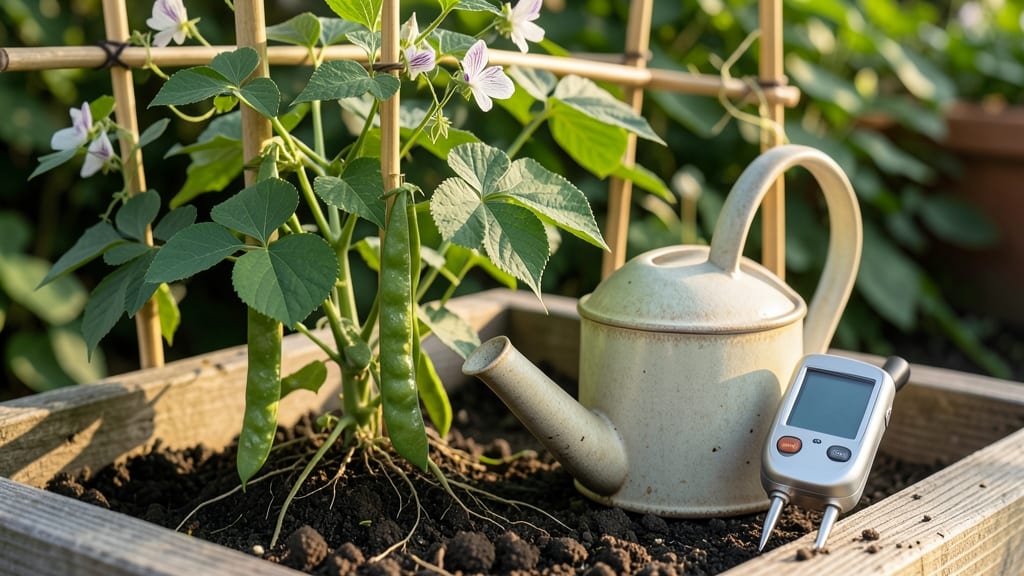
Bean plants need about 1 to 2 inches of water per week to thrive 🌱—but that number changes as they grow, and getting it wrong can mean the difference between a lush harvest and sad, wilted leaves.
Overwatering or underwatering your bean plants can mean the difference between a thriving harvest and wilted disappointment—so knowing exactly how much water they need at each stage is critical.
From delicate seedlings to heavy-producing mature plants, their water needs shift dramatically. Too much water drowns their roots, while too little stunts their growth, and neither scenario bodes well for your garden.
In this guide, I’ll break down the exact watering schedule for each growth stage—seedlings, vegetative growth, and flowering—plus the best techniques to keep your beans happy without drowning them.
Bean plant watering requirements by growth stage: seedling to flowering
Getting your bean plant's watering routine right is like hitting the sweet spot between a soggy mess and a thirsty struggle. I've learned through trial and error that bean plants need consistent moisture, but the exact amount changes dramatically as they grow.
During the seedling stage, delicate roots need gentle hydration, while mature plants with flowering pods demand deeper watering to support their rapid growth. Let's break down exactly what your beans need at each critical phase.
One of the biggest mistakes I made early on was treating all bean plants the same way. Bush beans and pole beans have slightly different needs, but even within those categories, the watering requirements shift as the plant progresses from tiny sprout to heavy-producing vine.
The key is understanding soil moisture indicators and adjusting your watering schedule based on your local climate and soil type. Let me show you exactly how to do this with a science-backed approach.
| Growth Stage | Water Frequency | Amount per Session | Soil Moisture Test | Environmental Factors |
|---|---|---|---|---|
| Seedling (0-3 weeks) | Every 2-3 days | 1/4 cup per plant | Top 1" should stay moist | Light shade, high humidity |
| Vegetative (3-6 weeks) | Every 1-2 days | 1/2 cup per plant | Top 2" should stay damp | Full sun exposure |
| Flowering (6-8 weeks) | Daily (hot weather) | 3/4 cup per plant | Top 3" should stay moist | Consistent warmth |
| Pod Development (8-12 weeks) | Every 1-2 days | 1 cup per plant | Top 4" should stay moist | Mulch to retain moisture |
When your beans are in the seedling stage (weeks 0-3), they're incredibly delicate. I recommend using a spray bottle or gentle watering can to avoid disturbing the soil around those tiny roots. The goal is to keep the top 1 inch of soil consistently moist—not soggy.
Think of it like a damp sponge rather than a dripping faucet. During this phase, I water every 2-3 days, but I always check the soil first by sticking my finger in about an inch deep. If it feels dry at that depth, it's time to water.
As your plants enter the vegetative stage (weeks 3-6), they'll start showing rapid leaf growth. This is when you'll notice those first true leaves replacing the initial seed leaves. At this point, I increase the watering to every 1-2 days and use about 1/2 cup per plant.
The key here is to water deeply enough to encourage strong root development. I've found that using a drip irrigation system or soaker hose works wonders for delivering water right at the base without wetting the leaves, which can lead to fungal issues.
Watch closely for flowering signs around week 6, when those beautiful white or purple blossoms start appearing. This is when your watering needs peak. During the flowering stage (weeks 6-8), beans need daily watering in hot weather to support both the flowers and developing pods.
I aim to give each plant about 3/4 cup of water per session, ensuring the top 3 inches of soil stay moist. This is also when I pay extra attention to mulching—using straw or grass clippings helps retain moisture and keeps the soil cool.
The final critical phase is pod development (weeks 8-12), where your beans are putting all their energy into growing those delicious pods. This is when I increase the water to every 1-2 days with about 1 cup per plant.
The soil should stay moist down to 4 inches deep, as the plants are now supporting both foliage and heavy pods. I've learned that morning watering is best during this stage—it gives the plants plenty of time to absorb moisture before the heat of the day.
Evening watering can lead to fungal problems, especially in humid climates.
Don't forget that environmental factors play a huge role in your watering schedule. In hot, dry climates, you'll need to water more frequently, sometimes even daily during peak summer months. Conversely, in cooler or rainy regions, you might only need to water every 2-3 days.
I always adjust based on weather forecasts—if rain is expected, I hold off on watering to avoid over-saturating the
Signs of overwatering vs underwatering in bean plants: what to watch for
Bean plants are surprisingly sensitive to watering mistakes—too much or too little can stunt growth or invite pests. Yellowing leaves or drooping stems are your first clues, but the real damage happens below the soil.
I’ve learned the hard way that soggy soil and crusty topsoil are red flags most gardeners overlook.
Start by checking the soil 1 inch below the surface—it should feel moist but not saturated. If it’s damp after 24 hours, you’re likely overwatering.
Conversely, if the soil is bone-dry, your beans are thirsty. Leaf curl or brown edges often signal underwatering, while mushy stems or white mold mean you’ve drowned the roots.
For overwatered beans, I’ve found that well-draining soil is your best defense. Amend clay soil with compost or perlite to prevent waterlogging. If roots are already rotting, trim the affected areas and repot in fresh, sterilized soil. Yellowing leaves that start at the bottom?
That’s classic overwatering—don’t wait for the whole plant to turn mushy!
When beans show underwatering signs, act fast. Morning watering is key—it gives roots time to absorb moisture before the heat of the day. Mulch heavily with straw or grass clippings to lock in moisture.
I’ve seen beans recover from wilting in just 24 hours with proper hydration, but chronic drought will stunt pods and reduce yield.
Pay attention to flower production too—beans need consistent moisture to set pods. If flowers drop off without forming beans, it’s often a watering inconsistency issue. Adjust your schedule based on weather: water daily in summer heat but every 3-4 days in spring/fall.
A simple soil moisture meter ($10 at garden centers) saves guesswork.
Pro tip: Container-grown beans dry out faster.
Check soil daily in pots—if the top inch is dry, water until it runs out the drainage holes. In-ground beans need deeper watering (2-3 inches) to encourage strong root growth. Never let beans sit in standing water, but don’t skimp either—your harvest depends on balance.