
Plants
Green bean seeds look like tiny, flattened ovals with a glossy finish, usually measuring between 5 to 10 millimeters long. Their color ranges from pale cream to light brown, and they often feature a subtle notch where the sprout will emerge.
These seeds are deceptively small but pack a lot of visual detail. 🔥 The smooth, almost waxy surface makes them easy to handle, while their size helps distinguish them from larger legume seeds like peas.
When planting, look for the slight ridge along one edge—this is where the seed attaches to the pod and can help you orient them properly in the soil. Varieties like pole beans may have slightly more pronounced ridges than bush bean seeds, which tend to be even flatter.
If you're trying to spot them in garden soil, focus on the top inch where they're typically planted. New sprouts will appear as tiny white roots first, followed by a small loop breaking through the soil surface.
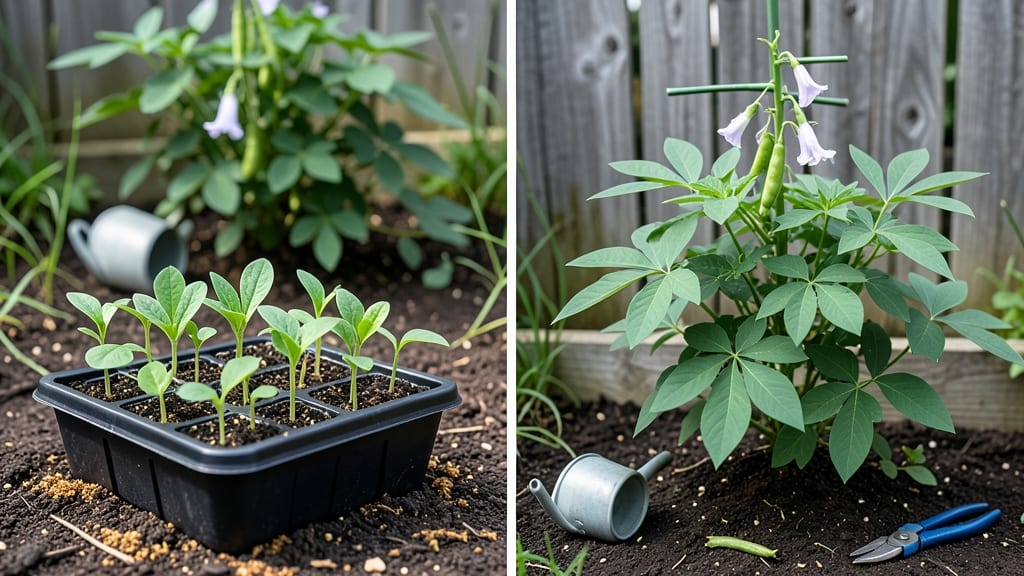
Using a seed tray with clear sides can help you track their progress without disturbing the soil.
💡 In This Article
- Identifying Green Bean Seed Characteristics and Varieties
- How to Locate Green Bean Seeds in Garden Soil
Identifying green bean seed characteristics and varieties
Green bean seeds come in subtle but distinct variations depending on whether they're from pole beans or bush beans. Pole bean seeds tend to be slightly larger—typically 8-10 millimeters long—with a more pronounced ridge along one edge where they attach to the pod.
This ridge acts like a natural orientation guide when planting. Bush bean seeds, on the other hand, measure closer to 5-7 millimeters and have a flatter, more uniform shape with minimal ridges.
The color spectrum ranges from nearly translucent cream to warm tan or even light brown, depending on the variety. Some heirloom varieties like 'Blue Lake' show faint blue-green undertones when held against light, while others like 'Kentucky Wonder' have a more golden hue.
The smooth, almost waxy surface reflects light beautifully, making them easier to spot against dark soil. This glossy finish comes from a natural coating that helps protect the seed from moisture loss during storage.
One key identifying feature is the hilarum—the small notch where the sprout emerges. This indentation is usually located at one end of the seed and appears as a tiny, crescent-shaped mark. When planting, this notch should face downward to ensure proper germination.
Some seeds may also show faint vein patterns radiating from this point, which can help distinguish them from other legume seeds like peas or lentils.
Texture plays a crucial role in identification too. Green bean seeds feel surprisingly firm yet delicate, almost like polished river stones. Unlike larger seeds that might feel rough or pitted, these seeds have a consistent smoothness that makes them pleasant to handle.
This uniformity helps gardeners quickly sort them from mixed seed collections. For comparison, they're about half the size of a typical pea seed and one-third the size of a sunflower seed.
When examining seeds under good light, you might notice subtle color variations even within the same packet. Some seeds may appear slightly darker along one edge due to uneven drying during harvest. This natural variation is normal and doesn't affect germination rates.
The most reliable way to confirm you're looking at green bean seeds is to check for the characteristic flat oval shape combined with the glossy surface and hilarum notch.
For gardeners who work with multiple varieties, a simple magnification tool can reveal even more details. Under 10x magnification, you can see the microscopic texture of the seed coat and sometimes even the early stages of embryo development within.
This level of detail helps distinguish between different green bean types and ensures you're planting what you intend.