
Planting
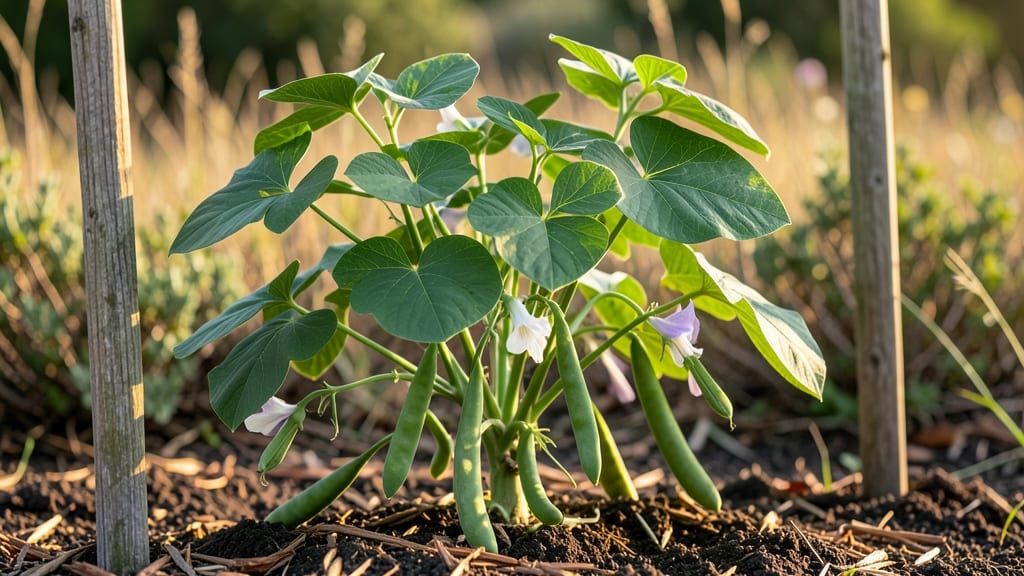
A lima bean plant looks like a vigorous climber with broad, heart-shaped leaves that have pointed tips and prominent veins, vines reaching 6 to 10 feet tall, and clusters of fragrant white or lavender flowers with dark centers. Its lush foliage and twisting tendrils make it easy to spot in gardens.
A lima bean plant's most distinctive feature is its large, glossy leaves that grow in a compound arrangement, often reaching 6-12 inches long. The vines themselves are woody and sturdy, capable of supporting their own weight without much trellis support in early stages.
What sets them apart from similar plants like runner beans is their thicker stems and more robust leaf structure. 🌿 These plants thrive in warm climates and produce flowers that eventually develop into the familiar large, flat pods we harvest.
The flowers appear in clusters along the vine and typically bloom in late spring to early summer, providing both beauty and function. Young plants have a bushier appearance, while mature plants develop long, sprawling vines that can cover significant vertical space.
This growth pattern makes them excellent candidates for vertical gardening solutions.
💡 In This Article
- Identifying Lima Bean Plant Leaves and Vines
- Lima Bean Flowers and Growth Stages
Identifying lima bean plant leaves and vines
The lima bean plant's leaves are its most recognizable feature, with a palmately compound structure consisting of 3-5 oval leaflets arranged like fingers on a hand. Each leaflet measures about 2-4 inches long, with a deep green, slightly waxy surface that reflects light beautifully in sunlight.
The pointed tips and prominent vein patterns (with 5-7 main veins radiating from the center) create a distinctive "fingerprint" that differentiates them from runner beans, which have smoother edges and fewer veins.
The vines themselves grow in a twining pattern, using specialized tendrils that form at the leaf axils to grasp supports. These tendrils are hair-like projections that coil around trellises or fences with remarkable precision, allowing the plant to climb 6-10 feet vertically.
Unlike cowpeas, which have a more bushy, sprawling growth habit, lima bean vines develop thicker, woody stems as they mature, capable of supporting their own weight when young but requiring support as they grow heavier with pods. 🌿 This climbing mechanism is what makes them ideal for vertical gardening spaces.
What's fascinating about the leaf arrangement is how it maximizes sunlight exposure. The leaves grow in a alternate pattern along the vine, with each leaf positioned at a 45-degree angle to its neighbor.
This spiral arrangement, known as phyllotaxis, allows each leaf to receive optimal light without shading others—a botanical adaptation that explains why lima bean plants appear so lush and productive. The leaf edges have a subtle serration, giving them a slightly jagged appearance when viewed closely.
When comparing lima bean plants to their relatives, the differences become clear. Runner beans have smaller, more delicate leaves with only 3 leaflets, while cowpeas feature rounder leaf shapes with a more pronounced lobed pattern.
The lima bean's larger size and sturdier structure are what make it stand out in garden settings. These botanical distinctions are crucial for proper identification, especially when distinguishing between different varieties like the large-seeded "Fordhook" type versus smaller "Baby Lima" varieties.
The vine's growth rate is another key identifier. Lima bean vines can grow 6-12 inches per week under ideal conditions, with rapid vertical expansion that becomes noticeable within 3-4 weeks of planting.
This aggressive growth habit helps them outcompete weeds while maximizing their access to sunlight—a survival strategy that explains why they thrive in warm climates with 70-85°F temperatures. The combination of their distinctive leaves, climbing tendrils, and rapid growth makes them unmistakable once established. 💡