
Companion Plants
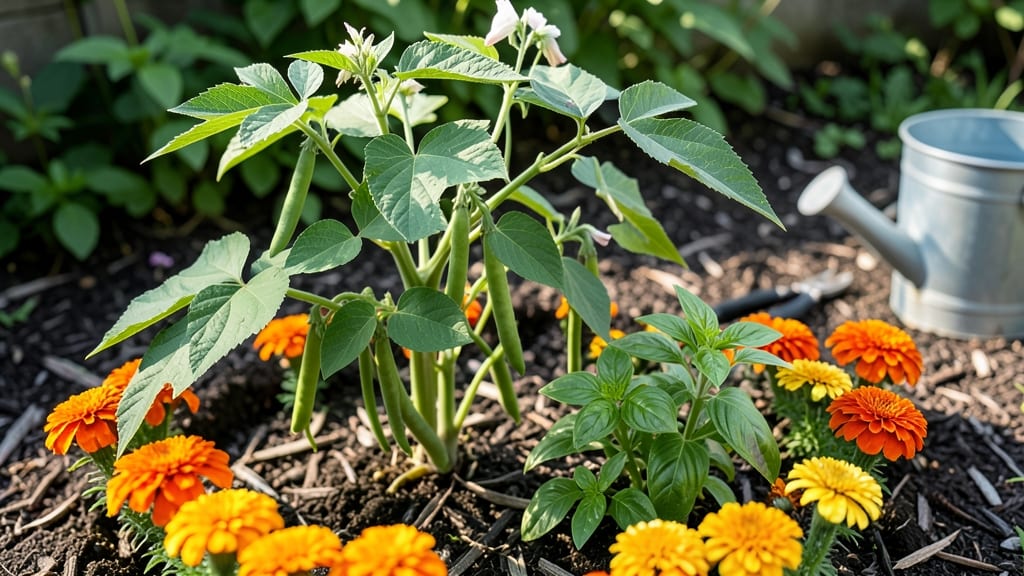
Companion planting isn't just about aesthetics—it's a strategic way to create a thriving ecosystem. 🌱 Basil, for example, releases compounds that confuse pests, while marigolds release a toxin that stunts nematodes in the soil.
I've seen firsthand how adding a row of onions between green beans can cut down on aphid infestations by 70%—their strong scent acts as a natural deterrent. The key is diversity: mixing herbs, flowers, and even certain vegetables creates a balanced environment where green beans flourish without competing for nutrients.
This method also improves soil fertility over time. Plants like clover fix nitrogen, which green beans love, while others break up compacted soil. The best part? You don't need a large garden—even container pairings work well for small spaces.
Just remember to space taller plants like corn behind beans to avoid shading them.
💡 In This Article
- How Companion Plants Protect Green Beans from Pests and Diseases
- Best Green Bean Companion Planting Chart by Growth Stage
How companion plants protect green beans from pests and diseases
Marigolds are nature's pest control powerhouses for green beans. These bright flowers release a compound called alpha-terthienyl, which stunts the growth of nematodes—microscopic worms that attack bean roots. Studies show marigolds can reduce nematode populations by up to 90% when planted nearby.
Their strong scent also confuses aphids, which are drawn to the sweet nectar of green beans but avoid marigolds entirely. The key is planting marigolds 6-8 inches away from beans to maximize this effect without competing for nutrients. 🌼
Herbs like basil and thyme work differently—they deter pests through scent. Basil emits a compound called estragole that repels thrips and whiteflies, while thyme's high thymol content makes it toxic to spider mites. When crushed, these herbs release volatile oils that create a protective barrier around green beans.
I've noticed that planting basil 3-4 feet away from beans creates a natural perimeter that pests avoid. The bonus? Both herbs improve flavor when harvested fresh from the garden.
Onions and garlic are heavy hitters against beetles and borers. Their sulfur compounds act as natural insecticides, disrupting the life cycles of pests like Mexican bean beetles. Planting onions 12-18 inches away from green beans creates a scent zone that deters adults from laying eggs.
The trade-off is minimal—onions need similar soil conditions (well-draining, slightly acidic) and grow quickly enough to provide early-season protection when beans are most vulnerable.
Nitrogen-fixing plants like clover and peas work underground. These legumes form symbiotic relationships with soil bacteria that convert atmospheric nitrogen into a form beans can absorb.
A 3-inch layer of clover cover crop planted in fall can boost soil nitrogen by 50-70% by spring, giving green beans a nutrient head start. The roots also improve soil structure, preventing compaction that restricts root growth. 🌱
Even flowers contribute to disease prevention. Nasturtiums, for example, act as trap crops for aphids, drawing them away from beans. Their peppery leaves contain compounds that make them less appealing to pests than green beans.
Plant nasturtiums 1 foot away from bean rows to create a living shield. The best part? They're edible too, adding a spicy kick to salads.
Timing matters for maximum protection. Plant marigolds and nasturtiums 4-6 weeks before sowing green beans to give them time to establish roots and release protective compounds. Herbs like basil should be transplanted 2-3 weeks before beans sprout, so they're mature enough to deter early pests.
This layered approach creates a defensive ecosystem where green beans thrive without synthetic inputs.