
Picking
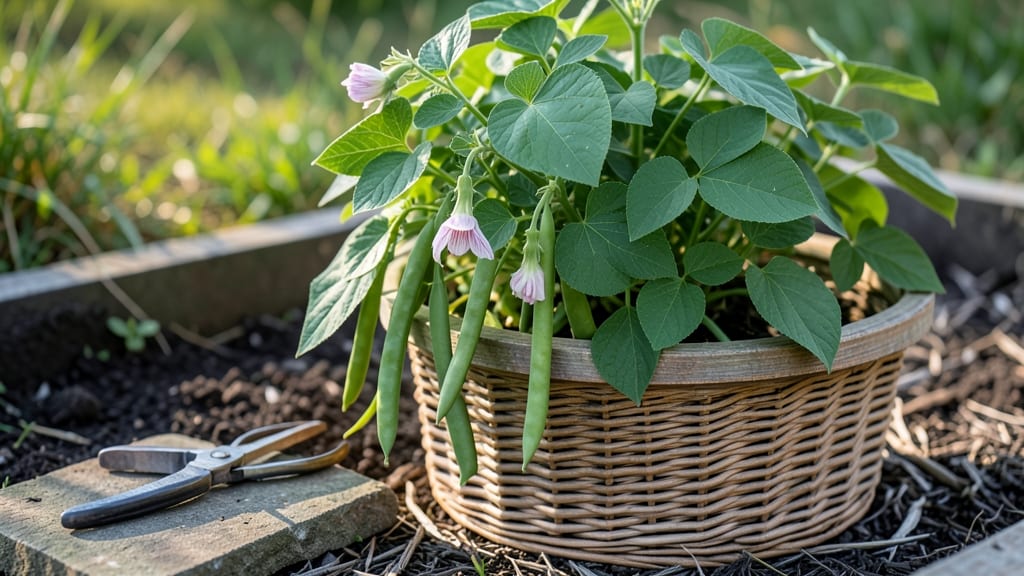
You should pick bush green beans when the pods grow to 4 to 6 inches long, show bright green color, and snap crisply when bent. Harvesting at this stage guarantees the best flavor and texture for maximum plant productivity.
Timing matters more than you might think—picking too early gives you undersized pods, while waiting too long turns them tough and woody. 🌱 The 4-6 inch window is your sweet spot for both taste and plant health, as mature beans signal the plant to produce more.
I always check the snap test first: if the pod bends but doesn't break, it's perfect for picking.
What's interesting is how this affects your harvest cycle. Once you start seeing woody stems or beans that rattle inside the pod, you've missed the boat—those plants will focus energy on seed production instead of new pods.
For bush varieties, I recommend harvesting every 2-3 days during peak season to keep the plants productive.
💡 In This Article
- How to Test Bean Maturity: Size, Color, and Texture
- Optimal Harvesting Frequency for Bush Bean Productivity
How to test bean maturity: size, color, and texture
Bush green beans reveal their perfect picking moment through three key visual and tactile cues. First, the pod length serves as your primary guide: aim for 4-6 inches total length, measured from stem to tip.
At this stage, the pods have fully developed but haven't yet begun the fiber-hardening process that turns them tough. I've found that pods shorter than 3 inches are still immature, offering a more watery texture and less developed flavor profile.
The color transformation is equally important. Mature bush beans should display a uniform, vibrant green hue with no yellowing or brown spots. This bright color indicates optimal chlorophyll activity, which directly correlates with sweetness.
What's fascinating is how the plant's internal chemistry changes: as pods mature beyond this window, chlorophyll breaks down and sugars convert to starches, creating that characteristic woody texture. 💚 For comparison, overripe pods often show a duller green or even slight purplish tinges near the stem.
The definitive test comes through touch: a crisp snap when gently bent indicates peak maturity. To perform this test, hold the pod between your thumb and forefinger about 1 inch from the stem and apply slight pressure.
A proper snap means the pod is tender yet firm—like a fresh celery stalk. If it bends without snapping, it's underripe; if it feels fibrous or cracks with resistance, you've waited too long.
This tactile method is particularly useful for distinguishing between varieties, as some bush beans develop slightly thicker skins.
Understanding these maturity signals helps you time your harvests for maximum yield. The 4-6 inch window represents just a 5-7 day growth period in optimal conditions, making consistent checking essential. I've noticed that morning harvests often yield the freshest pods since overnight temperatures can slightly slow the maturation process.
The key is balancing these visual and tactile cues—when all three indicators align, you're guaranteed the sweetest, most tender beans.
What most gardeners don't realize is how quickly beans transition from perfect to overripe. Once pods reach 7 inches, the internal seed development accelerates, causing the pod walls to thicken.
This thickening isn't just about texture—it's a physiological response where the plant redirects energy from pod production to seed maturation. The result? Beans that are tough enough to require boiling for 20+ minutes just to become edible, compared to the 5-8 minutes needed for properly timed harvests.
For those growing bush beans for both fresh eating and seed saving, this maturity testing becomes even more critical.
The same pods that snap perfectly for eating will yield the poorest quality seeds—you'll want to leave some pods to mature completely to 8-10 inches and develop brown seeds inside for seed collection.
This dual-purpose approach requires careful planning of your harvest schedule to maximize both fresh bean production and seed yield.