
Propagation
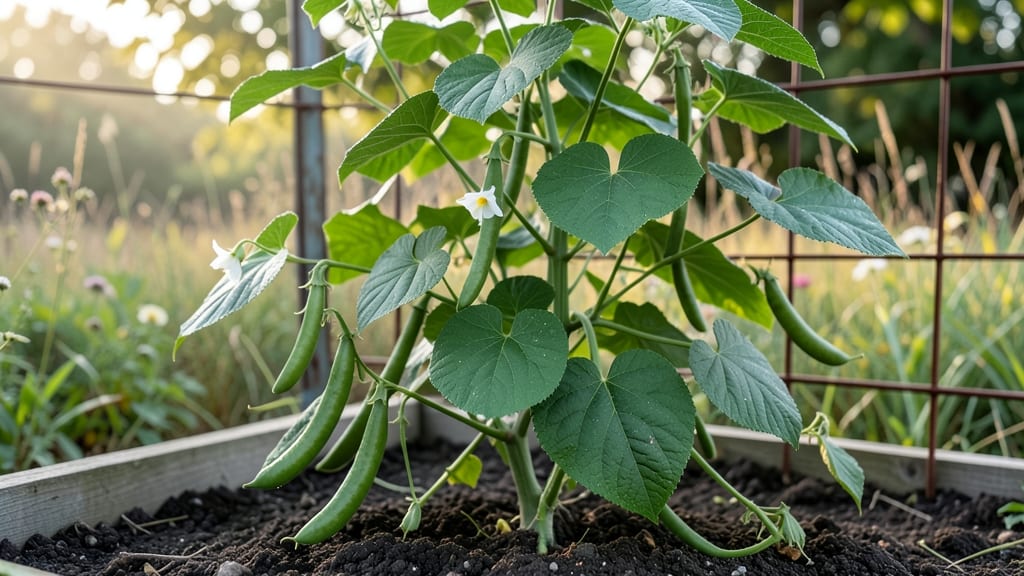
Green beans trace their roots to the Andean highlands and Mesoamerican regions, where indigenous farmers first cultivated their wild relatives over 7 millennia ago. 🌱 Archaeological evidence from caves in Peru shows early humans consuming these legumes as a protein-rich staple, long before European explorers encountered them.
The beans' adaptability—thriving in diverse climates—helped them become a cornerstone of pre-Columbian diets, with evidence of over 500 distinct varieties cultivated by indigenous communities.
These early adaptations laid the foundation for their global journey. Spanish conquistadors and Portuguese traders carried green beans to Europe in the 16th century, where they quickly became a garden favorite.
By the 17th century, they'd reached Asia through maritime trade routes, adapting to local tastes—like the long, slender varieties now common in Chinese cuisine. This cross-continental migration transformed green beans from a New World crop into a worldwide staple.
💡 In This Article
- The Ancient Origins of Green Beans in the Americas
- How Green Beans Spread Globally Through Trade and Agriculture
The ancient origins of green beans in the americas
The green beans we know today descend from wild Phaseolus vulgaris plants that first appeared in the high-altitude regions of Peru and Mexico around 7,000-10,000 years ago.
Archaeological excavations in caves like Guila Naquitz (Oaxaca, Mexico) reveal charred bean seeds dating back 9,000 years, proving they were a dietary staple long before maize or potatoes.
These early beans grew as vining plants in forest clearings, with pods reaching 12-18 inches long and containing 3-5 seeds—smaller than modern varieties but packed with protein (about 20% by weight), making them invaluable for indigenous communities. 🌿
Indigenous farmers in the Andes and Mesoamerica selectively bred these wild beans over generations, developing over 500 distinct varieties adapted to local climates. Genetic studies show modern green beans share 99% DNA similarity with these ancient strains, confirming their direct lineage.
The Incas cultivated beans at 10,000 feet elevations, while Maya farmers grew them in lowland tropical regions—demonstrating their remarkable adaptability to temperatures ranging from 50°F to 90°F.
These early agricultural practices laid the foundation for green beans' nutritional role as a complete protein source, containing all essential amino acids.
What makes this domestication extraordinary is how quickly these beans became integrated into cultural practices. In Aztec and Inca societies, beans were used in religious ceremonies, trade goods, and daily meals.
The Spanish chronicler Bernal Díaz del Castillo noted in the 16th century that indigenous people consumed beans daily, often paired with corn and squash—a combination that still forms the basis of many Latin American dishes today.
This early cultivation created the genetic diversity we see in modern green beans, from the slender French haricots verts to the robust bush varieties grown in American gardens. 🌱
The botanical journey begins with these wild ancestors' remarkable traits: their ability to fix nitrogen in soil (reducing the need for fertilizers) and their rapid growth cycle (60-90 days to maturity).
These characteristics made them ideal for sustainable agriculture, allowing early farmers to cultivate them alongside other crops without depleting nutrients. The beans' small size and hardy nature also meant they could thrive in disturbed soils, making them perfect for slash-and-burn farming practices common in Mesoamerica.
Modern genetic research has identified two primary domestication centers: the highlands of Peru (where beans were first domesticated) and the lowland regions of Mexico. The Peruvian varieties tend to have larger seeds and thicker pods, while Mexican strains often produce more vining plants.
This geographical separation created the genetic diversity that allows green beans to grow in everything from tropical climates to temperate zones. The fact that these ancient beans could survive in such varied conditions explains why they became one of the first crops to spread globally after European contact. 🌎