
Size
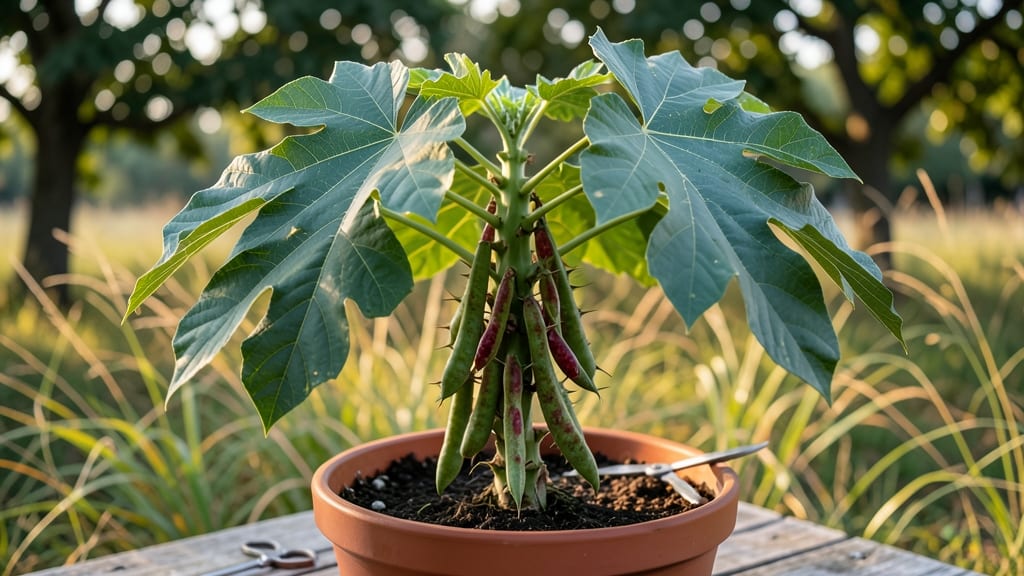
Castor beans grow naturally in tropical and subtropical regions, thriving in warm climates with well-drained soil and full sunlight. They originate from Africa but are now cultivated globally in areas like India, Brazil, and China for their seeds and oil-rich properties.
Castor beans thrive in regions where temperatures stay consistently warm year-round, making them perfect for equatorial zones. 🌍 Native to East Africa, these hardy plants have adapted to diverse environments—from arid savannas to lush riverbanks—thanks to their remarkable drought resistance.
Today, major production hubs like India and Brazil benefit from their ability to flourish in both tropical climates and semi-arid conditions, as long as they receive adequate sunlight and drainage.
What makes castor beans unique is their versatility in cultivation. Unlike many crops, they don't require rich soil, which explains why they're grown in both fertile river valleys and marginal lands.
The plant's deep root system allows it to access moisture from deep underground, making it an excellent choice for regions with seasonal water shortages. This adaptability has helped castor beans become a staple in both traditional and modern agricultural systems worldwide.
💡 In This Article
- Native Habitats and Historical Growth Zones of Castor Plants
- Optimal Climate and Soil Conditions for Cultivating Castor Beans
Native habitats and historical growth zones of castor plants
The castor plant (Ricinus communis) traces its botanical roots to the savannas and riverine forests of East Africa, particularly in regions like Ethiopia and Somalia.
Archaeological evidence suggests these plants were domesticated over 5,000 years ago, with early cultivation spreading along ancient trade routes to the Middle East and Mediterranean by 2000 BCE.
The plant's natural resilience allowed it to thrive in diverse African ecosystems—from the dry acacia woodlands of Kenya to the humid floodplains of the Nile Delta.
What makes castor beans uniquely adaptable is their tropical-subtropical climate requirement: they flourish in areas with average annual temperatures between 70-90°F (21-32°C) and 1,000-2,500 mm of rainfall annually, though they can tolerate as little as 500 mm if grown in well-drained soils.
In their native habitat, castor plants grow wild along seasonal rivers and lake edges, where their deep taproots (reaching 3-5 feet deep) access groundwater during dry periods. This natural drought resistance explains why they later became a staple in India's arid regions and Brazil's semi-arid northeast.
The plant's historical spread mirrors human migration patterns. By the 1st century CE, castor beans had reached China via the Silk Road, where they were valued for their medicinal properties and non-toxic oil.
European colonization in the 16th-18th centuries accelerated global cultivation, with Portuguese traders introducing castor plants to Brazil, where they became a key export crop by the 1800s.
Today, India remains the world's largest producer, accounting for ~80% of global castor oil output, thanks to its monsoon-influenced climate that perfectly matches the plant's needs.
Interestingly, castor plants exhibit sexual dimorphism—male and female flowers grow on separate plants—which affects their natural distribution. Female plants produce larger, more oil-rich seeds, making them the preferred target for cultivation.
In the wild, cross-pollination by insects like bees and wasps ensures genetic diversity, while cultivated varieties are often hand-pollinated for consistency. This biological quirk explains why some regions (like Ethiopia's highlands) still contain wild populations with higher genetic variability than commercial strains.
Climate change is now altering castor bean distribution patterns. Rising temperatures in southern Europe (like Spain and Italy) have enabled experimental cultivation, while droughts in Africa threaten wild populations.
The plant's C4 photosynthetic pathway (similar to corn) gives it an edge in high-temperature environments, but extreme heat can reduce seed yield by up to 30% if paired with water stress. This delicate balance explains why India's monsoon-dependent regions remain the gold standard for castor production.
For gardeners in temperate zones, understanding these native patterns is key. Castor plants can survive brief frosts (down to 25°F/-4°C) but won't produce seeds if temperatures drop below 50°F (10°C) for extended periods.
This explains why they're often grown as annuals in cooler climates—they focus energy on leafy growth rather than seed development when days shorten.
The plant's fast growth rate (reaching 6-10 feet tall in one season) makes it a striking ornamental, but its toxic seeds require careful handling, a trait inherited from its African origins where predators avoided them.